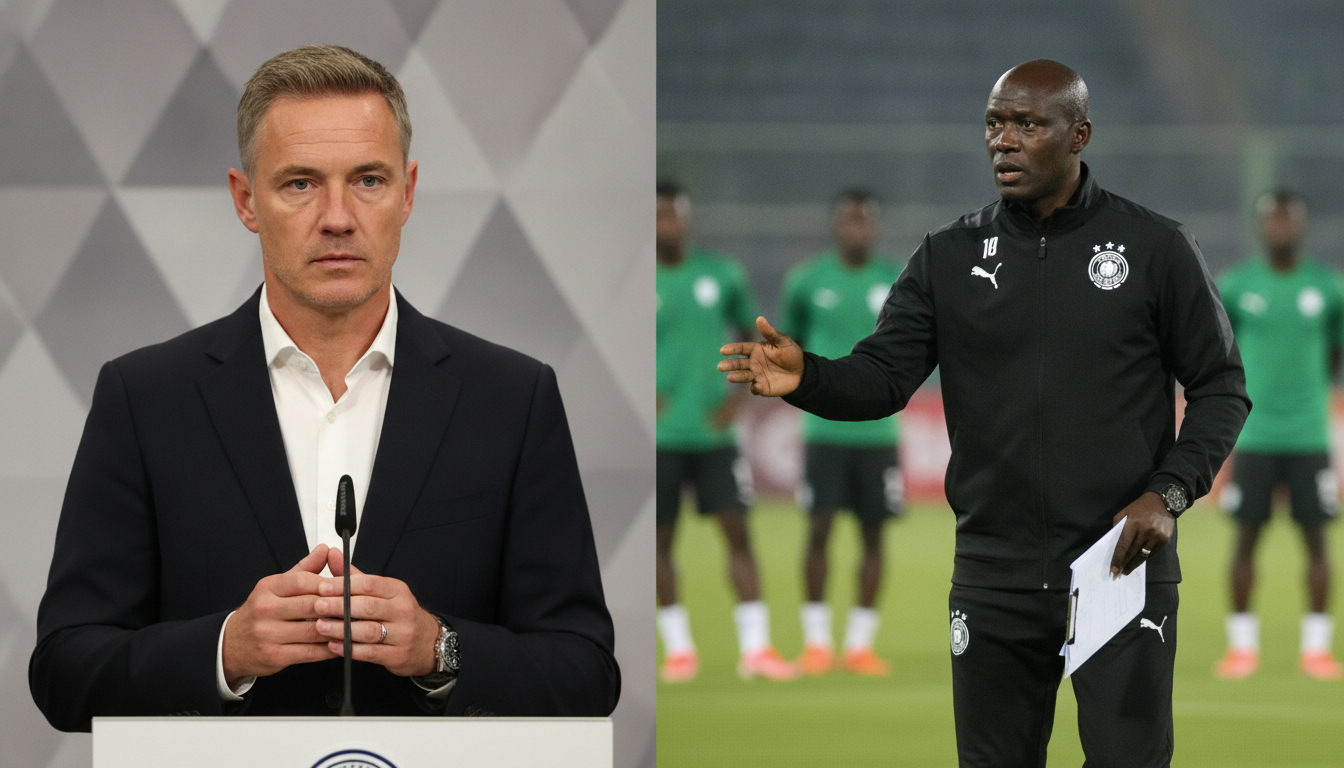
Bastian Schweinsteiger Rejects Racism Accusations After Germany v Côte d’Ivoire Broadcast Comments
Bastian Schweinsteiger has denied accusations of racism made by Côte d’Ivoire coach Emerse Faé, saying his remarks were a football analysis and Das Erste defended his intent and wording.


Bastian Schweinsteiger has publicly rejected claims that comments he made after Germany’s Group E match with Côte d’Ivoire were racially motivated, insisting his remarks were strictly about tactics and style of play.
The former Bayern Munich midfielder and 2014 World Cup winner said he had been offering an analysis of the team’s approach and did not intend to offend individuals or communities.
His broadcaster, Das Erste, issued a statement defending the tenor of his commentary and suggesting a direct conversation could resolve the dispute.
Schweinsteiger Denies Racism Allegations
Bastian Schweinsteiger said his words were misconstrued and that he was addressing on-field patterns rather than making personal or cultural judgments about players.
He framed the statements as technical observations based on recent matches and stressed that his aim was to explain footballing tendencies to viewers.
Those close to the presenter noted he has a long history as a high-profile international player and media figure, which they say makes him aware of the sensitivities around language in tournament coverage.
Schweinsteiger’s response arrived after an exchange of public criticism and came at a time when tournament commentary is under particularly intense scrutiny.
While he did not provide an extended breakdown of the phrases that caused offence, he reiterated that his focus was on "football" and tactical interpretation rather than any commentary on people.
What Was Said on the Broadcast
The remarks that prompted the accusation came during a televised post-match analysis of Germany’s Group E match with Côte d’Ivoire, where Schweinsteiger discussed the Ivorian team’s playing style and what he expected tactically from them.
He summarized his observations from recent fixtures and explained the reasoning behind his assessment of how the Ivory Coast set up and executed phases of play.
At one point in the exchange, Schweinsteiger stated, "I was talking about football, not about people," framing his commentary as an on-pitch evaluation rather than a personal critique.
Broadcasters and pundits often use comparative language when discussing teams from different regions, and those choices of words can shift public perception rapidly.
That practical reality made the initial response from Côte d’Ivoire’s staff and their coach immediate and visible, turning a segment of analysis into a matter of public debate.
Das Erste Issues Defense
Das Erste, the German public broadcaster that employed Schweinsteiger on the programme, publicly defended the former international in the days following the match.
The network’s sports coordinator explained that Schweinsteiger had been setting out expectations about the Ivory Coast side’s style and that he had drawn on his observations of recent games in doing so.
The coordinator added that the broadcaster did not detect racist intent or language in Schweinsteiger’s remarks and underlined that the commentary was presented as a footballing assessment on air.
In its statement the channel also proposed that a direct conversation between the parties could quickly clarify intentions and resolve misunderstandings.
Das Erste suggested that, were coach Emerse Faé to speak with Schweinsteiger himself, the coach’s concerns would likely be allayed, signaling a preference for private dialogue over protracted public dispute.
Reaction from Côte d’Ivoire and Coach Emerse Faé
Côte d’Ivoire’s head coach, Emerse Faé, raised the allegation publicly after the game and his reaction prompted the clarification from Schweinsteiger and the statement from Das Erste.
Faé’s response highlighted how national team coaches are particularly vigilant to perceptions of their players and staff during global tournaments, where commentary can shape broader narratives.
At this stage there has been no public indication of formal disciplinary action from tournament organisers or the broadcaster, and both sides have indicated a willingness to address the issue through conversation.
Observers in media and on social platforms have debated the line between robust tactical critique and language that can be interpreted as culturally insensitive.
That debate has amplified calls from some quarters for clearer editorial guidelines and more culturally aware phrasing in live punditry, particularly during high-profile international events.
Context: Schweinsteiger’s Media Role and Playing Career
Bastian Schweinsteiger’s transition from elite player to television analyst has been closely watched given his profile as a Champions League and World Cup winner.
His stature in the sport lends weight to his assessments, which in turn raises expectations about precision of expression when discussing teams from diverse footballing cultures.
Former players who move into broadcast roles often face the dual challenge of providing incisive tactical commentary while navigating heightened public sensitivity.
Tournament settings magnify those pressures, as pundits are speaking to global audiences and any perceived misstep can lead to swift and wide-ranging reaction.
Networks and production teams frequently brief commentators on cultural and contextual matters, but these protocols are sometimes tested in the heat of live analysis.
Possible Resolution and Tournament Implications
Das Erste’s suggestion of a direct conversation between Emerse Faé and Bastian Schweinsteiger leaves open a practical path to defusing the dispute without formal sanctions.
A face-to-face clarification, if it takes place, would likely focus on words used, the intended meaning behind them, and whether additional public explanation is warranted to restore mutual understanding.
Such an outcome would be in line with precedent in major tournaments where miscommunications between media figures and national teams have been resolved through dialogue rather than punitive measures.
Beyond this immediate exchange, broadcasters may re-evaluate briefing processes for commentators to reduce the chance that tactical descriptions are misinterpreted as derogatory.
Tournament organisers and networks both have a stake in ensuring that expert commentary provides insight without inflaming cultural or national sensitivities, and this episode may prompt renewed attention to those editorial responsibilities.
The dispute remains unresolved in the public record, with Schweinsteiger maintaining that his comments were football-focused and his broadcaster urging direct conversation as the quickest way to settle doubts.
As the tournament progresses, the parties involved will face choices about whether to pursue private reconciliation or allow the matter to continue as a point of public discussion.