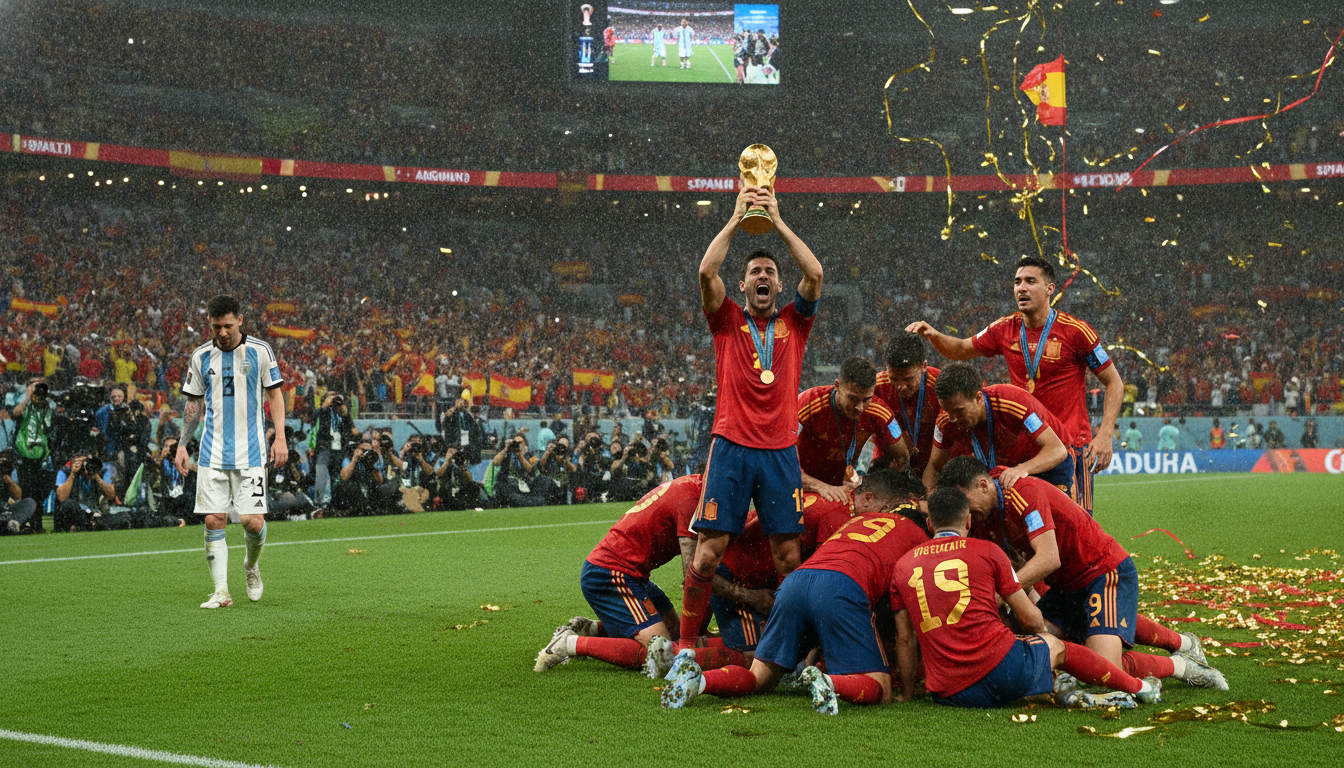
Spain Crowned 2026 World Cup Champions as Ferran Torres Fires Extra-Time Winner Against Argentina
Spain beat Argentina 1-0 after extra time at MetLife Stadium in East Rutherford as Ferran Torres’ 106th-minute strike secured the 2026 World Cup title for La Roja. (fifa.com)

Torres ends stalemate with a decisive 106th-minute strike
Substitute Ferran Torres broke a scoreless deadlock early in the second period of extra time, reacting fastest to a loose ball in the box and driving a low, powerful finish beneath the crossbar. The goal arrived in the 106th minute and proved to be the match-winner that separated the two sides. (efe.com)
Torres, introduced off the bench in the second half, delivered his country a second men’s World Cup after Spain’s 2010 triumph, ending a tournament that showcased a blend of tactical control and late-stage drama. The strike capped an intense 120 minutes in which Spain dominated possession but had been repeatedly denied by Argentina’s goalkeeper. (skysports.com)
Argentina reduced to 10 men after late second-yellow sending-off
The match swung again before extra time when Argentina midfielder Enzo Fernández received a second yellow card in stoppage, leaving Lionel Scaloni’s side down to 10 for the remainder of the contest. The dismissal came after a late tackle in added time and altered the tactical balance heading into extra time. (football-italia.net)
Playing a man short, Argentina defended tenaciously but were forced into deeper blocks that allowed Spain to stretch the field and probe wide channels. The red card compounded an already difficult night for the holders and shifted momentum toward the European champions in the opening minutes of the extra period. (gulfnews.com)
Spain’s possession and pressing strategy dominated the final phases
Spain controlled the tempo for long periods, using patient circulation and aggressive pressing to keep Argentina largely on the back foot during regular time. That control yielded few clear-cut shots early on, but it wore down the Argentine backline and created the openings that eventually produced Torres’ decisive intervention. (fifa.com)
Statistically, La Roja’s dominance was reflected in possession and territory, though the match remained tight and low-scoring until the decisive moment. Spain’s approach combined high-possession patterns with strategic substitutions that provided the attacking edge needed in extra time. (fifa.com)
MetLife Stadium finale delivered showpiece spectacle and capacity attendance
The final was staged at MetLife Stadium in East Rutherford, New Jersey, in front of a sell-out crowd as the 2026 World Cup — co-hosted by the United States, Canada and Mexico — drew to a close. The occasion included a high-profile pre-match and halftime entertainment program alongside ceremony elements that echoed major American sporting spectacles. (apnews.com)
Fans and dignitaries filled the stands at the Meadowlands complex for a match that combined sporting intensity with a large-scale production, capping a tournament that unfolded across three nations and multiple time zones. The stadium environment intensified the drama of the extra-time winner and the subsequent trophy presentation. (vod.fifa.com)
Defensive resilience and goalkeeper heroics defined Argentina’s run
Argentina reached the final as defending champions and again relied on dogged defending and Emiliano Martínez’s shot-stopping to keep them in contention throughout the match. Martínez made several crucial saves that kept the game scoreless in regular time and contributed to a tense finish. (apnews.com)
Even after the red card, the Argentine squad reorganized to deny space and limit high-quality chances, forcing Spain to work for openings until Torres’ late finish. Though ultimately undone by the extra-time strike, Argentina’s defensive display underpinned a campaign that carried the title holders to consecutive World Cup finals. (fifa.com)
Implications for Spain, the coach and the players
The victory crowns Luis de la Fuente’s team as world champions for the second time and cements a recent run of success that has included strong performances at major tournaments. For the players, the win vindicates a long-term development of Spain’s possession-based identity coupled with tactical flexibility in knockout football. (fifa.com)
Torres’ match-winning moment elevated him into an exclusive group of substitutes who have scored in World Cup finals, while other squad members and staff will be measured on how they translate this success into sustained international performance. The triumph also reshapes conversations about Spain’s generation and its standing among world football powers. (skysports.com)
Tournament legacy and broader takeaways from the 2026 World Cup
The 2026 World Cup, staged across the United States, Canada and Mexico, expanded the field to 48 teams and delivered a tournament marked by varied storylines, surprise results and moments of invention. The final, decided by a single extra-time goal, encapsulated the competition’s blend of tactical nuance and dramatic endings. (vod.fifa.com)
Organizers pointed to high attendances, commercial reach and major events integrated into the final as evidence of the tournament’s scale, while football stakeholders will now assess competitive balance and format effects ahead of future editions. Spain’s title provides a narrative closure to the 2026 World Cup and sets the stage for fresh rivalries and questions about the international pecking order. (apnews.com)
Spain’s extra-time victory over Argentina at MetLife Stadium concluded a 48-team World Cup that blended spectacle and intense footballing competition. The decisive 106th-minute strike by Ferran Torres secured La Roja their second men’s World Cup crown and brought the tournament to a dramatic finish in New Jersey. (efe.com)