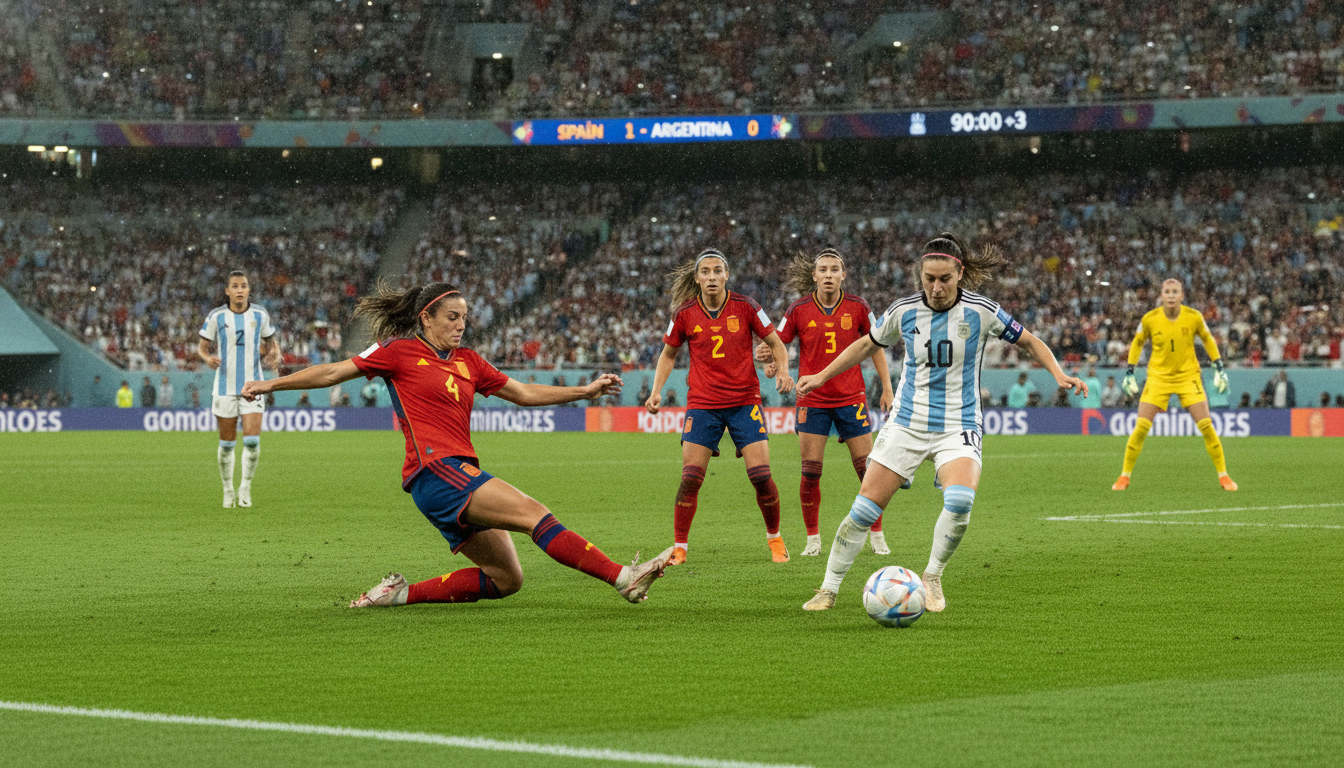
Spain vs Argentina World Cup final: Spain’s defensive strength meets Argentina’s title experience
Spain vs Argentina World Cup final preview: defensive records, fullback influence, and tactical matchups set the stage for Sunday’s title clash in East Rutherford.


Spain and Argentina meet in the World Cup final in East Rutherford on Sunday in what promises to be a high-stakes clash between two of world football’s most accomplished teams. Spain’s defensive solidity and tactical flexibility have carried them to the final, while Argentina arrive as defending champions with experience at the highest level. The Spain vs Argentina World Cup final will also pitch superstars Lionel Messi and Lamine Yamal against a Spanish side determined to control possession and neutralize transitions.
Spain’s defensive record and resilience
Spain have conceded only once on their route to the final, a run that has been built on compact defending and disciplined structure. Goalkeeper Unai Simón compiled an extended run without conceding that became a talking point, underpinning a backline that has remained composed under pressure.
That defensive strength has allowed Spain to dominate possession without inviting danger, turning their traditional passing identity into a dual threat of control and containment. The ability to absorb periods of intensity and then regain control has been a defining feature of Luis de la Fuente’s team at this tournament.
Spain’s defensive resilience was particularly evident in the semi-final against France, where they limited a team known for rapid counter-attacks and individual brilliance. Across the tournament, the team has balanced ball retention with timely interventions, suggesting the defence is as much tactical as it is technical.
Fullback partnership of Marc Cucurella and Pedro Porro
Marc Cucurella and Pedro Porro have been pivotal to Spain’s balance, offering both defensive steel and attacking support on the flanks. Cucurella’s work rate and positional sense have made him a reliable shield on the left, while Porro has contributed dynamism and, notably, his first international goals at this World Cup.
The fullbacks’ capacity to shuttle between defensive duties and overlapping runs gives Spain extra width without sacrificing compactness through the middle. Their interplay has allowed Spain to stretch opponents and create space for midfielders to control tempo.
Their combined performance in the knockout rounds helped neutralize France’s forward threats, proving that Spain can handle high-calibre attacking opponents by relying on disciplined wide defenders. How each fullback manages one-on-one moments and transitional duties will be crucial on Sunday.
Midfield control and Rodri’s leadership
At the heart of Spain’s system sits a midfield designed to dictate tempo and protect the defense, with captain Rodri articulating the team’s approach. Rodri has emphasized Spain’s adaptability, noting they can both control matches through possession and shift into more physical, direct play when required.
This midfield discipline has permitted Spain to manage games without overcommitting men forward, maintaining a structure that limits opponents’ chances. Rodri’s reading of the game and his ability to break up play have been central to that cause.
Spain’s midfield must now handle Argentina’s creativity and directness while supplying attackers with incisive passing. The duel in midfield will likely decide possession patterns and the number of meaningful chances created for each side.
Argentina’s experience and championship mentality
Argentina arrive as the tournament’s defending champions, carrying the experience of winning at the same level and the leadership of players accustomed to knockout pressure. That prior success offers a psychological edge in moments where temperament and composure are decisive.
Lionel Messi remains Argentina’s focal point, bringing creativity, finishing ability, and a history of producing moments in major finals. Alongside younger talents such as Lamine Yamal, Argentina blend veteran know-how with youthful intensity, creating a multifaceted attacking threat.
Argentina’s approach to big matches typically emphasizes quick transitions, exploiting space behind opposition lines and relying on the individual quality of their forwards. Against a possession-heavy Spain, Argentina will seek to compress space centrally and launch rapid counters that test Spain’s defensive transitions.
Tactical crossroads: possession control versus quick transition
The match sets up as a tactical crossroads: Spain’s possession-based, control-first identity versus Argentina’s blend of experience, directness and individual brilliance. Spain will aim to dominate the ball, extend passages of play and force Argentina to chase, thereby increasing the likelihood of mistakes and opening channels for progressive passing.
Argentina, conversely, will look to minimize sustained spells of Spanish control and instead concentrate on moments of verticality and speed. Success for Argentina will depend on quick ball recovery and accurate, forward-moving passes that bypass Spain’s midfield shield.
Set pieces, transitional moments and fullback decisions could prove decisive in a game where margins are small. How each side manages turnovers and counterattacking opportunities will likely shape the match’s decisive phases.
Match scenarios and what to watch in the decisive moments
Key scenarios to monitor include Spain’s ability to retain composure under Argentine pressure and Argentina’s capacity to convert limited chances into goals. The fullbacks’ upfield involvement, midfield battles around Rodri, and Messi’s treatment in tight spaces all represent potential turning points.
Substitutions and tactical tweaks during the game will matter greatly, as both coaches must adapt to emerging patterns and momentum swings. A disciplined defensive shift by Spain or a timely attacking change by Argentina could alter the match’s dynamic in an instant.
Individual duels — such as wide defenders against pacey wingers and midfield enforcers versus creative playmakers — will likely determine which team controls transitional phases. Small tactical gambits, including pressing triggers and passing lanes, may have outsized influence on the final outcome.
The coming final in East Rutherford is more than a confrontation of star names; it is a contest between two contrasting philosophies and two teams that have earned their place through different strengths. The tactical chess match and the handling of pivotal moments will define who lifts football’s most coveted trophy.
Both nations carry heavy historical expectations and a desire to etch new chapters into their footballing legacies. The Spain vs Argentina World Cup final will not only crown a champion but also offer a defining moment for players, coaches and footballing identities on the world stage.