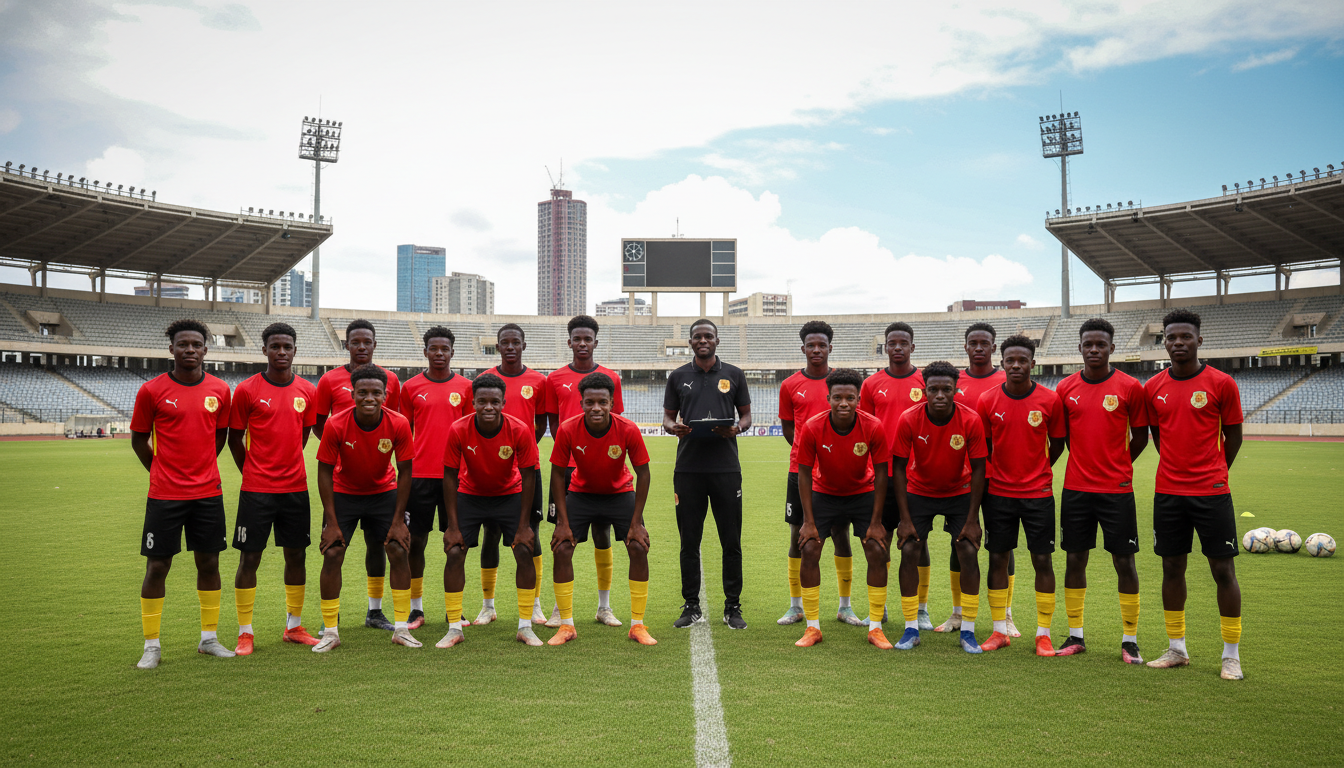
Uganda U-17 Women’s Team Names Provisional Teen Cranes Squad Ahead of Kenya World Cup Qualifiers
Uganda U-17 Women’s team announced a provisional Teen Cranes squad as preparations ramp up for the second-round FIFA U-17 Women’s World Cup 2026 qualifiers against Kenya. The selection, led by head coach Sheryl Ulanda Botes, sees continuity from the side that won their previous tie 6-1 on aggregate over Zimbabwe. The squad will assemble at the FUFA Technical Centre in Njeru ahead of the first leg on 22 May 2026 and the return fixture on 30 May 2026 in Nairobi.


Botes names provisional Teen Cranes squad
The provisional list was released as the team moves into an intensive preparation phase under coach Sheryl Ulanda Botes. Most players retained their places after contributing to Uganda’s comprehensive victory over Zimbabwe in the opening qualifying round. The announcement signals Botes’s preference for continuity and experience within this age group as Uganda seeks a deeper run in the FIFA U-17 Women’s World Cup 2026 qualifiers.
Selection emphasis appears to balance club experience and school-level talent, with several players drawn from established women’s clubs and youth academies. The decision to carry over a core group aims to preserve on-field understanding and to reward players who delivered strong performances in the previous tie.
Residential camp at FUFA Technical Centre in Njeru
The Teen Cranes will convene for a residential training camp at the FUFA Technical Centre in Njeru in the days leading to the first leg on 22 May 2026. The camp will focus on match fitness, tactical drills, and set-piece work designed to sharpen the squad for a two-legged knockout encounter. Staff have scheduled intensive training blocks and video sessions to ensure players are prepared physically and mentally for the demands of continental qualifying.
Training logistics include coordinated sessions for recovery and analysis, with the technical staff using the FUFA facilities to run simulated match scenarios. The residential environment is intended to foster team cohesion and provide the medical and sports-science support necessary for tournament-style preparation.
Goalkeepers and defence named to anchor the side
The goalkeeping group features Sharifah Kizito Namutebi of Kampala Queens FC, Hawa Kizza from SIA International WFC, A. Mayimuna Namuwaya of St. Noa Girls FC, and Sophia Nakazzi representing Boni Consilii Girls FC. The quartet provides a mix of club-based experience and youth potential, giving the coaching staff several options between the posts. Coaches will evaluate form and readiness during the camp before confirming the matchday selections.
At the back, Botes has called a defensive roster that blends school program prospects with club recruits. Defenders named include Ritah Anitah Nambuusi, Martha Babirye, Jovia Nakirya and Ester Namatovu, among others. That unit will be tasked with maintaining the organisation that helped produce a strong defensive showing in the prior round while adapting to Kenya’s attacking threats.
Midfield structure highlights depth and versatility
The midfield selections reflect depth across creative and combative roles, with players drawn from URA Ladies FC, SIA International WFC, Isra Soccer Academy and leading school programmes. Notable inclusions are Tracy Nabalanzi, Jennifer N. Onyango, Angel Gerevans Dominick and Brenda Nassaka. The midfield group offers a mixture of ball-winning capability, distribution skills, and players capable of linking play between defence and attack.
Coaches appear to value versatility, with several midfielders comfortable in multiple systems and positions. That flexibility will give Botes tactical options should the tie require adjustments across two legs or in response to in-game developments.
Forwards and attacking options to carry the threat
The attacking contingent is led by Shadia Nabirye of Kawempe Muslims Ladies FC and includes Susan Nabyonga, Terry Mora Oseko and Monica Buteme. These forwards offer a blend of pace, finishing, and aerial presence that the coaching staff will seek to exploit against Kenya. Their role will be pivotal in converting the team’s control of possession into clear goal-scoring opportunities over both fixtures.
Training emphasis for the forwards during the camp will include transitional exercises, finishing drills under pressure, and coordinated movement patterns to break down organised defences. The selection confirms the federation’s focus on a proactive offensive strategy geared toward securing qualification.
Technical team and support staff full complement announced
Coach Sheryl Ulanda Botes will be assisted by Ahumuza Colines and Nantumbwe Sharifah, while specialist staff include goalkeeper coach David Ribeiro and video analyst Nsubuga Allan Magunda. The medical and recovery team features team doctor Kabatalindwa Mable and physiotherapist Nakuya Jackline, with sports scientist Nkata Moses William responsible for performance monitoring. Operational roles are staffed by team manager Namusisi Joan, equipment manager Nakiguba Cissy Gaudensia and media officer Namutebi Aminah.
The comprehensive support structure indicates FUFA’s intent to provide full back-office and technical backing for the campaign. Video analysis and sports-science inputs are expected to play an important role in match preparation and injury prevention across the short but intense qualifying window.
Fixtures, venues and the route to the World Cup
Uganda will host the first leg at FUFA Stadium in Kadiba on 22 May 2026 before travelling to Nairobi for the return fixture at Nyayo National Stadium on 30 May 2026. The two-legged tie is a knockout stage on the path to the FIFA U-17 Women’s World Cup 2026, with the aggregate winner progressing to the next round of qualifiers. Match planning will therefore incorporate travel, recovery protocols, and strategies to manage the two-match aggregate format.
Kenya will present a familiar regional rival with its own strengths and tactical approach, making detailed scouting and match-specific preparation essential. The Teen Cranes’ coaching staff has signalled their intent to use the FUFA camp to refine set-pieces and transitional patterns that could prove decisive across both legs.
Federation backing and broader development implications
FUFA Corporate Affairs Director Ahmed Hussein has reiterated the federation’s backing for the Teen Cranes and described the squad as a focal point for Uganda’s youth women’s football ambitions this year. Federation support includes logistics, medical provision and performance resources intended to give the squad the best possible chance in qualifying. That institutional backing underscores a broader investment in youth pathways that FUFA hopes will translate into long-term growth for women’s football in the country.
Officials view these qualifiers as both a competitive priority and a development milestone for players who could move into higher age-group national teams. Continued progress at youth level is central to FUFA’s strategy to build a pipeline of talent capable of competing at senior international tournaments.
Preparations will also be judged on the squad’s ability to manage the psychological demands of knockout football, to handle away environments, and to capitalise on home advantage in Kadiba. The federation’s support is expected to ease logistical burdens and allow the coaching staff to focus on technical and tactical readiness.
The Teen Cranes enter the tie with confidence stemming from their 6-1 aggregate victory over Zimbabwe in the previous round. That performance has elevated expectations among supporters and federation officials alike, while also increasing the scrutiny on tactical choices and player management ahead of the Kenya matches. Success over the two legs would represent another step toward a place at the FIFA U-17 Women’s World Cup 2026 and would affirm the progress of Uganda’s youth development programmes.
Players will face final selection decisions after the residential camp and pre-match friendlies or internal scrimmages, with the technical team set to name the matchday squads closer to kick-off. The coming weeks will be decisive as the coaching staff balance form, fitness, and tactical fit to present the strongest possible unit for both fixtures.
The upcoming qualifiers provide a platform for individual players to showcase their potential to scouts, academies and senior national-team coaches. Consistent performances over the two legs could accelerate opportunities for this crop of players at higher competitive levels and within professional club setups.
Final preparations will focus on sharpening defensive organisation, maximising transitional speed, and ensuring clinical finishing in the penalty areas. The Teen Cranes’ ability to execute a clear game plan under pressure will ultimately determine whether they can navigate the knockout format and progress toward the global stage.
The team’s assembly at FUFA’s Njeru complex, the named technical staff, and FUFA’s stated institutional backing collectively underline Uganda’s intent to take these qualifiers seriously. The football community will be watching closely as the Teen Cranes aim to convert preparation into results over the two decisive matches in May 2026.