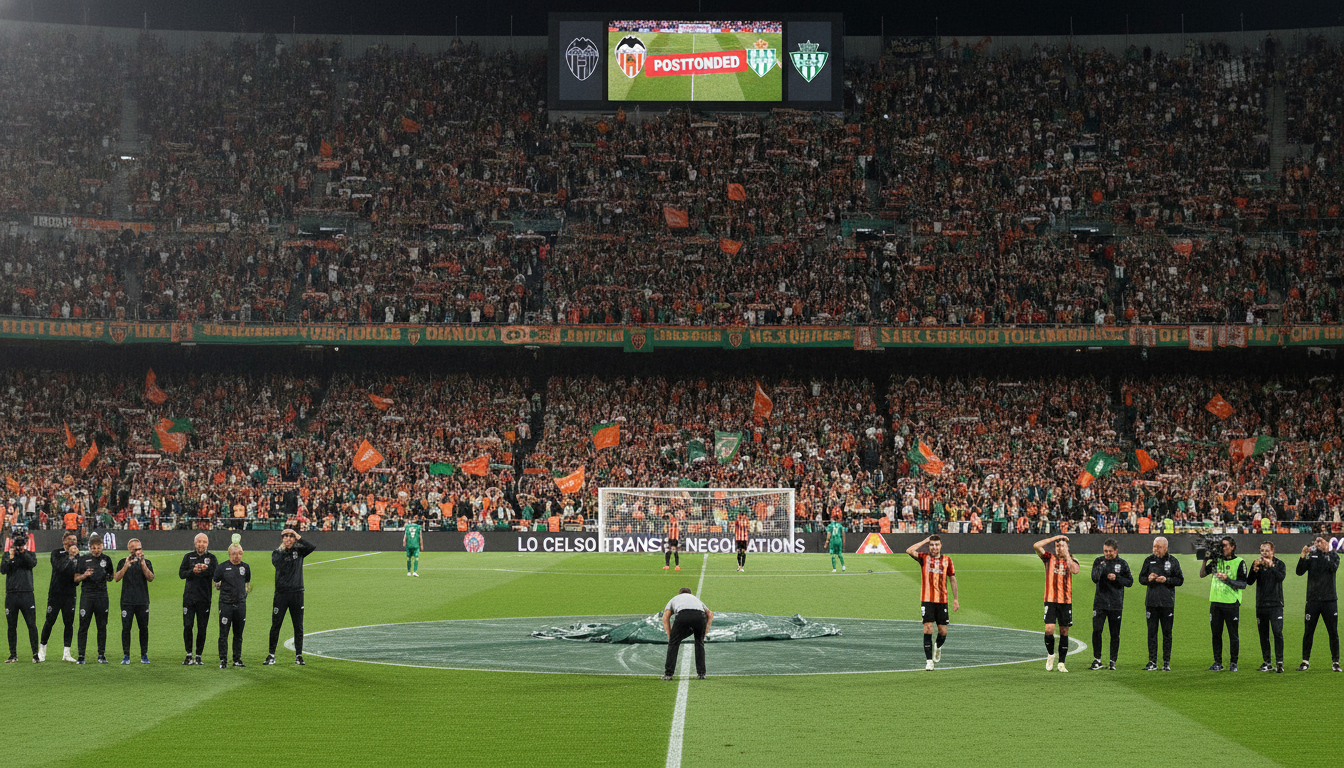
Valencia LaLiga opener postponed as Betis fixture moved to August 25
Valencia LaLiga opener postponed after Betis request; Mestalla clash moved to Aug 25. Valencia will now face Celta on Aug 22 in a congested start week.


Valencia will not play their LaLiga opener on the first weekend of the 2026-27 season after the league approved a request from Real Betis to postpone the fixture originally scheduled for August 15 or 16 at Mestalla. The decision means the Valencia LaLiga opener will now take place a week later, with Carlos Corberán’s side beginning the campaign on August 22 against Celta de Vigo. LaLiga’s acceptance of the change follows rules established in the agreement between the competition and the players’ union, the AFE. The rearrangement sets up a compressed run of matches for Valencia across the opening eight days of the season.
LaLiga accepts Betis request
LaLiga granted Betis’ application to reschedule the match under provisions that allow postponements in specific circumstances agreed with the AFE. The request was made to accommodate Betis midfielder Giovani Lo Celso, who is participating in the World Cup of the United States, Mexico and Canada and was involved in the tournament’s late stages. League officials assessed the application and approved the delay, noting the exceptional nature of international commitments during the summer. The decision aligns with prior league practice of adjusting fixtures when a club’s competitive balance would be materially affected by players at major tournaments.
Original fixture and new date details
The fixture initially earmarked for mid-August at Mestalla has been moved to Tuesday, August 25, with a 21:00 kick-off time now scheduled for the rescheduled game against Betis. Valencia’s revised campaign opens on Saturday, August 22 at 19:30, when the club will host Celta de Vigo at Mestalla. The team’s third match of the month is set for Sunday, August 30 at 19:30, a trip to Riazor to face Deportivo. Those three matches now fall within an eight-day window, creating a busy and compact opening stretch for Corberán’s squad.
Sporting consequences of a congested start
The revised calendar forces Valencia into a demanding early-season workload that heightens the importance of squad depth and rotation plans. Playing three competitive matches in eight days increases physical stress on players and raises the risk of fatigue-related injuries, particularly for those who featured heavily during pre-season. Corberán will need to balance competitive ambition with recovery, especially given the short turnaround between the Celta fixture and the rescheduled Betis match. The compressed schedule also reduces training windows, limiting the coach’s ability to implement tactical adjustments between games.
Tactical and selection challenges for Carlos Corberán
Corberán faces immediate selection dilemmas as he prepares teams for varied opposition with minimal recovery time between matches. The manager is likely to deploy a rotation strategy, mixing experienced starters with younger or recently signed players to preserve energy levels across the run of fixtures. Match tempo, substitutions and set-piece preparation will become critical levers to manage workload during each 90 minutes. Valencia’s medical and performance staff will play a pivotal role in monitoring players’ condition, adjusting training loads and advising on minute allocation to avoid early-season injuries.
Operational and fan implications at Mestalla
The change affects supporters and club operations, with season-ticket holders and fans required to adjust travel and attendance plans for the rescheduled date at Mestalla. Valencia’s ticketing and customer services departments will need to communicate promptly about seat allocations, rebooking options and any broadcast scheduling updates. Local authorities and stadium security services must also adapt logistics for the midweek fixture, which typically demands different transport and policing arrangements than a weekend match. Commercial partners and broadcasters will coordinate to ensure the match reaches audiences as planned while accommodating the late alteration.
Broader calendar context and precedent in Spanish football
Fixture adjustments to accommodate international tournaments are not unprecedented in LaLiga, and the league’s agreement with the AFE provides a framework for these exceptional changes. Clubs and the league regularly consult when global competitions overlap with domestic scheduling to preserve competitive fairness and protect player welfare. The timing of the World Cup created particular pressure on early domestic dates this season, prompting a number of similar considerations across the division. Such reshuffles underscore the ongoing tension between international obligations and the demands of domestic competition calendars.
Valencia’s opening weeks will now test the squad’s resilience and the coaching staff’s planning as the team seeks to establish positive momentum despite a compressed schedule. Supporters will turn up to Mestalla on August 22 hoping for a strong start against Celta, aware that the quick succession of fixtures in the following days will shape the team’s early form. The club and its rival will navigate the revised timetable with an eye on both immediate results and the long-term durability of their players as LaLiga’s season gets under way.