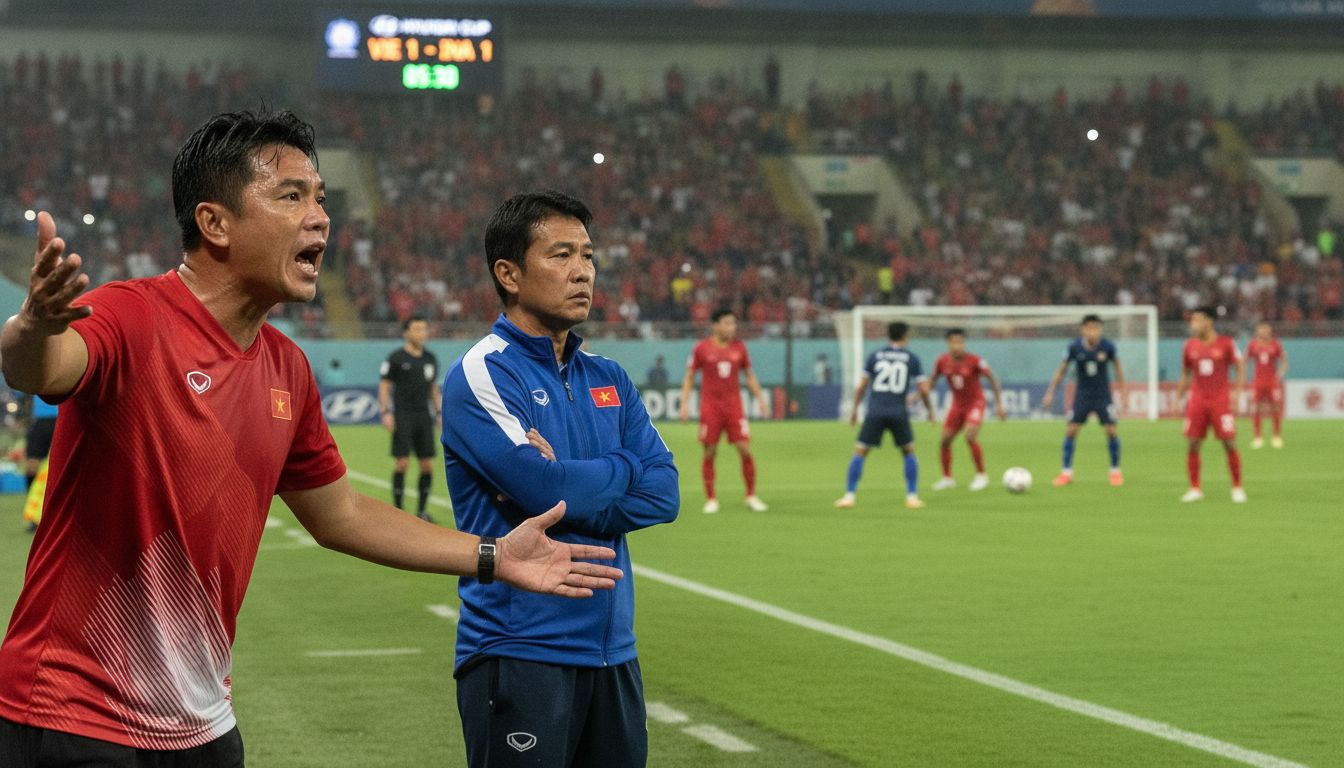
Vietnam vs Indonesia in Bogor: Vietnam must win to stay alive in ASEAN Hyundai Cup 2026
Vietnam vs Indonesia in Bogor: defending champions Vietnam must win to stay alive in ASEAN Hyundai Cup 2026 Group A and secure a semi-final place tonight.


Vietnam vs Indonesia in Bogor is the headline match of Group A in the ASEAN Hyundai Cup 2026, with the defending champions facing a make-or-break clash against an in-form Indonesia side. Vietnam, level on points but behind on goal difference after a goalless draw with Singapore, need a victory to guarantee a safe path to the semi-finals. Indonesia arrive unbeaten and will look to convert early tournament momentum into control of the group in front of a passionate home crowd.
Match stakes and immediate implications
Victory for Vietnam would place them firmly in the semi-final conversation and remove dependence on other results in the group. A draw could leave the defending champions vulnerable to being overtaken on goal difference or head-to-head criteria, depending on tiebreakers used by the competition.
Indonesia can secure top spot with another three points, allowing John Herdman’s side to manage minutes for key players in the final group match. Conversely, a loss would leave the hosts exposed and could invite late-group drama heading into the final round of fixtures.
Both teams enter the fixture with contrasting recent results: Vietnam displayed devastating scoring power against Timor-Leste but were contained by Singapore, while Indonesia have combined a big win and a solid follow-up to sit atop the standings. The outcome in Bogor will shape tactical choices and personnel selection for both coaches in the closing days of the group stage.
Tactical matchup: Vietnamese compact defence versus Indonesia’s aerial forward line
Vietnam’s defensive unit comes into the game on the back of two matches without conceding, a trend that has bolstered confidence in their back four and midfield shield. Their compact shape and collective responsibility to defend from the front have been key pillars in maintaining clean sheets, and those elements will be tested by Indonesia’s physical approach.
Indonesia present a distinct threat through set-pieces and aerial duels, with their target forwards imposing themselves in the penalty area. Their ability to win second balls and punish lapses in marking has produced goals so far, and Vietnam must guard against lapses in concentration on crosses and long deliveries.
Midfield battles will likely determine control of tempo; Vietnam favor quick transitions and structured pressing, while Indonesia have shown a willingness to vary play between direct channels and patient possession. How each side adapts in the first 20 minutes could dictate whether the match opens up or becomes a tight, low-scoring contest.
Group A standings and qualification scenarios
Group A arrived at this fixture with Indonesia leading after consecutive victories, and Singapore occupying the second spot following their draw with Vietnam. Vietnam’s 7-0 opening win over Timor-Leste gave them a superior goal tally initially, but the recent stalemate with Singapore left them trailing in the table.
A clear-cut qualification pathway exists for Vietnam: a win secures advancement and preserves their status as contenders. Should they draw, Vietnam will depend on other results and tie-breaking metrics, increasing the pressure for a decisive approach rather than settling for parity.
Indonesia can approach the match with the option to play for a win to clinch the group or to prioritize pragmatic match control if circumstances within the game favor such an approach. The permutations mean both sides must balance ambition with caution, especially as matchday substitutions and game management may be decisive late on.
Key players and matchups to watch
Mitch Baker has emerged as a focal point of Indonesia’s attack, combining height, aerial strength and a knack for arriving in scoring positions. His presence forces opposing defenders to stay alert on set plays and long balls, and his movement opens spaces for teammates to exploit in behind.
For Vietnam, the defensive leadership—both in central defenders and the defensive midfield anchor—will be crucial in nullifying direct threats. The unit’s cohesion and ability to coordinate offside lines, clearances and marking assignments will be decisive when Indonesia push crosses into the box.
Midfield creators from both sides will also influence the outcome. Players who can deliver accurate switches of play and quick vertical passes are likely to break the rhythm of opposing defensive blocks. Additionally, full-backs with the ability to overlap and deliver quality crosses could tilt the balance in a game where width and delivery into the penalty area will matter.
Coaching plans and pre-match assessments
Vietnam coach Kim Sang-sik has framed the encounter as essential to his team’s progression, acknowledging the psychological and environmental challenges of playing away from home. He emphasized collective defensive responsibility and the need for cohesion across the entire team, indicating tactical tweaks to maintain compactness while seeking opportunities in transition.
John Herdman has described the match as the tournament moment both teams want, stressing preparation for a strong opponent rather than expecting perfection. Herdman’s recent team selections suggest he values adaptability; he has been prepared to alter game plans depending on match developments and is focused on readiness and fight from his players.
Both coaches have publicly downplayed the expectation of a flawless performance, instead prioritizing competitive resilience and the ability to respond to momentum swings during a match. That pragmatic stance reflects the realities of tournament football, where refereeing decisions, injuries and fluctuations in form often determine results more than tactical purity.
Home conditions, crowd influence and match environment
Playing in Bogor gives Indonesia a familiar backdrop and a vocal supporter base eager to see their team consolidate early progress. The atmosphere is expected to be intense, with supporters likely to influence momentum at key moments and give the hosts a psychological edge in close exchanges.
Vietnam will need to manage the noise and the physical conditions associated with playing away, including travel fatigue and local climate variations. Mental preparation and experience in hostile environments will be as important as technical plans in preserving concentration for 90 minutes.
Matchday officials and set-piece situations could become focal talking points, especially if the game remains tight and decisions in the penalty area arise. Both teams have shown they can exploit opportunities from dead-ball scenarios, so discipline and defensive organization will be monitored closely by coaching staff and supporters alike.
What a result means for the knockout phase
A win for Vietnam would reinsert the reigning champions into the semi-final picture with confidence and momentum. It would validate Kim’s tactical adjustments and allow Vietnam to approach the final group match with reduced pressure, enabling rotation if necessary.
For Indonesia, victory would not only secure a group-topping place but also provide strategic advantages in the semi-final draw, including potential matchups and rest periods. Maintaining an unbeaten record through the group stage would be a statement of depth and balance for Herdman’s squad.
If the match ends level or produces an unexpected victor, the group standings will tighten and produce high-stakes drama in the closing round of fixtures. That scenario would reward teams best able to manage pressure and execute game plans with precision under heightened expectations.
The teams will take to the pitch tonight in Bogor with contrasting objectives but the same tournament aspiration: to advance and lift the ASEAN Hyundai Cup. The result will not only affect standings but also set the tone for the knockout phase, testing leadership, tactical flexibility and composure when it matters most.