Viktor Gyokeres credits Hong Kong Arsenal debut for momentum after starring in Sweden’s 5-1 win over Tunisia
Viktor Gyokeres credits his Hong Kong debut with Arsenal for giving him momentum into a season that culminated in a standout performance as Sweden routed Tunisia 5-1 in Monterrey. (151 characters)

Viktor Gyokeres said his substitute appearance for Arsenal in Hong Kong last summer helped set the tone for a breakthrough campaign that continued with a commanding showing for Sweden in their 5-1 World Cup victory over Tunisia. The striker not only scored but also created a goal as Sweden dismantled a disjointed Tunisian side in Monterrey. Gyokeres’ comments after the match linked the welcome he received in Hong Kong and the similar conditions in Mexico to his confidence and readiness on the big stage.
Gyokeres credits Hong Kong debut for momentum
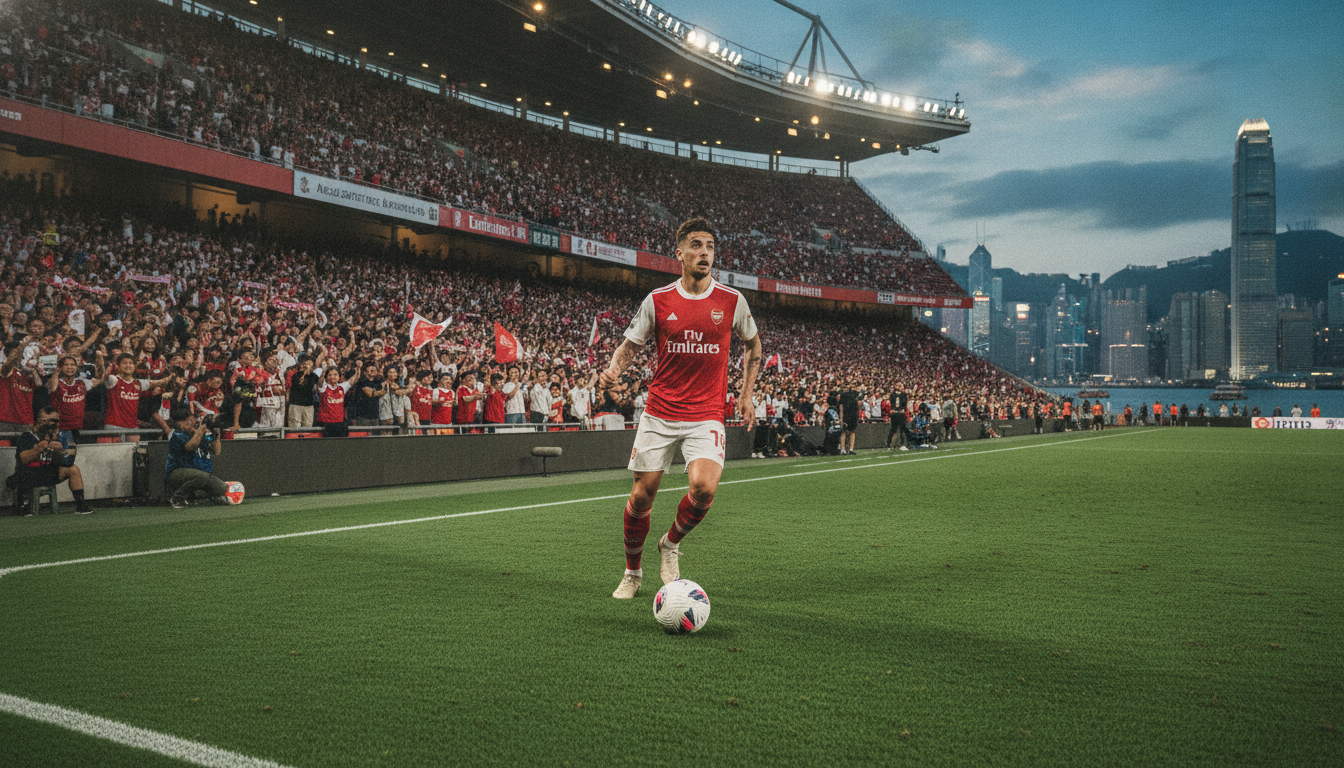
Viktor Gyokeres described his first match in Arsenal colours, a July friendly at Kai Tak Stadium, as an experience that accelerated his integration into the squad. He said the warm reception from teammates and fans made him feel part of the group immediately, aiding his adjustment ahead of competitive action. Gyokeres added that the climate in Hong Kong gave him useful acclimatisation for Monterrey, where he delivered one of his most influential international displays.
The Arsenal arrival ultimately fulfilled the expectations that accompanied his high-profile transfer, and Gyokeres has framed that early encounter as more than a tour game. For the player, the short trip to Hong Kong was a practical and psychological stepping stone that contributed to a season in which he became a decisive attacking option for both club and country. Those early impressions, he suggested, carried into the World Cup setting where conditions matched what he had already experienced.
Signed as the final piece for Arteta, delivered in the league
Arsenal manager Mikel Arteta paid a reported £64 million to bring Gyokeres from Sporting Lisbon, a move described at the time as adding the final piece to the Premier League title puzzle. Gyokeres repaid that investment by contributing 14 league goals as Arsenal ended a 22-year wait for the title. His role evolved from a squad addition to a frontline weapon whose timing and movement provided an edge across the domestic campaign.
The striker’s ability to adapt quickly to Arteta’s system was visible in his finishing and link-up play throughout the season, traits that translated into international action. His form at club level laid the groundwork for Sweden to call on him with confidence at the World Cup, and his Monterrey performance underlined the value of a mid-summer debut that accelerated his assimilation into top-level English football.
Clinical performance as Sweden crushed Tunisia
Gyokeres produced a consummate centre-forward display in Sweden’s 5-1 victory, combining a goal with an assist to break down a Tunisian defence that struggled to cope with his movements. Sweden’s attack was incisive and fluency in the final third exposed a Tunisian side unable to find cohesion, while Gyokeres repeatedly positioned himself to capitalise on space and create opportunities for teammates. The result was a one-sided scoreline that reflected Sweden’s control across the match.
The striker’s contribution was not limited to statistical output; his presence occupied defenders and created openings that Sweden exploited. His goal combined timing and composure, and his assist demonstrated an understanding of when to lay off play to teammates in better positions. Collectively, the performance highlighted why Gyokeres is now seen as a key figure for both club and country.
Tunisia’s reaction and coaching consequences
Tunisia’s players faced sharp post-match scrutiny after the heavy defeat, with some members of the squad hearing critical commentary from journalists and supporters back home. Reports of players expressing shame and offering apologies underscored the level of domestic disappointment, and the result immediately prompted leadership changes within the national setup. Head coach Sabri Lamouchi was relieved of his duties following the match, reflecting the severity of the fallout from the performance.
The decision to part ways with Lamouchi comes amid a heated public response and a necessity for the Tunisian federation to reassess preparations and personnel. Such a swift coaching change is a stark reminder of the pressure national teams face at major tournaments when results fall short. For Tunisia, the immediate focus will be rebuilding confidence and addressing structural issues that left the side vulnerable in Monterrey.
Team morale and the Swedish dressing-room mood
In contrast to the Tunisian reaction, the Swedish contingent left the field upbeat and confident, buoyed by a resounding group-stage win. Players and staff praised the collective performance, noting the balance between proactive attacking intent and defensive discipline that defined the result. Gyokeres’ teammates highlighted his contribution and the way the forward’s form galvanised the group at a crucial tournament stage.
Such a victory provides momentum that could be decisive as Sweden navigates the remainder of the World Cup, offering a tangible lift in belief and tactical clarity. The match also reinforced the idea that players who arrive at peak condition and with strong club form can shift a national side’s fortunes. For Sweden, the challenge now is consolidating that confidence into consistency across the tournament’s knockout phases.
Implications for Arsenal and Gyokeres’ future prospects
Gyokeres’ World Cup display will be watched closely by Arsenal as the club evaluates his development and long-term role under Arteta. The striker’s capacity to produce on the international stage after a rapid adaptation at Arsenal bolsters the club’s decision to invest significantly in his transfer. How Arsenal manages his workload and expectations over the coming seasons will be important as they seek to defend and build on their Premier League success.
On an individual level, Gyokeres has positioned himself as a forward capable of performing in different environments and under varied tactical demands. Consistent international performances can enhance his profile and provide additional experience that benefits Arsenal, particularly when facing high-pressure fixtures. The interplay between national and club duties will be managed carefully to maintain form and fitness.
The momentum that began with a substitute appearance at Kai Tak Stadium has carried through to a World Cup stage where Gyokeres announced himself emphatically. His reflections on the Hong Kong debut, the swift acceptance he felt within the Arsenal dressing room, and the tactical growth over the season all point to a player whose trajectory is headed upward. As both Arsenal and Sweden turn the page to the next phase of their respective campaigns, Gyokeres stands as a figure who has converted early opportunity into influential performance.