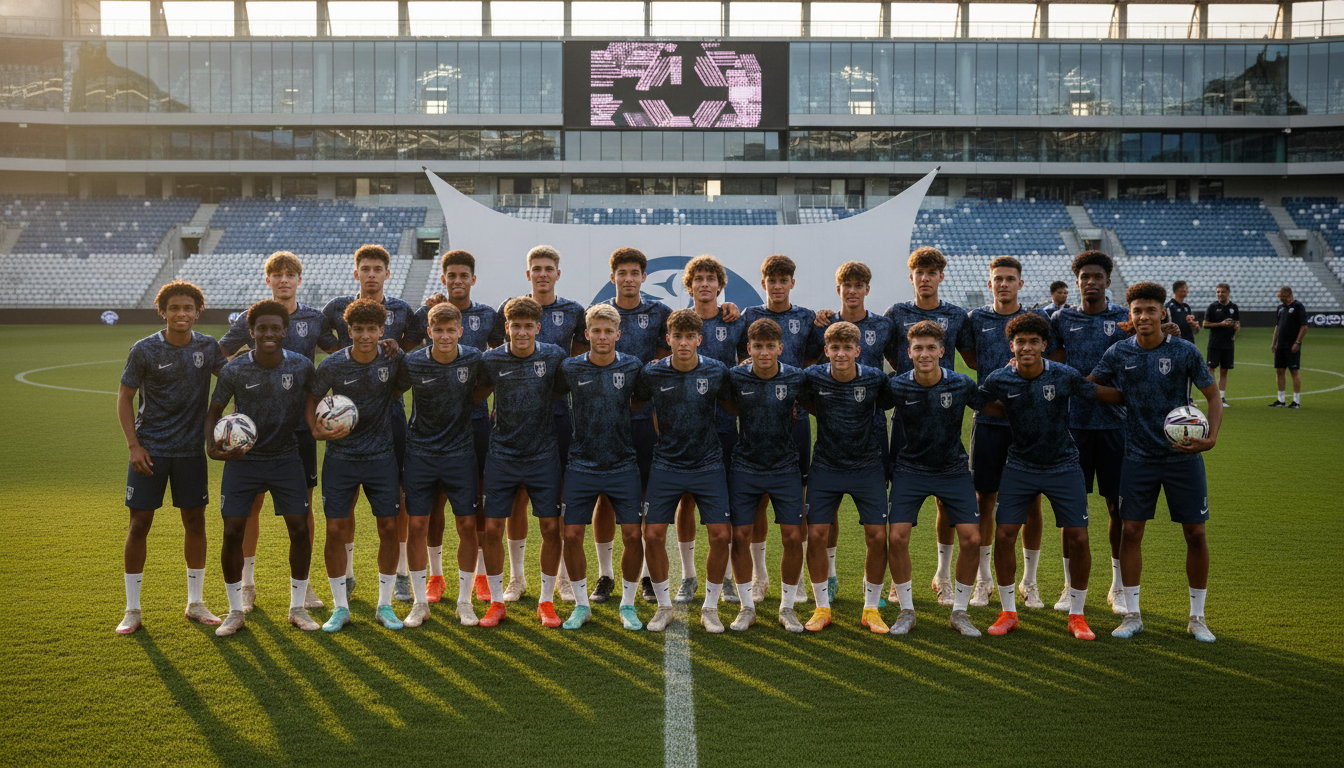
Teenagers at the 2026 World Cup: 22 Young Players Poised to Shape the Tournament
Twenty-two teenagers feature on FIFA’s 2026 World Cup rosters, including Lamine Yamal and Pau Cubarsi, ready to make an impact on the tournament soon.


The presence of teenagers at the 2026 World Cup underscores a generational shift in international selection as national coaches balance experience with youthful potential. Several of the 22 teenagers have already established themselves at top European clubs, and their inclusion raises questions about playing time, tactical roles, and market value. This article examines who the teenage call-ups are, how they compare to past youthful World Cup breakouts, and the practical implications for teams and the sport.
22 Teenagers Named on FIFA 2026 Rosters
Twenty-two teenagers appear across the 48-team field after FIFA published official rosters for the expanded tournament. The list contains a mix of players who are regulars at elite clubs and others whose selection is a clear vote of confidence from their federations. National teams have used the larger 26–26 matchday squads available under the tournament format to include younger prospects alongside seasoned veterans.
Several names have drawn attention because of their club form and reputation at youth level, while others were surprise inclusions based on recent international youth tournaments. The age distribution and positions covered by these teenagers vary, with attackers, midfielders and defenders all represented. Their selection reflects broader development trends in European and South American football where clubs have accelerated pathways for elite young talent.
Teenage Breakouts Mirror Mbappé, Pelé and Owen
Historically, the World Cup has been a stage where teenagers take major steps in their careers — Pelé at 17 in 1958, Michael Owen at 18 in 1998, and Kylian Mbappé at 19 in 2018 are prominent examples. Those tournaments provided a global platform that transformed promising youngsters into household names and altered transfer markets. The current cohort could follow similar trajectories if they are given minutes and perform on the biggest stage.
Comparisons to past icons are inevitable but should be measured; each era presents different tactical demands and media pressures. The modern commercial and social media landscape intensifies scrutiny, yet the football fundamentals remain the same: talent, opportunity and composure determine whether a teenager converts a World Cup call-up into a career-defining moment. Coaches and federations will therefore temper expectations while recognizing the historical significance of a standout performance.
Barcelona and Bayern Teenagers Bring Club Form
Several teenagers named for 2026 have already made first-team contributions at major European clubs, providing a compelling reason for their national team selection. Spain’s Lamine Yamal and Pau Cubarsi, aged 18 and 19 respectively, are two high-profile Barcelona products who entered senior football with significant minutes at club level. Their technical development within Barcelona’s system and exposure to top-tier competition make them credible options for matchday squads.
Germany’s Lennart Karl, also 18, enjoyed a breakthrough season with Bayern Munich and has been integrated into a senior setup accustomed to developing young players. Club experience at clubs of Bayern’s stature often translates to tactical discipline and readiness for international duty. In France, younger pros such as Warren Zaire-Emery and Desire Doue — age 20 and 21 but first-time World Cup call-ups — illustrate that the tournament will also feature fresh-faced players who already operate regularly in elite club environments.
Coaches’ Choices and Tactical Deployment
National team managers face tactical decisions when integrating teenagers at a World Cup, balancing the need for immediate results with the development of squad depth. Teenagers are likely to be used in specific roles that leverage their strengths, such as high-energy wing play, pressing midfield positions or as tactical substitutes to change the tempo of a match. The risk-management approach is more common in knockout matches where experience is prized, but group-stage rotation offers opportunities for younger players.
Selection committees will also consider the psychological readiness of teenagers for the tournament’s pressures, including travel, media obligations and hostile atmospheres in some stadia. Coaches generally introduce promising youngsters gradually, allowing them to acclimate to international senior football before increasing responsibilities. The 2026 World Cup’s expanded format, with more matches and group-stage fixtures, increases the likelihood that at least some teenagers will see competitive minutes.
Market Effects and Transfer Implications
Inclusion on a World Cup roster can accelerate a young player’s market trajectory, with scouts and clubs closely monitoring performances. Many of the teenagers named have pre-existing reputations, and a strong World Cup showing can increase their valuation substantially. Transfer windows that follow the tournament historically reflect player stock changes, and younger players often attract long-term investment from clubs looking to secure emerging talent.
Agents and clubs will weigh the benefits of immediate transfer moves against continued development in a familiar environment. For already-integrated players at Barcelona and Bayern, any market movement will be scrutinized for its impact on playing time and career progression. National associations also have a stake in managing expectations; while transfers can benefit a player financially, the national team’s interest is best served if the player continues to develop with regular competitive minutes.
Potential Tournament Influence and Long-Term Outlook
The practical influence teenagers exert on match results may be limited initially, but their long-term impact on the tournament narrative could be substantial. A breakout performance by a teenager in the group stage can shift media attention and force opponents to adapt strategies in later rounds. Even limited appearances that reveal composure, tactical intelligence, or decisive moments will be noted by clubs and commentators alike.
Beyond the tournament, these World Cup experiences provide an invaluable reference point for future selections and career milestones. Players who handle the demands of a global event often return to club systems with increased confidence and authority. Federations will track progress and may accelerate integration into senior programs, shaping national team cycles for years to come.
A final test for these teenagers will be consistency after the World Cup; a single standout game can open doors, but sustained development determines whether a player becomes a fixture at the highest level. The 2026 tournament therefore represents both an immediate opportunity and a long-term audition for the next generation of international stars.
As the 2026 World Cup approaches, the presence of 22 teenagers on official rosters highlights football’s shifting talent pipelines and the calculated risks national teams are willing to take. Their contributions will be watched closely by coaches, clubs and supporters, and the tournament may once again provide the stage where young players change the trajectory of their careers.