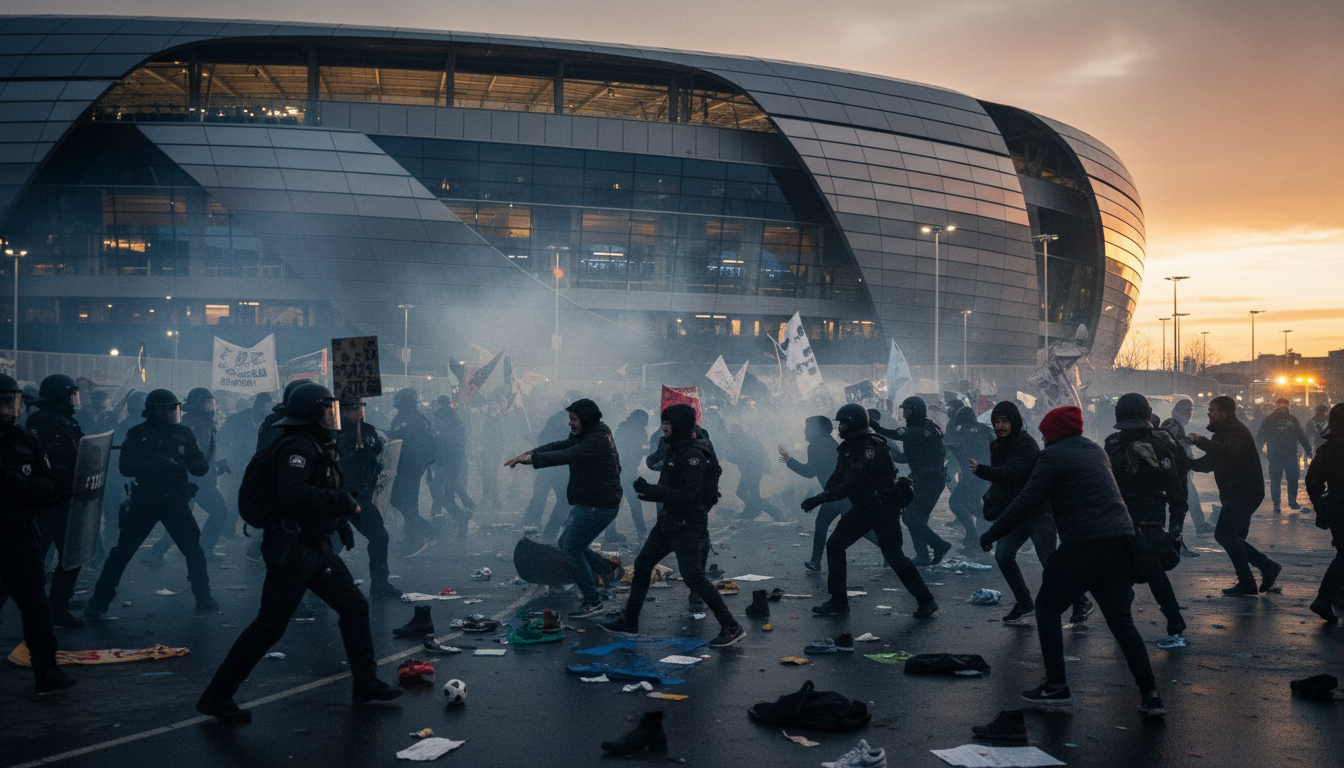
Amnesty warns 2026 World Cup could become a stage for repression amid human rights concerns
Amnesty warns 2026 World Cup could become a ‘stage for repression’, flagging risks to fans, players, journalists and communities across North America.


Amnesty International has issued a stark warning that the 2026 World Cup, staged across the United States, Canada and Mexico, risks becoming a "stage for repression" unless concrete safeguards are implemented. The London-based rights organisation says its report identifies significant threats to fans, players, journalists, workers and local communities that could arise as the tournament unfolds. FIFA has pledged a tournament where everyone “feels safe, included and free to exercise their rights,” language that Amnesty says stands in sharp contrast to conditions on the ground in several host locations.
Amnesty report flags risks for fans, players and communities
The 80-page report by Amnesty International catalogues a range of scenarios in which matchday security measures, emergency powers and law enforcement activity could curtail civil liberties. The organisation warns that heavy-handed policing, restrictions on peaceful protest and intensified migration enforcement could affect thousands of people involved directly and indirectly with the tournament. Amnesty frames these outcomes not as hypothetical worst cases but as foreseeable consequences unless authorities and tournament organisers adopt binding accountability mechanisms.
Amnesty’s report, titled "Humanity Must Win," draws on interviews, legal analysis and prior precedents from large sporting events to map where harms are most likely to occur. It stresses that harms are not evenly distributed, and that migrant workers, transient fans, journalists covering protests and long-standing community groups around stadiums may face heightened vulnerability. The report urges host governments and FIFA to implement rights-respecting plans that go beyond general assurances and create enforceable protections.
United States described as facing a ‘human rights emergency’
Amnesty singles out the United States as a focal point of concern, describing conditions there in unusually forceful terms and citing recent enforcement practices that it says raise risks for matchgoers and communities. The organisation highlights increased immigration enforcement actions, including mass deportations and operations described as “paramilitary-style,” as factors that could intersect with World Cup security plans. Amnesty argues that these practices create a chilling environment for undocumented residents and others who might otherwise participate in or observe tournament-related activities.
The report notes that the United States will host the majority of fixtures, a factor Amnesty says increases the potential scope of harms if enforcement and security practices are not carefully constrained. It references public statements from U.S. enforcement officials indicating an elevated operational role during the tournament, including comments that the immigration agency would be “a key part of the overall security apparatus for the World Cup.” Amnesty interprets such declarations as signals that migration enforcement could be integrated with public-order policing in ways that threaten civil liberties.
FIFA’s pledge of safety met with skepticism
FIFA has repeatedly stated that the tournament will be safe and inclusive, promising an environment in which people are free to exercise their rights. Human rights advocates say those assurances are important but insufficient unless FIFA attaches clear, enforceable conditions to host agreements and provides robust monitoring. Amnesty and allied groups call for FIFA to use its leverage over host governments to secure legal guarantees that protect freedom of expression, assembly and movement during the event.
Observers note that past major events have produced mixed results when organisers relied on voluntary commitments from host authorities rather than binding obligations. Amnesty recommends that FIFA require detailed rights-protection plans, independent monitoring teams, and transparent reporting channels with the power to document and address abuses as they occur. Without such measures, critics say, the federation’s public statements risk amounting to rhetoric rather than practical protection for vulnerable groups.
Security planning, enforcement presence and civil liberties concerns
Tournament security planning is inherently complex, involving national, local and private authorities, and in 2026 it will span three sovereign jurisdictions with differing legal frameworks. Amnesty warns that this complexity can produce gaps in accountability, particularly where temporary security measures or emergency powers are invoked. The organisation underscores the importance of pre-established limits on detentions, searches and surveillance that are consistent with international human rights law.
Civil liberties groups have also highlighted the interplay between crowd-control tactics and the rights of journalists and protesters, who often rely on proximity to stadiums and public spaces to cover and comment on events. Amnesty cautions that broad or vaguely defined security zones can be used to curtail peaceful protest or to restrict independent reporting. The organisation urges host authorities to adopt narrowly tailored security measures that include non-discriminatory guidance for on-the-ground officers and clear avenues for redress.
Advocates call for binding safeguards and independent monitoring
Human rights organisations and local advocacy groups are calling for a set of concrete, enforceable safeguards to be adopted before the tournament begins. Key demands include legally binding host-city agreements that specify limits on immigration enforcement at match sites, independent oversight mechanisms with access to stadiums and detention sites, and transparent complaint processes for rights violations. Advocates also want mandatory human rights training for private security personnel and public officials engaged in World Cup security operations.
Several civil society actors are seeking commitments from FIFA to make funding and hosting rights contingent on demonstrable human rights protections, and to allow independent observers unfettered access throughout the tournament. They argue that these steps would move protections from aspirational statements to practical measures that can prevent abuses and provide victims with avenues for accountability. Governments, tournament organisers and FIFA face a narrow window to negotiate and implement those safeguards before the first whistle blows.
The spotlight on rights risks has already prompted discussions between national authorities, local organisers and rights groups in multiple host cities. Some municipalities are exploring memoranda of understanding that outline roles and responsibilities, while human rights monitors have proposed sampling frameworks to assess crowd-management practices during matches. Yet advocates caution that voluntary memoranda without enforcement teeth will not substitute for binding, independently monitored protections.
Civil society groups also emphasize the need for clear communication to fans and workers about their rights during the tournament, including accessible guidance on how to seek help if they face discrimination, detention or violence. Language access, legal aid hotlines and partnerships with community organizations are among the practical measures organisations say could mitigate harm. These initiatives, advocates argue, are essential to complement systemic safeguards and ensure that rights protections function in practice as well as on paper.
Amid growing scrutiny, FIFA and host authorities can still narrow the gap between public assurances and enforceable protections by committing to independent monitoring, transparent operational plans and specific limits on enforcement actions at football venues. Those steps would respond to Amnesty’s central concern that without rigorous safeguards the 2026 World Cup risks exposing vulnerable people to unnecessary harm. The coming months will test whether organisers and governments translate rhetoric into the concrete protections required for a rights-respecting tournament.