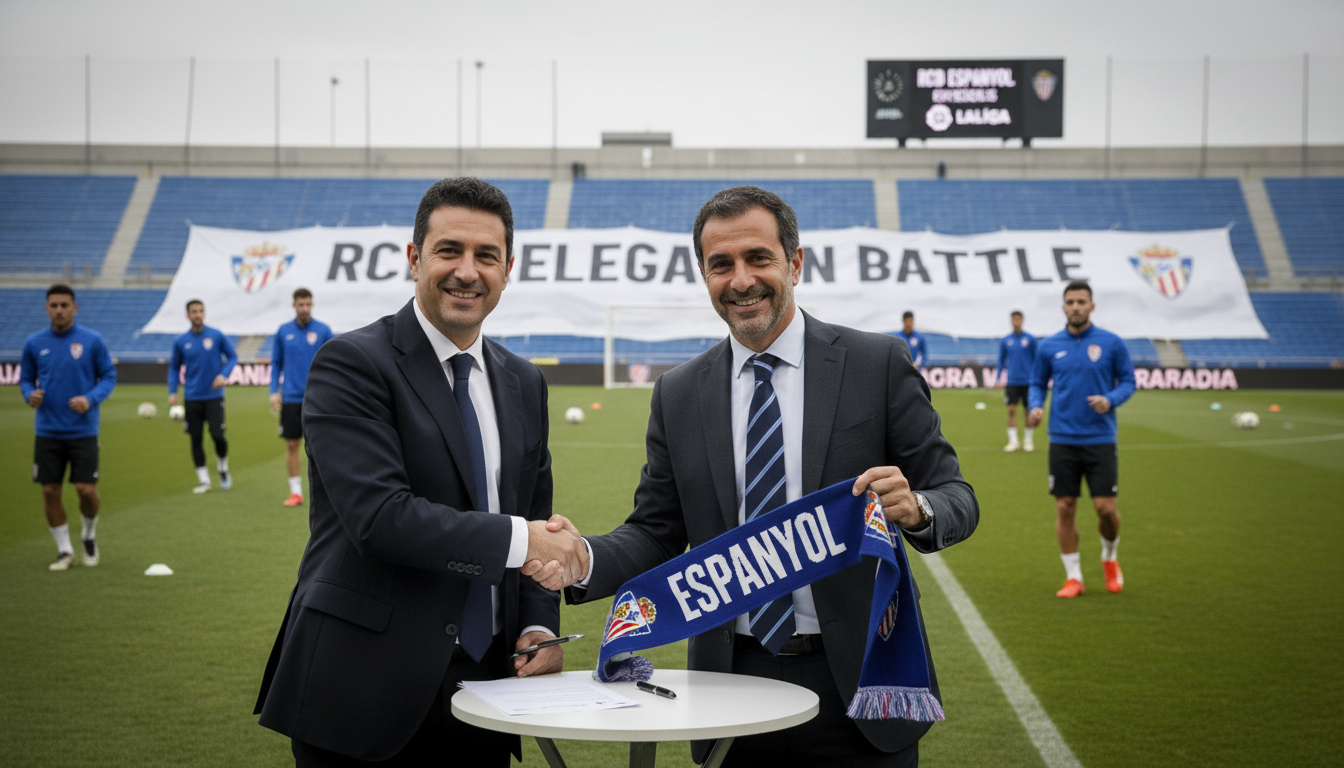
Monchi appointed Espanyol sporting director as club reshapes recruitment and scouting
Monchi appointed RCD Espanyol sporting director, tasked with leading the club’s sporting strategy as the Pericos fight to secure LaLiga status and rebuild.


Ramón Rodríguez Verdejo, widely known as Monchi, has been named director general deportivo of RCD Espanyol, a move the club confirmed ahead of the LaLiga run-in on May 11, 2026. The appointment places Monchi at the head of Espanyol’s sporting area and signals a major restructuring of the club’s football operations. The news arrives while the Pericos remain engaged in a fight to consolidate their top-flight position, and the club has made clear existing executive directors will report into Monchi’s new remit. This appointment introduces one of Europe’s most experienced sporting executives into a club seeking greater stability and a strategic overhaul.
Club statement and immediate responsibilities
RCD Espanyol issued a formal statement announcing the appointment and describing Monchi as a figure of "recognised prestige" in European football. The club said he will lead the Sporting Area and that current heads of sport will retain their operational roles while reporting to the new director general deportivo.
The announcement framed Monchi’s arrival as a reinforcement of the club’s structure rather than an overnight overhaul of personnel. Espanyol’s leadership emphasized continuity alongside fresh strategic direction under Monchi’s oversight as the organisation seeks to balance short-term survival with long-term planning.
Monchi’s career profile and scouting reputation
Monchi, born in San Fernando, Cádiz in 1968, built his reputation over decades as Sevilla’s influential sporting director, where his recruitment and scouting model produced sustained success. He is widely credited with establishing a vast scouting network and a data-informed recruitment pipeline that converted modest transfer fees into significant on-field returns and resale profits.
At Sevilla, Monchi’s methodology combined exhaustive scouting, player profiling, and a willingness to develop talent from outside the elite radar. His track record includes multiple Europa League triumphs and the elevation of lesser-known signings into assets with wider market value, experience that Espanyol will expect to deploy in pursuit of both stability and growth.
Sevilla links and speculation over a return
The appointment closes the door on ongoing speculation linking Monchi to a possible return to Sevilla, a narrative that intensified amid talk of a broader project potentially involving Sergio Ramos. Sources close to the negotiations suggested Monchi’s decision was "very meditated," a phrase he used when communicating directly with supporters, indicating the conclusion of a deliberate process.
While ties to Sevilla remain part of Monchi’s career story, Espanyol’s timely confirmation prevents further conjecture about his short-term future. By securing his services before the season’s conclusion, the Pericos have undercut the chances of a late-stage reversal and signalled their intent to move quickly under his guidance.
Alan Pace’s reaction and the club’s strategic aims
Espanyol chairman Alan Pace publicly welcomed Monchi and underlined the club’s eagerness to commence collaborative work. Pace framed the hire as a strategic investment in the club’s football infrastructure and a necessary step toward enhancing competitiveness and financial sustainability.
The club has been explicit that Monchi will assume broad authority over transfers, scouting, and the sporting roadmap, reporting directly to the board. That delegation of powers suggests Espanyol is preparing to give the sporting directorroom to implement both immediate reinforcements and a multi-year plan centered on recruitment and academy development.
Immediate challenges: relegation fight and summer window
Monchi assumes the role while Espanyol is still embroiled in the fight to preserve their LaLiga status, a contextual constraint that will shape his short-term priorities. The club will need to balance urgent squad needs before the end of the campaign with preparations for the upcoming summer transfer window.
Operationally, Monchi’s first tasks will likely include an appraisal of the current squad, identification of immediate targets, and reinforcement of scouting intelligence. Equally important will be stabilising morale and ensuring the coaching staff have clarity on recruitment objectives that align with survival and subsequent consolidation.
Long-term remit: transfers, youth pathway and financial strategy
Beyond the immediate survival imperative, Monchi’s hiring points to a long-term remit that includes professionalising Espanyol’s transfer strategy, strengthening the academy-to-first-team pathway, and improving the club’s position in player trading markets. His prior model at Sevilla emphasized signing undervalued talent, enhancing player value, and reinvesting proceeds into sustainable growth.
Espanyol can expect Monchi to prioritise data integration with scouting, expand the club’s talent network across markets, and create clearer succession plans for key positions. The structural change — current sporting directors reporting into a single figure — aims to centralise decision-making and reduce duplication, which could yield sharper recruitment decisions in future windows.
Expectations from supporters and market implications
Supporters are likely to view Monchi’s appointment as a statement of ambition, given his reputation for astute signings and commercial prudence. The transfer market response will be closely watched, with agents and clubs assessing Espanyol’s new negotiating posture under a director known for extracting value.
Market implications extend to potential player sales, contract renewals, and the club’s capacity to open new scouting territories. If Monchi replicates elements of his Sevilla blueprint, Espanyol could see a shift toward identifying lower-profile prospects with high development potential, while selectively targeting established players to provide immediate stability.
Espanyol’s board has set the terms of this initiative by clarifying the reporting lines and retaining existing operational leads to ensure continuity. This layered approach allows Monchi to institute strategic changes without creating immediate upheaval, while still providing him the authority to reshape recruitment and long-term planning.
Monchi’s public message to supporters described the move as a considered decision and acknowledged the demands of the new role. His tone suggested an awareness of the dual pressures at play: securing the club’s place in LaLiga and building the structures necessary for sustained competitiveness.
The coming weeks will test how quickly Monchi can assess the squad and influence short-term outcomes, but his mandate is clearly broader than a single transfer window. Espanyol’s decision to name him now indicates a desire to give him runway to implement systemic changes from the outset.
This appointment will also be observed by LaLiga rivals, who will gauge how Espanyol’s recruitment and player development posture evolves. Clubs with similar profiles often benefit from a coherent sporting strategy that combines an active scouting base with financial discipline, and Monchi’s arrival signals Espanyol’s commitment to that model.
The club’s administrative choice to keep existing sport directors in their roles under Monchi’s leadership seeks to blend institutional memory with fresh oversight. That balance could accelerate decision-making while limiting disruptions to scouting continuity and player relationships.
In the short term, fans and pundits will track any shifts in transfer policy and the first moves orchestrated by the new director. In the medium term, success for Monchi will be measured by a clearer recruitment identity, improved player development outcomes, and measurable progress in squad value management.
Espanyol has positioned this appointment as both a tactical and strategic endeavour, responding to an immediate competitive context while laying foundations for a more robust sporting operation. Monchi’s profile suggests he will pursue a plan that integrates scouting breadth, analytical support, and a pragmatic approach to the market.
The next phase for RCD Espanyol will test the alignment between board ambitions, Monchi’s strategy, and on-field performance. If the club can blend short-term reinforcements with a coherent, longer-term transfer philosophy, the appointment could mark a pivotal turning point in the Pericos’ modern trajectory.
For supporters, the hope is that Monchi’s arrival brings clarity, smarter recruitment, and a renewed emphasis on developing players who can compete consistently in LaLiga. The club has announced the change with urgency and intent, and the coming months will reveal how effectively that intent is converted into results.