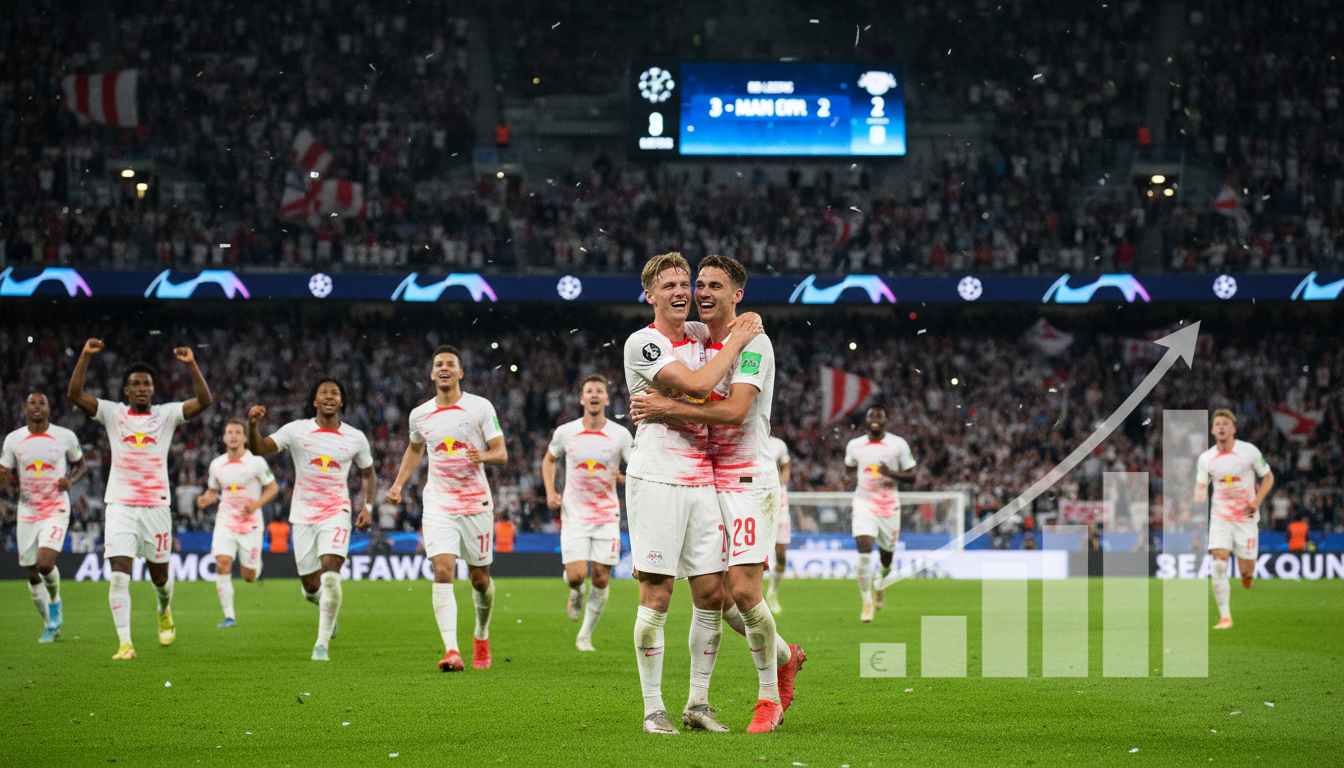
RB Leipzig transfer plan: Champions League cash lowers summer sales target to €113m
RB Leipzig transfer plan: Champions League income reduces summer sale requirement to €113m, prompting potential exits and targeted signings ahead of 2026/27.


RB Leipzig have confirmed a place in next season’s Champions League and that qualification has materially altered the club’s summer budgeting, with the RB Leipzig transfer plan now centered on raising roughly €113m in player sales after UEFA prize money is credited. The Champions League berth is expected to bring approximately €60m in revenue, softening the need for a previously projected €200m sales haul and allowing sporting directors more flexibility in squad construction. Club executives face the twin task of converting marketable assets into funds while preserving a competitive core capable of handling European and domestic demands.
Champions League qualification changes the financial equation
Qualification for the Champions League has delivered a significant financial reprieve for Leipzig and is central to their transfer strategy going into the summer window. The club anticipates around €60m from UEFA participation, a figure that reduces the immediate transfer-generated income required to balance next season’s books. That windfall means Leipzig are now targeting about €113m in outgoing transfer value rather than the much larger sum they would have needed without European football.
This altered threshold affects timing and the profile of prospective departures, since players with high market demand can still be retained longer to protect sporting continuity. Sporting and financial directors have therefore entered a phase of more precise valuation work, weighing offers against the club’s competitive ambitions and the need to deliver a clean set of accounts.
Names now under consideration for transfer departures
Several players have emerged as probable candidates to help meet the sales target, with at least one high-value exit potentially covering a large portion of the required funds. Castello Lukeba sits high on the list because of a reported release clause near €80m, a figure that would materially close the gap if activated. Meanwhile, Arthur Vermeeren, Lutsharel Geertruida and Eljif Elmas are also being assessed as sellable assets, having spent the 2025/26 season out on loan.
Leipzig’s strategy appears to prioritize selling players who are surplus to immediate tactical plans or who have lower reintegration prospects following their loan spells. The club must balance extracting maximum fees with the risk of weakening squad depth, particularly across positions where injuries or rotation could be expected during a congested calendar.
Recent arrivals and planned signings shape squad outlook
While planning for departures, Leipzig have already advanced their recruitment with confirmed signings aimed at shoring up the squad for continental competition. The arrivals of Rocco Reitz from Borussia Mönchengladbach and Abdoul Koné from Reims reflect a targeted approach to add depth and positional versatility. Both signings are interpreted as part of a broader rebuild tailored to the demands of Champions League group stages and a busy Bundesliga schedule.
In addition to permanent deals, the club is pursuing loan solutions that include obligations to buy, displaying caution in immediate cash layout while securing future options. One priority is to bring Brajan Gruda back on loan from Brighton with an obligation to purchase, a structure that would spread costs and lock in a promising talent for the medium term.
How sales and signings could affect competitiveness
The tension between financial rectitude and on-field ambitions will define Leipzig’s summer decisions, with sporting success in 2026/27 depending on astute business as much as coaching. Selling a marquee defender such as Lukeba would generate substantial funds but would necessitate swift reinvestment or reliance on newly signed alternatives to avoid weakening the backline. Conversely, retaining core figures while achieving the €113m sale target through multiple smaller deals will test the club’s scouting and negotiation apparatus.
European competition amplifies the need for squad rotation and depth, meaning that short-term financial gains cannot come at the expense of long-term sporting projects. The club’s recruitment of multi-functional players suggests leadership is attempting to marry fiscal discipline with tactical pragmatism.
Market dynamics and timing of transfers
Timing will play a decisive role in whether Leipzig converts their roster into the necessary revenue without impairing next season’s prospects. The club must navigate a transfer market where demand, purchase clauses and negotiation leverage vary by player and destination. A buyer activating a known release clause would simplify matters, but most deals will require market-driven bargaining that could stretch into late July or August.
Leipzig are also operating within broader market constraints, including buyer budgets after Euro 2024-era inflation and evolving squad priorities across Europe. That environment favors strategic sales — for example, offloading players whose loan performances have increased visibility — and creative deal structures that include sell-on clauses, add-ons or staggered payments to maximize realized value.
Potential scenarios and strategic priorities for sporting directors
Within Leipzig’s executive suite, several strategic scenarios are likely under consideration, from a single marquee sale to a series of calculated exits combined with conditional purchases. If the club secures one large fee, leadership can pursue targeted reinforcements without compromising the wage structure. Alternatively, a distributed-sale approach would require identifying multiple clubs ready to pay premium fees for younger talents and recent loanees.
Sporting directors must prioritize positions where depth is thin, protect emerging talents from untimely sales, and ensure any income targets do not derail a season in which both domestic and European demands are higher. The preferred outcome for Leipzig would be to meet the €113m objective while maintaining a balanced squad that reflects the club’s pressing tactical needs.
Leipzig will also factor in longer-term planning, such as aligning sales with the club’s player development pathway and the timing of contract expirations. Those considerations influence whether a club accepts a near-term offer or waits for a more lucrative proposal later in the window.
A pragmatic transfer plan will likely combine immediate sales that are agreed early with contingency carve-outs for late-window opportunities. Maintaining negotiation discipline will be essential, as premature discounts could create financial shortfalls that harm both sporting and fiscal goals.
The club’s ability to execute a blended strategy of smart departures and disciplined acquisitions will determine whether Leipzig can remain competitive in the Bundesliga and the Champions League without compromising financial stability.
Final paragraph
Leipzig enter the summer window with Champions League qualification providing breathing space, but they still face a sizeable task to raise roughly €113m through the transfer market while preparing a squad capable of competing on multiple fronts.