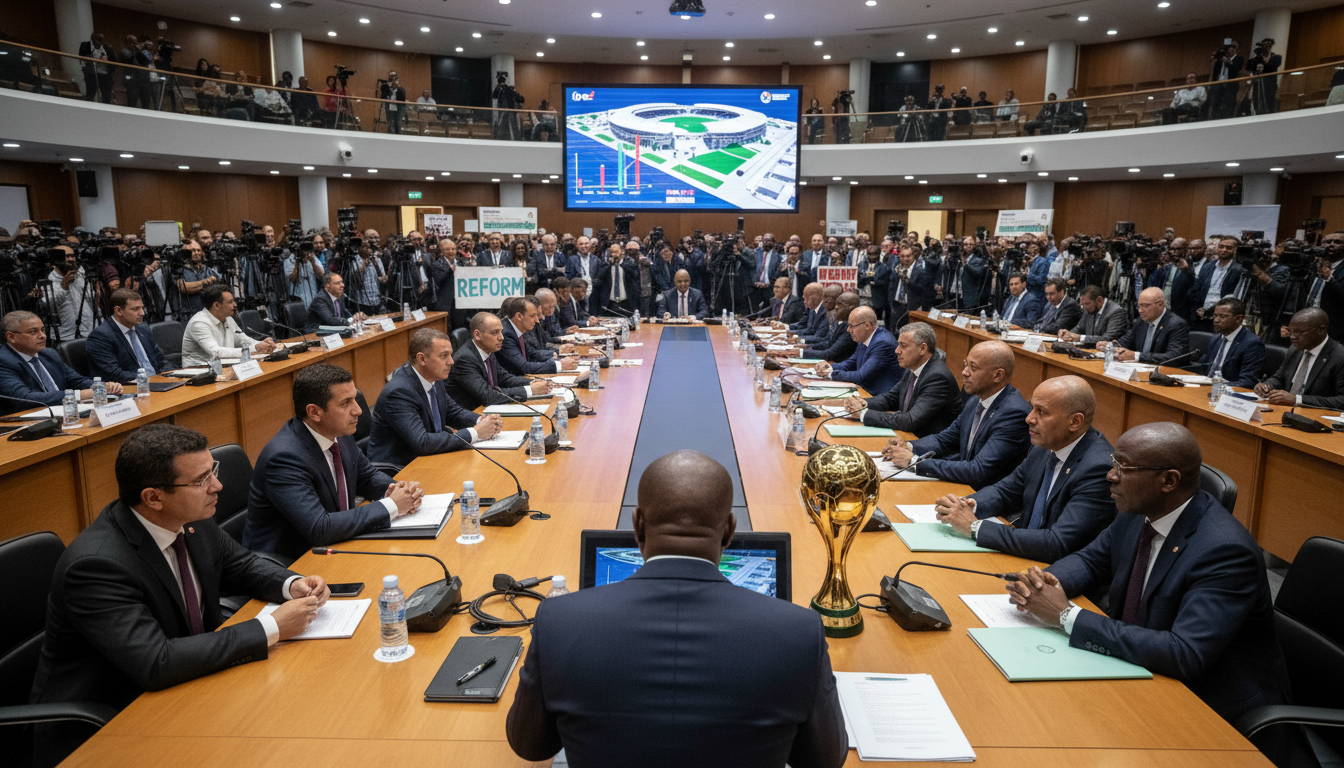
CAF says deficiencies from 2025 Africa Cup of Nations final have been addressed
CAF president Patrice Motsepe says reforms and new regulations have been introduced to prevent a repeat of the chaotic 2025 Africa Cup of Nations final in Morocco. (bbc.co.uk)


Summary of Motsepe’s statement
Patrice Motsepe told BBC Sport Africa that the Confederation of African Football has identified and begun to correct the "deficiencies" that contributed to the troubled end of the 2025 Africa Cup of Nations final. He said CAF has worked to restore confidence in refereeing and VAR systems and has introduced new laws and regulations to reduce the risk of similar incidents. (bbc.co.uk)
Motsepe framed the reforms as part of a broader effort to protect the integrity of competitions and rebuild trust among players, federations and supporters. He said the changes were informed by formal reviews of the final and by recommendations from CAF’s refereeing and disciplinary bodies. (bbc.co.uk)
How the final unfolded in Rabat
The contest between Senegal and hosts Morocco at the Prince Moulay Abdellah Stadium on 18 January turned into a flashpoint after a sequence of controversial decisions late in the match. Senegal left the pitch in protest after a VAR-reviewed penalty was awarded to Morocco in stoppage time of a match that had been goalless at full time. The on-field uproar and subsequent events left the final clouded by confusion and physical confrontations in the stadium. (en.wikipedia.org)
The match had already been tense: a late disallowed goal for Senegal and the contentious VAR intervention triggered the players’ protest and the walk-off. Stadium security clashed with supporters, and images from the stands and pitch perimeter showed chaotic scenes that rapidly became the defining memory of the tournament’s climax. (en.wikipedia.org)
CAF’s disciplinary decision and the title change
Two months after the final, CAF’s Appeal Board ruled that Senegal’s departure from the field constituted a forfeit under tournament regulations and therefore overturned the on-field result, awarding a 3-0 victory to Morocco and declaring the hosts the 2025 Africa Cup of Nations champions. The ruling and the subsequent presentation of the trophy to Morocco provoked immediate controversy and widespread criticism. (bbc.co.uk)
CAF said its decision followed the application of Article 84 of the AFCON regulations and the legal framework governing forfeited matches. The ruling was framed by CAF as an enforcement of competition rules rather than a reassessment of the refereeing calls on the night. The move nonetheless prompted questions about proportionality, timing and the confederation’s handling of high-stakes disputes. (bbc.co.uk)
Senegal’s legal response and the CAS appeal
The Senegalese Football Federation promptly exercised its right to appeal and lodged a case with the Court of Arbitration for Sport in Lausanne, seeking to overturn CAF’s decision and to have the on-field result – Senegal’s extra-time victory – reinstated. CAS has registered the appeal and the legal process is now the primary venue for resolving which nation will be officially recognized as the tournament winner. (en.hespress.com)
Legal counsel for the FSF has argued the appeal will focus on the interpretation of CAF regulations and the procedures followed by the Appeal Board, asserting that the federation intends to exhaust available judicial remedies to defend what it calls the sporting truth of the final. CAF has said it will respect and implement whatever decision emerges from CAS. (en.hespress.com)
Public and pundit reaction to the ruling
The decision to strip Senegal of the title sparked sharp criticism from commentators and former players, with some calling the outcome an embarrassment for CAF and African football generally. Pundits on international broadcasts described the confederation’s handling of the dispute as damaging to the tournament’s reputation and to efforts to professionalize competition governance across the continent. (witness.co.za)
The backlash was not limited to media commentary. Senegal’s federation publicly denounced the ruling as unfair and vowed to pursue its appeal, while sections of the football community called for independent reviews into both the final’s management and CAF’s appeals procedures. The episode has become a focal point for broader debates about transparency, accountability and due process in African football governance. (witness.co.za)
Security, ‘towelgate’ and stadium management failings
Beyond the on-field refereeing issues, the final was marred by incidents at the touchline and in the stands that exposed weaknesses in stadium operations and stewarding. So-called “towelgate” — repeated attempts by ballboys and others to remove the Senegal goalkeeper’s towel — prompted a disciplinary fine against the Moroccan federation and drew heavy criticism for unsportsmanlike behavior in a match that required careful crowd and perimeter management. (bbc.co.uk)
CAF has singled out such non-technical failures in its internal reviews, saying that better steward training, clearer ballboy protocols and stricter enforcement of host responsibilities form part of the remedial measures now being implemented. Motsepe indicated that restoring confidence in matchday operations is as important as technical fixes to refereeing and VAR. (bbc.co.uk)
What the reforms look like and their potential impact
According to Motsepe, the reforms include changes to refereeing oversight, improved VAR protocols and new regulations intended to tighten the responsibilities of hosts and match officials. CAF officials have also discussed enhanced reporting mechanisms, faster internal reviews of controversial decisions and stiffer sanctions for breaches of conduct by ballboys, stadium staff and security services. (bbc.co.uk)
The confederation’s stated aim is to ensure transparency and consistency so that the integrity of competition results is not undermined by procedural lapses. Observers caution, however, that the practical impact of rule changes will depend on enforcement and the willingness of member federations and tournament hosts to accept external scrutiny. The CAS appeal now adds a juridical layer to the question of how far reforms can insulate future tournaments from reputational damage. (bbc.co.uk)
Senegal’s formal challenge and the global attention it has drawn mean that CAF’s steps will be judged both on paper and in practice, with the governing body under pressure to demonstrate measurable improvements before the next major competitions. Motsepe’s diplomatic visits to both Senegal and Morocco have been presented as part of that effort to rebuild relationships and calm tensions between stakeholders. (bbc.co.uk)
CAF says it will accept and implement whatever ruling the Court of Arbitration for Sport issues, while continuing its internal reforms and disciplinary processes. The next months will determine whether the confederation can translate policy changes into restored credibility among national federations, players and supporters. (en.hespress.com)
The legal dispute and the governance debate it has triggered are likely to shape conversations at the highest levels of African football for the rest of the year. CAF’s ability to manage the fallout swiftly and transparently will be central to whether the 2025 Africa Cup of Nations is remembered as a learning moment or as a lasting reputational setback.