Uli Hoeneß Names His Germany XI for the 2026 World Cup
Hoeneß picks a 4-2-3-1 lineup led by Manuel Neuer and a Kimmich–Pavlović double pivot.

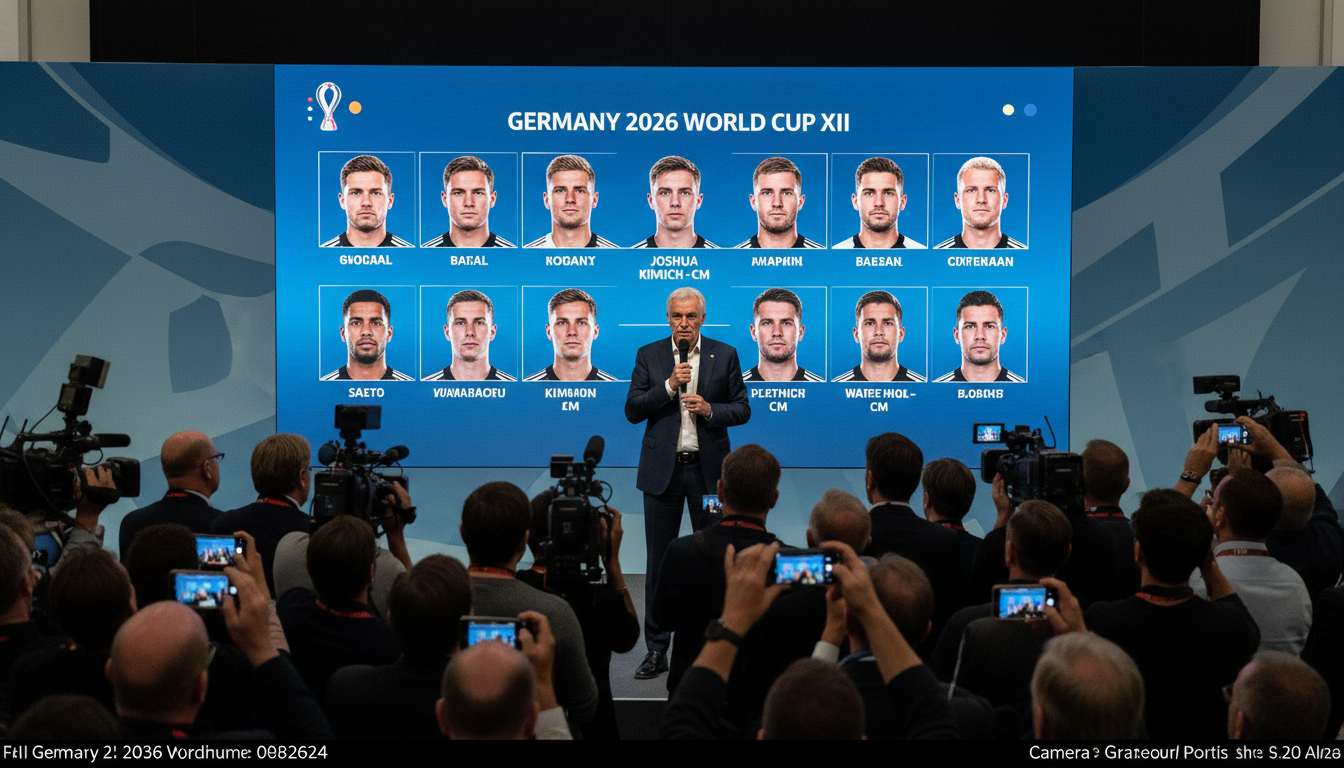
Uli Hoeneß has unveiled his personal Germany XI for the 2026 World Cup, setting out a 4-2-3-1 that retains Manuel Neuer in goal and places Joshua Kimmich in a central midfield role. The selection — which Hoeneß offered after the DFB squad announcement — puts a premium on midfield control and attacking creativity while making a number of unconventional defensive and forward choices. Hoeneß’s lineup places Aleksandar Pavlović alongside Kimmich, names Nathaniel Brown at left-back, and prefers Nick Woltemade as the lone striker over figures such as Kai Havertz.
Hoeneß’s XI and formation breakdown
Uli Hoeneß’s starting eleven is presented in a 4-2-3-1 shape with Neuer; Raum, Tah, Schlotterbeck, Brown across the back; Kimmich and Pavlović as the double pivot; Leweling, Wirtz and Musiala behind Woltemade. The selection emphasizes a stable defensive spine and a compact midfield designed to shield the center-backs and supply the attacking trio. Hoeneß explicitly prioritizes positional fit and balance, choosing players he believes will perform best within his chosen system. The formation reflects a tactical focus on midfield control and fluid attacking transitions rather than pure wide overloads.
Rationale for moving Joshua Kimmich into midfield
Hoeneß insists Joshua Kimmich is most effective when deployed in central midfield, where he can dictate tempo, break up play, and distribute under pressure. In Hoeneß’s view, Kimmich’s ball-winning ability and range of passing make him better suited to a number-six/box-to-box hybrid role than a full-back or an out-and-out defensive specialist. Pairing Kimmich with Aleksandar Pavlović is intended to offer both protection and vertical progression, with Pavlović providing defensive cover and the athletic profile to carry the ball forward. That pairing also frees the attacking trio to press and combine higher up the pitch while Kimmich orchestrates from slightly deeper positions.
Defensive configuration and goalkeeper continuity
Manuel Neuer remains Hoeneß’s choice between the sticks, signaling a preference for experience and sweep‑keeper leadership at the World Cup. The defensive backline includes Jonathan Tah and Nico Schlotterbeck as the central partnership, offering height and one-on-one defensive reliability. Hoeneß’s placement of David Raum at right-back is unconventional given the player’s left-sided pedigree, but the plan appears to prioritize midfield balance over natural full‑back orientation. Nathaniel Brown’s selection at left-back underscores Hoeneß’s interest in pace and offensive support from wide defensive positions.
Midfield balance and slotting Pavlović beside Kimmich
By insisting on Aleksandar Pavlović as Kimmich’s partner, Hoeneß prioritizes a double-pivot that can both retrieve possession and sustain forward momentum. Pavlović’s inclusion in the double-pivot is presented as a way to shore up defensive transitions while allowing Kimmich to assume more creative responsibilities. This approach seeks to prevent midfield overloads from opponents and to create a two-player shield in front of the center-backs. Hoeneß frames the pairing as the “best solution” for the team’s defensive midfield needs, emphasizing complementarity rather than individual star power.
Attacking midfield trio: experience and emerging talent
Hoeneß slots Jamie Leweling, Florian Wirtz and Jamal Musiala into the three attacking midfield positions, blending playmaking, creativity and directness. Wirtz and Musiala are positioned as the team’s two most reliable creative outlets, expected to unlock defenses with movement and incisive passing. Leweling’s selection — ahead of some established names — is justified, in Hoeneß’s view, by his readiness to start and his fit for the role in this formation. Hoeneß also referenced Leroy Sané and Lennart Karl, noting Sané’s quality but current dip in confidence and Karl’s need for further development before assuming a starting berth.
Striker choice and tactical fit for Kai Havertz and Nick Woltemade
In choosing Nick Woltemade as the central striker, Hoeneß favored a player he views as a more natural fit for a lone forward in a 4-2-3-1 than Kai Havertz. Hoeneß acknowledged Havertz’s qualities but argued Woltemade’s profile suits the formation better, offering a clearer focal point and a stronger positional instinct for leading the line. The selection indicates an emphasis on a forward who can occupy defenders, link with the supporting midfielders and press effectively from the front. This assessment suggests Hoeneß is willing to prioritize tactical cohesion over headline names when configuring his preferred starting lineup.
Potential tensions with Nagelsmann’s squad selection
Hoeneß’s public XI arrives shortly after Julian Nagelsmann named the official DFB squad for the tournament, and the differences underscore how selection debates persist ahead of the World Cup. Where Nagelsmann must weigh form, fitness and squad harmony across a larger roster, Hoeneß is offering a compressed eleven that reflects his tactical preferences and long-held views. That divergence is not uncommon in national-team discourse, but it does highlight the conversation around positional roles — specifically Kimmich’s deployment and the identity of the central striker. Whether Nagelsmann will entertain aspects of Hoeneß’s plan in training or match selection remains an open question as preparations continue.
Implications for team dynamics and tactical options
Hoeneß’s XI points toward a Germany side that would seek control through midfield structure while relying on versatile attackers to create and finish chances. The Kimmich–Pavlović axis would allow for patterned build-up play and protection of the back four, while the trio of Leweling, Wirtz and Musiala would be tasked with unlocking defenses through quick combinations and off-ball movement. Defensively, the selection of Brown and Raum as full-backs suggests a desire for balance between defensive solidity and support in wide channels. The plan offers Nagelsmann an identifiable blueprint for a possession-based approach with high pressing triggers from the front.
Uli Hoeneß’s public selection rekindles familiar debates about the balance between experience and in-form youth, between tactical conservatism and attacking freedom. The lineup places trusted veterans in key roles while bringing forward younger names who have impressed domestically and internationally. As Germany moves closer to the tournament, those debates will shift from speculation to practical tests in training camps and warm-up fixtures. For supporters and analysts, Hoeneß’s eleven provides a concrete frame for discussing how Germany might approach group-stage opponents and adapt through the knockout rounds.
The conversation sparked by Hoeneß’s choices will likely continue in public and within the DFB setup, as coaches weigh different priorities ahead of a major tournament. Ultimately, the starting eleven for Germany at the 2026 World Cup will be decided by form, fitness and tactical coherence over the coming weeks. Hoeneß’s selection offers one clear vision of how Germany could balance midfield control and attacking creativity, and it ensures that selection debates remain a central storyline in the national team’s World Cup build-up.