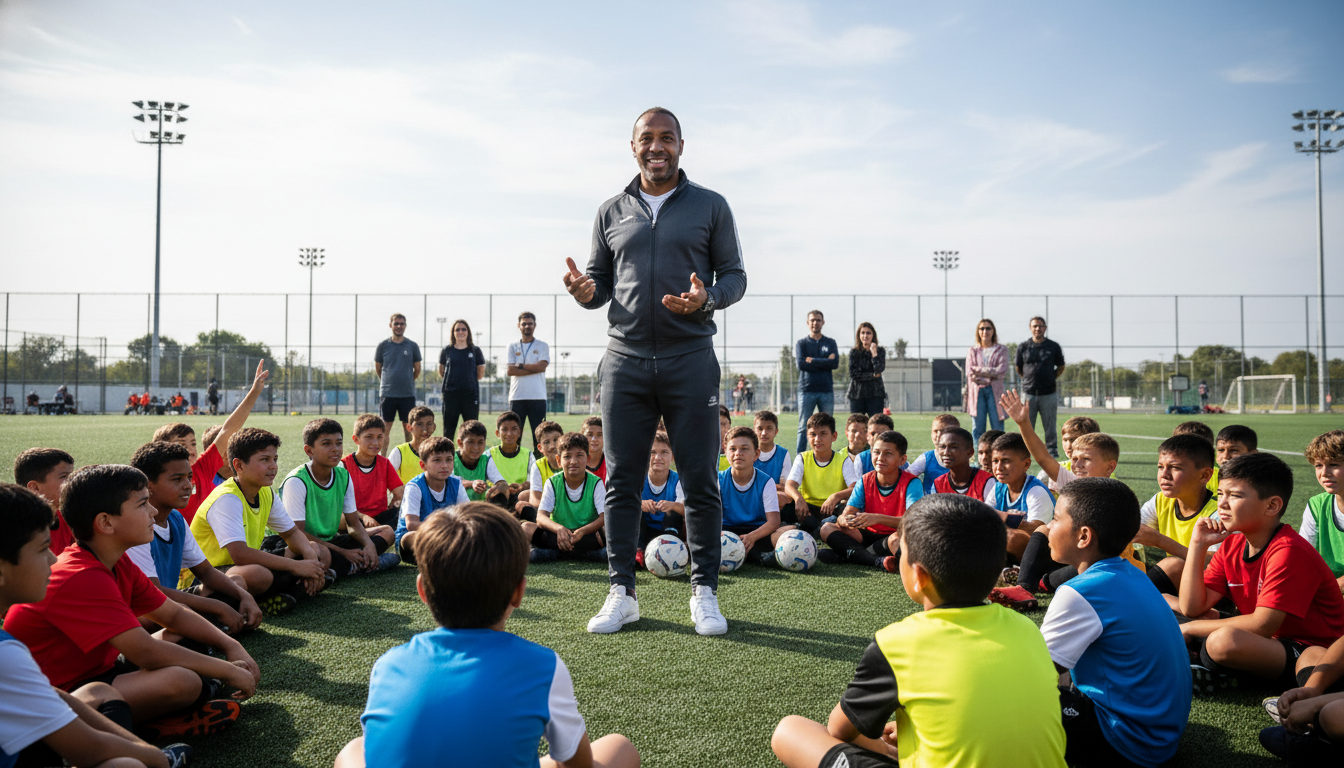
Thierry Henry tells young players to work hard and put others first in Hong Kong speech
Thierry Henry urged young people at a Hong Kong event to embrace relentless practice and team-first values as keys to success, sharing personal lessons from his playing career.


French football legend Thierry Henry used a high-profile appearance in Hong Kong to press a simple message: success requires daily work, humility and an eye on others. Speaking to some 600 pupils aged 10 to 18 at the Hong Kong Jockey Club Amphitheatre, Henry drew on memories from his time at Arsenal, Barcelona and with France to underscore how repetition and sacrifice shaped his career. He told the audience that confidence is earned through hours of failure and practice rather than natural talent alone. The talk formed part of his appearance at the UBS Asian Investment Conference and combined practical coaching insight with reflections on leadership and personal growth.
Henry’s pitch to the next generation
Henry framed his advice around two linked ideas: repetition and selflessness, arguing that both are essential for anyone seeking to excel. He told the gathered pupils that repeating drills until actions become instinctive is what separates moments of composure from flashes of luck. The former striker said he began as an inaccurate finisher but developed a relentless work ethic that allowed him to convert pressure into consistent performance.
By stressing the need to put others ahead of oneself, Henry pushed beyond technical instruction into character-building. He suggested that teams and communities flourish when individuals accept roles that benefit the collective, and he offered his own career as an example of learning to adapt and to value contribution over personal glory. That message resonated throughout his remarks and linked the practical side of training with broader life skills.
Details of the Hong Kong appearance
The event took place at the Hong Kong Jockey Club Amphitheatre where an audience of schoolchildren listened to Henry’s guidance and anecdotes. Organizers seated pupils aged 10 to 18 in a forum-style session that allowed Henry to speak directly to a diverse youth audience. The setting provided a platform for a former world-class player to translate elite experience into accessible, actionable advice for young people.
Henry’s appearance was scheduled alongside his participation at the UBS Asian Investment Conference, giving the message additional public reach. The combination of a business conference and a youth forum helped cast his remarks as part of a broader conversation on leadership and professional development. Attendees reported that his tone was candid and practical rather than promotional or ceremonial.
On repetition, failure and finishing
Henry emphasized that technical skill is built through repetition and resilience, not innate ability alone, describing how hours of “failure” preceded mastery. He recounted practicing in adverse conditions and working without constant coaching, which he said forged instincts that later appeared effortless on matchday. The former striker linked early mistakes with later composure, explaining that confidence in front of goal came after countless unsuccessful attempts.
He also highlighted the role of self-directed training, noting he would work on finishing with or without a goalkeeper present and in all weather conditions. That discipline, Henry said, created habits that produced reliability under pressure. For aspiring players, his prescription was practical: seek deliberate repetition, accept setbacks as learning moments, and commit to incremental improvement.
Advice on evolving and accepting guidance
Henry told pupils to remain open to advice and to evolve as they grow, framing adaptability as a professional necessity. He pointed out that careers change and that young people who refuse to learn or to accept feedback risk stagnation. The message stressed mental flexibility: listen to coaches, assimilate criticism and be willing to refine one’s approach over time.
Corollary to that was a call for humility: Henry said reflecting on oneself while also thinking of others had been the single most important lesson he had learned. He linked self-reflection with leadership, arguing that effective individuals regularly reassess their performance and priorities. That combination of introspection and outward focus, he suggested, underpins both sporting and non-sporting success.
Leadership lessons beyond the pitch
Throughout his remarks, Henry threaded leadership lessons appropriate for classrooms, dressing rooms and workplaces alike. He urged students to prioritize communal goals and to accept small, often unseen contributions that help collective outcomes. By framing leadership as service rather than status, he offered a model that places team success ahead of individual recognition.
He also touched on the relational dimension of leadership, encouraging young people to mentor peers and to seek mentors themselves. Henry presented leadership as an active practice—one that involves listening, taking responsibility and demonstrating consistency in both effort and ethics. Those behaviors, he said, create trust and sustainable achievement in any group.
Legacy, public image and ongoing influence
Henry’s stature as a prolific striker and public figure lends weight to his advice, but he repeatedly underlined the ordinary work behind extraordinary outcomes. He referenced his early inability to hit the target as a reminder that iconic moments are the product of routine labor. That transparency about struggle serves to demystify success and to make his guidance practical for a broad audience.
His presence at a major Asian conference and a youth forum underscores how current and retired athletes can shape public conversations on work, leadership and education. Henry’s remarks are likely to circulate among youth programs and coaching networks, reinforcing approaches that favor practice, resilience and team-first values. For many young listeners, the takeaways will be less about celebrity and more about replicable habits.
The photo circulating from the event — which recalls Henry’s celebrated international career — helps situate the talk within his wider legacy as a world champion and elite scorer. Yet the substance of his message remained focused on process, not reputation, and on steady application rather than short-term fame.
The Hong Kong session offered a compact syllabus for young athletes and students: work hard, accept guidance, serve others and persist through failure. Those simple tenets, repeated and illustrated by Henry’s personal story, provided a clear roadmap for anyone seeking sustained progress on or off the pitch.