Arsenal’s 2025/26 Premier League Triumph Unites Fans Across Continents
Arsenal’s 2025/26 Premier League triumph brought mass celebration and a rare moment of shared identity to supporters around the world, underscoring sport’s power to knit communities together. The club ended a 22-year wait to reclaim England’s top flight, and the victory resonated far beyond North London as fans gathered in living rooms, local pubs and public squares. The title run and its aftermath have sparked discussions about how football can foster belonging across racial, generational and geographical divides.


Arsenal Clinch Premier League After 22 Years
Arsenal secured the 2025/26 title following a decisive run of form in the closing months of the season. Tactical consistency, a deep squad and a string of key results against direct rivals combined to lift the Gunners back to the summit of English football. The triumph marks the end of a long-term project by the club’s management and coaching staff to build a sustainable, competitive team.
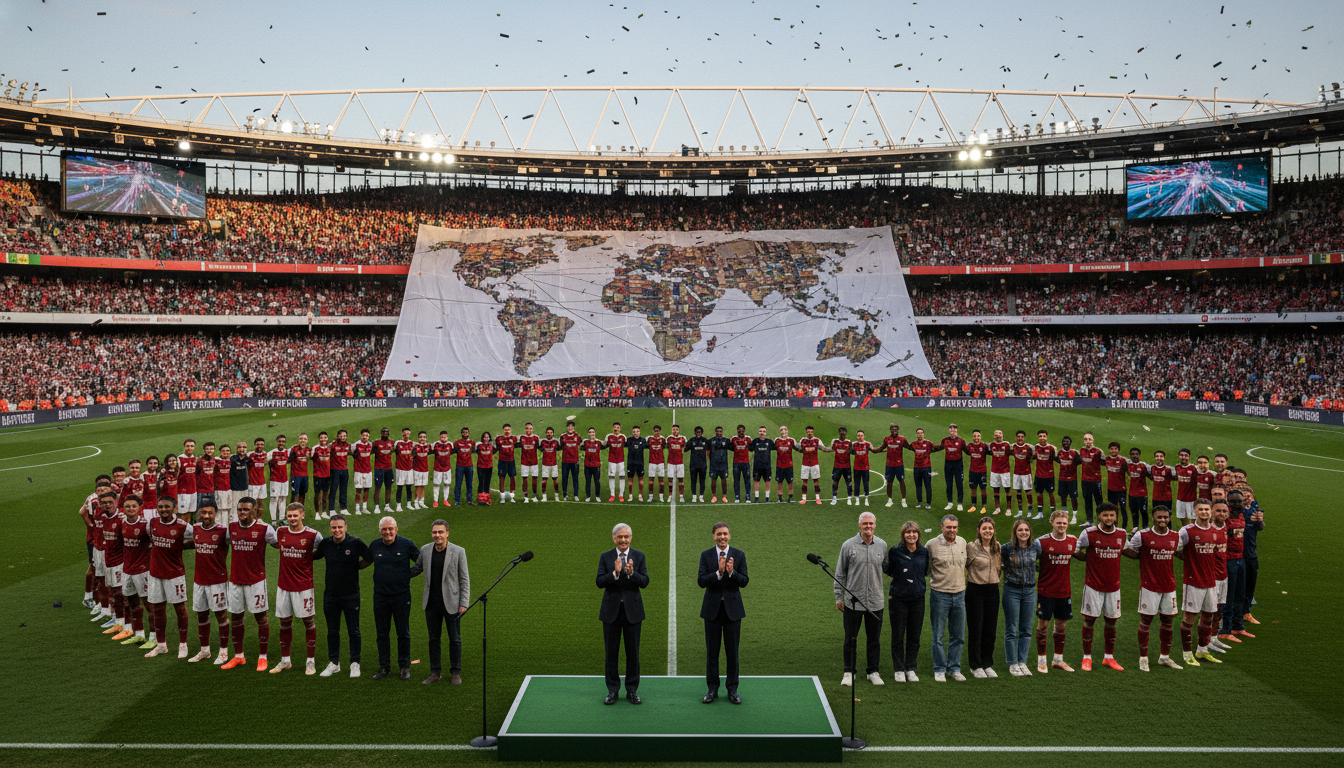
The final matchday brought a mixture of relief and jubilation among players and supporters alike. Scenes inside the stadium and across North London showed thousands of fans celebrating together, many of whom had waited decades for this moment. That collective release became a focal point for wider public gatherings in cities with substantial Arsenal followings.
Global Reactions and Mass Celebrations
Reactions to Arsenal’s title were immediate and global, with celebrations reported in capital cities from Lagos to Johannesburg and Nairobi to Kampala. Supporters’ groups organized watch parties and street celebrations that spilled into late hours, illustrating how the club’s appeal extends across continents. Social media amplified these moments, creating a shared visual record of worldwide jubilation.
Public celebrations often crossed cultural and class lines, bringing together people who might not otherwise meet. In many cities, local pubs and community centers became hubs for fans to mark the achievement and connect with other supporters. Municipal authorities in several locations coordinated crowd management and safety measures to accommodate large, spontaneous gatherings.
Sport as a Catalyst for Social Cohesion
Arsenal’s 2025/26 Premier League triumph has reignited conversations about sport’s unique capacity to promote social cohesion. Sporting success provides a common reference point that can bridge divisions of race, class and age, offering communities an accessible reason to celebrate together. That shared identity can translate into moments of cross-community interaction that are otherwise rare.
Researchers and community leaders point to the ritualistic and emotional elements of sport as key drivers of connection. Shared traditions—singing, chants, matchday rituals—create a vocabulary for belonging that is portable across borders. When those rituals are enacted in public spaces, they can temporarily transform social landscapes by creating networks of mutual recognition.
Historical Parallels with African Sporting Moments
Observers have drawn parallels between Arsenal’s title and other historical sporting moments that produced wider social effects. Notable examples include national or club successes that helped maintain public calm or foster unity in times of division. In several African nations, landmark football achievements have been credited with opening space for dialogue and collective relief after periods of tension.
Such parallels are not exact, but they highlight how sporting milestones can become touchstones in collective memory. The symbolism of victory often transcends the result itself, becoming a narrative for resilience, aspiration and shared pride. Those narratives are then carried forward by supporters and local institutions as part of community identity.
Club Initiatives and Local Community Impact
Arsenal’s leadership has emphasized community investment as part of the club’s broader strategy, linking on-field success with off-field social responsibility. Youth programs, local partnerships and outreach campaigns have expanded in recent years, creating pathways for fans and residents to engage with the club beyond matchdays. Officials argue that sustained community engagement helps solidify the social capital generated by sporting success.
Several local initiatives tied to the club are expected to gain momentum following the title, with planned expansions in grassroots coaching and educational partnerships. These programs aim to channel the energy of celebration into longer-term participation and opportunity, particularly for young people in underrepresented neighborhoods. Club representatives have indicated that the new era of success will be used as a platform to deepen those commitments.
Implications for Fan Culture and Identity
The title has prompted reflection within supporter groups about identity and the club’s role in the communities it represents. Longstanding fans described the victory as vindication of loyalty, while newer supporters interpreted it as the beginning of a generational shift. Across fan demographics, the result has renewed interest in traditions, local ties and charitable work tied to the club.
There are also practical implications for fan culture, including increased demand for matchday tickets, merchandise and organized travel. Supporter groups are negotiating with local authorities and transport providers to ensure safe and inclusive access to upcoming fixtures and celebratory events. At the same time, clubs and municipal officials are mindful of the need to balance commercial opportunities with the preservation of community-oriented fan practices.
This season’s success has also prompted broader institutions to consider organized sport in strategies for social engagement. Civic leaders and non-governmental organizations are evaluating how collaborative efforts with clubs can amplify outreach, using positive sporting moments as catalysts for investment in youth services and community infrastructure.
The emotional resonance of Arsenal’s 2025/26 Premier League triumph demonstrates how a single sporting campaign can ripple through societies in ways that extend beyond the scoreboard. Celebrations and initiatives sparked by the title have the potential to create durable social connections if sustained by policy, funding and community leadership.
Officials and club representatives have signaled intent to build on the momentum with concrete programs and partnerships. Whether that intent translates into long-term social gains will depend on coordination between the club, local authorities and community organizations. The coming months will be telling as programs are implemented and new patterns of participation are measured.
Arsenal’s success was the result of long-term planning, tactical evolution and contributions from a diverse group of players. The narrative of a 22-year journey ending in triumph will become part of club lore and is likely to influence how future squads approach the balance between ambition and continuity. For supporters across the globe, the victory will remain a shared reference point and a reminder of the community-building potential inherent in sport.
The response to the title underscores a wider truth about modern sport: victories can catalyze joy that crosses boundaries, but converting that energy into lasting social cohesion requires deliberate effort. The extent to which Arsenal’s 2025/26 Premier League triumph leads to sustained community benefits will depend on how clubs, civic institutions and supporters move from celebration to collaboration.