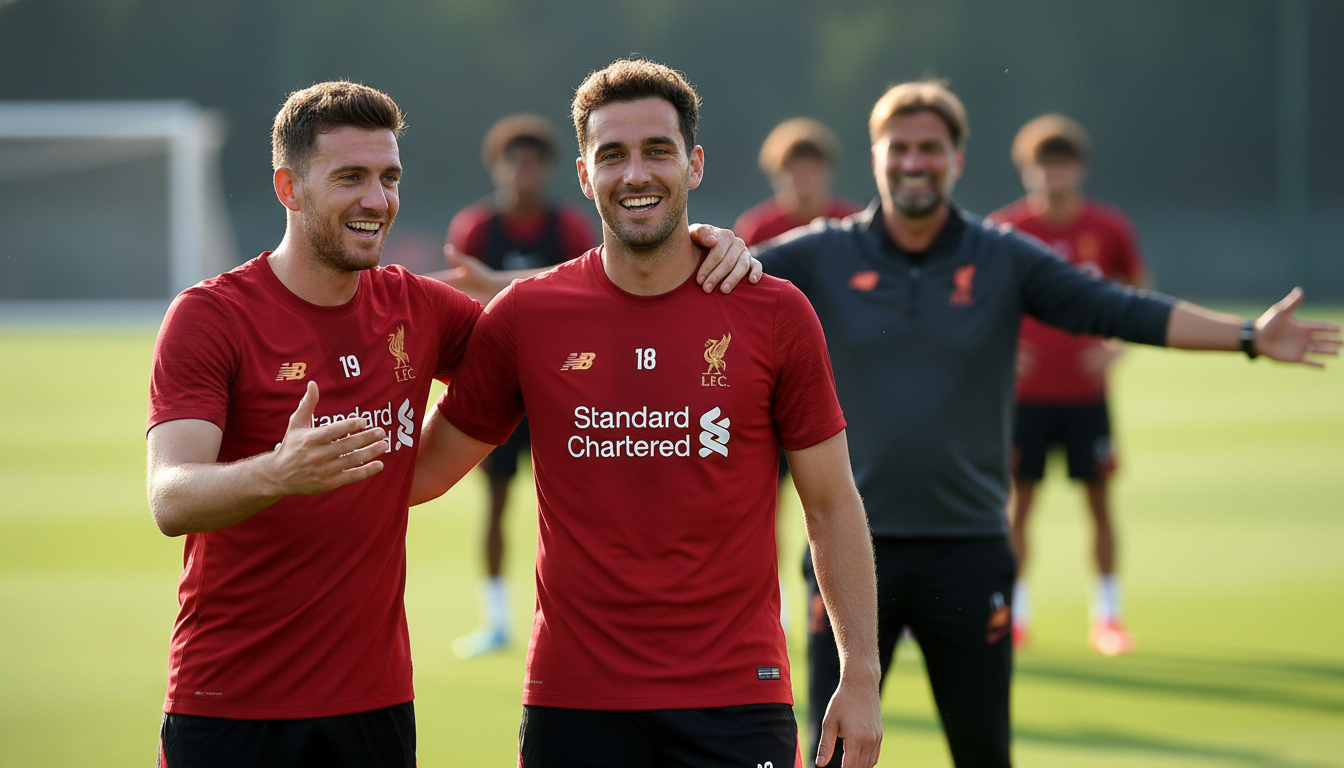
Jurgen Klopp’s Hugs: Robertson and Alisson Recall How the Manager’s Embrace Built Liverpool’s Spirit
Liverpool players Andy Robertson and Alisson Becker say Jurgen Klopp’s hugs created a special atmosphere that helped the team thrive.


Opening: Players describe Klopp’s "special" hugs
Liverpool full-back Andy Robertson and goalkeeper Alisson Becker have spoken publicly about the emotional side of life under manager Jurgen Klopp, highlighting the role of the manager’s trademark embrace in shaping team morale. Both players described the hugs as more than a moment of affection, saying they were a deliberate tool in building trust and positivity across the squad. Their comments, given in a recent broadcast segment about Liverpool’s Champions League campaign, underline how Klopp’s personal touch became part of the club’s identity.
Players reflect on Klopp’s intangible influence
Robertson and Alisson stressed that Klopp’s gestures were consistent and purposeful rather than spontaneous theater. They said the manager mixed intensity with warmth, delivering encouragement in moments of pressure and celebration alike. Teammates noticed that the physical gestures helped normalize vulnerability and reinforced a collective belief that the squad was united behind a shared goal.
The players framed the hugs as part of a wider approach to leadership that prioritized human connection alongside tactical preparation. They emphasized that Klopp’s methods created a daily environment in which players felt supported, accountable and motivated to give their best. This blend of emotional intelligence and competitive drive, Robertson and Alisson argued, contributed directly to Liverpool’s sustained success during Klopp’s tenure.
Robertson on connection and club culture
Andy Robertson outlined how Klopp’s interactions extended beyond the first team and into the club’s wider culture. He recounted that staff, academy players and support personnel all felt included by Klopp’s manner, which in turn fostered a sense of belonging at every level. Robertson said that when the manager made time for individuals, it signaled that each person mattered to the collective mission.
Robertson also linked the emotional atmosphere to on-field coherence, noting that players who trust one another are quicker to accept tactical instructions and support each other during adversity. He argued that the visible warmth in the dressing room translated into resilience on the pitch, helping Liverpool recover from setbacks and sustain pressure across matches. For Robertson, those moments of human connection were as important as any tactical meeting.
Alisson on emotional leadership and matchday composure
Alisson Becker described Klopp’s hugs as part of an emotional architecture that allowed players to reset and refocus before matches. The goalkeeper said the physical reassurance helped him manage matchday nerves and maintain composure under intense scrutiny. He explained that the gesture carried weight precisely because it came from a manager who combined honesty with optimism.
Alisson also noted that Klopp’s style encouraged leaders within the squad to emulate that openness, creating a culture in which senior players were comfortable showing emotion and supporting colleagues. The goalkeeper suggested that when a manager models emotional acceptance, it lowers barriers to communication and improves decision-making in high-pressure moments. That, he said, was particularly valuable in knockout competitions where margins are fine.
The science of touch and team cohesion
Experts in sports psychology caution against over-simplifying the role of touch, but longstanding research supports the idea that appropriate physical contact can strengthen social bonds. Touch releases hormones associated with bonding and stress reduction, which can help teammates feel more connected and resilient. Within high-performance teams, small rituals and consistent gestures can amplify trust and shorten the time needed for new players to integrate.
At the same time, professionals stress that context and consent are vital; gestures are effective only when they align with personal boundaries and cultural norms. Both Robertson and Alisson suggested that Klopp’s instincts were finely tuned to the individuals he worked with, ensuring his approach felt natural rather than contrived. That sensitivity, according to players and psychologists alike, is what allows ritualized behaviors to translate into measurable improvements in teamwork and focus.
Klopp’s man-management and measurable results
Jurgen Klopp’s tenure at Liverpool produced a clear correlation between culture-building and competitive success, with trophies that include a Champions League title and a Premier League crown. Players and analysts attribute part of that run to the manager’s ability to maintain high standards while fostering a supportive environment. The combination of tactical clarity, relentless work ethic and emotional intelligence helped Liverpool sustain top-level performances across multiple seasons.
Robertson and Alisson framed the hugs as one element among many in a management blueprint that prioritized consistency and collective responsibility. They highlighted how Klopp balanced rigorous training demands with individualized encouragement, allowing players to recover mentally as well as physically. That equilibrium, they argued, enabled Liverpool to peak at decisive moments and maintain a standard of excellence across domestic and European competitions.
Teammates on routines, rituals and leadership rituals
Beyond hugs, Robertson and Alisson described a range of small routines that knitted the team together, from pre-match playlists to group meals and repeated warm-up sequences. These rituals provided a familiar framework that reduced uncertainty and allowed players to focus on performance. Teammates said the repetition of these practices fostered a shared language and reinforced expectations without the need for constant instruction.
Senior players also assumed responsibility for preserving the cultural norms Klopp instilled, acting as conduits between the manager and the dressing room. Robertson and Alisson both emphasized that leadership at Liverpool was distributed; while Klopp set the tone, on-field captains and experienced squad members ensured standards were upheld daily. This diffusion of responsibility, they believe, made the culture sustainable and resilient even as personnel changed.
Broader lessons for coaches and sporting organizations
The accounts from Robertson and Alisson offer practical lessons for coaches who aim to combine performance and player welfare. First, consistent gestures of support should complement technical instruction rather than replace it; authenticity is key. Second, creating small, replicable rituals can accelerate cohesion and help teams perform under pressure. Finally, leaders must be attentive to individual differences and cultural contexts when designing their own approaches to motivation.
Clubs that invest in emotional intelligence and structured support systems are more likely to sustain peak performance over multiple seasons. Robertson and Alisson’s reflections suggest that when managers treat players as whole people, the benefits extend beyond morale to influence focus, recovery and the ability to execute complex tactical plans. The Liverpool example is not a blueprint that can be copied verbatim, but it provides a set of principles that other organizations can adapt.
Klopp’s public persona will remain closely associated with the feel-good imagery of embraces and animated celebrations, yet players insist the real impact was rooted in the manager’s consistency and intention. Robertson and Alisson’s testimonies underline how small, human gestures can be a crucial ingredient in elite team performance.
The documentary segment that featured these comments sheds light on often-overlooked aspects of coaching, reminding observers that success in professional football is as much about relationships as it is about formations. For Liverpool, the blend of tactical rigor and emotional leadership became a hallmark that sustained the club through intense competition and high expectations.
Looking ahead, Klopp’s legacy at Liverpool will be judged by trophies and records, but teammates insist the lasting imprint will be a culture of care and collective belief. Robertson and Alisson’s accounts offer a window into how a manager’s personal style can shape a club’s identity and influence performance long after a match ends.