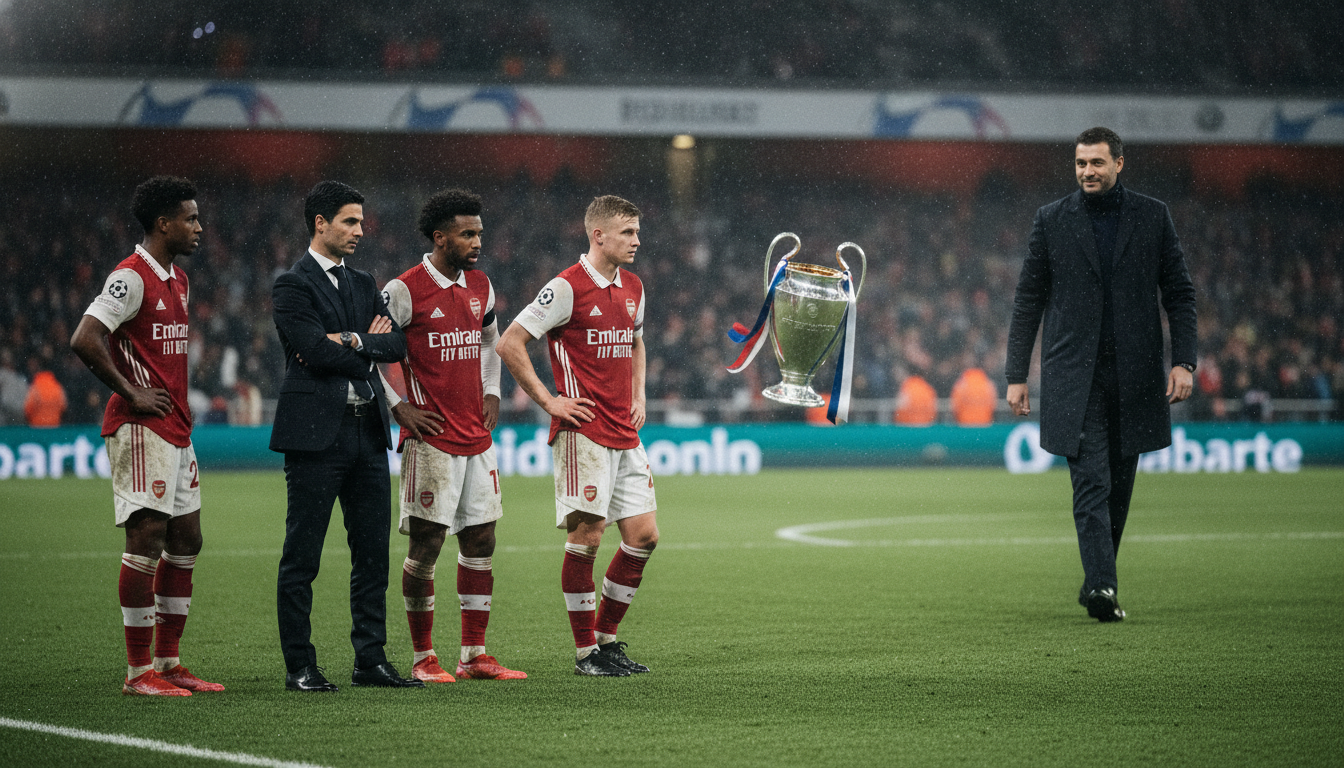
Arsenal face tactical questions after Champions League final loss to PSG on penalties
Arsenal face tactical questions after Champions League final loss to PSG on penalties in Budapest; Arteta concedes gap in midfield control as Gunners plan adjustments.


Arsenal’s season ended in frustration as they were beaten by Paris St-Germain on penalties in the Champions League final in Budapest, leaving the club to regroup quickly after domestic title celebrations. The Arsenal Champions League final exposed a pronounced possession deficit and tactical shortcomings that manager Mikel Arteta acknowledged publicly. Kai Havertz’s early strike proved to be Arsenal’s only shot on target across 120 minutes, underscoring the challenge the Gunners faced against elite opposition. The result has prompted debate over whether Arsenal will evolve their style or rely on the blueprint that secured them the Premier League crown.
Final in Budapest highlights possession imbalance
Arsenal suffered a dramatic shift in control once Kai Havertz scored early, a moment that altered the match’s strategic complexion. Despite taking the lead, the Gunners finished with under 25% possession, a statistic that starkly contrasts with expectations for a final between two top European sides. PSG’s ability to dominate the ball forced Arsenal into a more defensive posture for long stretches, limiting their chances and territory. That imbalance amplified questions about Arsenal’s capacity to impose their preferred game against opponents capable of sustained, technical control.
Havertz goal changed the game’s dynamics
The early goal from Kai Havertz put Arsenal ahead but also appeared to push the team toward caution rather than continued offensive probing. Analysts and former players noted that once Arsenal led, they ceded ground and allowed PSG to dictate play, rather than maintaining the initiative. The lack of follow-up attempts on target left Arsenal reliant on their defensive discipline and a penalty shootout to decide the outcome. That tactical retreat, whether conscious or forced by PSG’s pressure, is likely to be a focal point of pre-season planning.
Arteta praises PSG and signals tactical reconsideration
Mikel Arteta described PSG as “the best team” and admitted their quality with the ball shaped much of the encounter, suggesting respect for the opposition’s individual and collective technical strengths. Arteta also hinted that Arsenal could study PSG’s approach and incorporate elements into their own game, particularly in how to handle high-possession opponents. The manager’s comments indicate a willingness to refine tactical priorities while preserving core principles that brought domestic success. How far that evolution goes will shape transfer strategy and training emphasis in the months ahead.
Expert reaction and tactical analysis from former players
Former professionals and pundits emphasized the significance of possession statistics and the difficulty of overturning control once it was ceded. Observers argued that a possession split as extreme as roughly 75-25 is highly unusual in a Champions League final and reveals a mismatch in midfield control and ball progression. Critics suggested Arsenal’s midfield compactness and creativity were stretched under PSG’s sustained pressure, limiting forward combinations and penetrative passes. Those assessments will feed into technical reviews at London Colney and inform how the squad is prepared to face possession-rich teams next season.
Implications for Arsenal’s midfield and recruitment
The final exposed areas where Arsenal may require reinforcement, especially in players capable of managing possession and creating transitions under pressure. Strengthening midfield depth and adding a technically fluid pivot could help the team both retain the ball and launch attacks more reliably against elite opponents. Recruitment for the summer window will likely weigh tactical fit heavily, prioritizing players who can combine ball retention with forward intent. The club’s challenge will be to balance continuity with targeted upgrades that address the specific vulnerabilities revealed in Budapest.
Looking ahead to title defense and European ambitions
Arsenal return to London with the immediate task of preparing to defend their Premier League title while aiming to improve in Europe. The close scheduling between domestic celebrations and this continental conclusion leaves little time for introspection, but the club faces a clear set of priorities: maintain the strengths that won the league, bolster areas exposed by PSG, and adapt tactically where necessary. Supporters and club officials will expect measured changes rather than wholesale revolutions, with an emphasis on incremental improvements that keep Arsenal competitive on both fronts. How Arteta and his staff balance confidence from domestic success with lessons from the final will define the club’s path next season.
The loss in Budapest will be processed quickly at Arsenal, but it also provides a precise diagnostic of where the team must improve to complete at the very highest level in Europe.