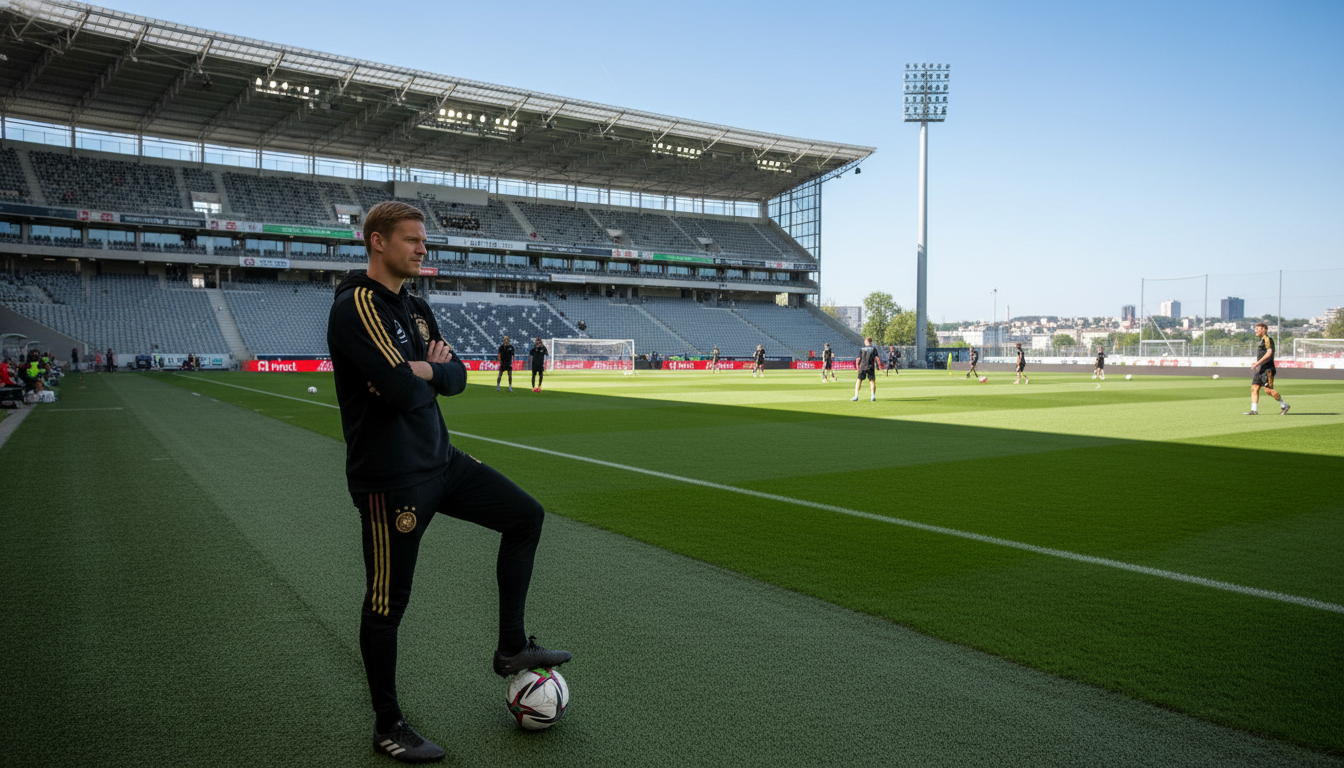
Germany vs Finland friendly: Nagelsmann rests Neuer as Germany press World Cup preparations
Germany vs Finland friendly preview: hosts rest Manuel Neuer while testing combinations ahead of the 2026 World Cup, with lineups and tactical battles to watch.


Germany begin a final warm-up for the 2026 World Cup in a high-profile Germany vs Finland friendly that sees coach Julian Nagelsmann rest veteran goalkeeper Manuel Neuer and hand the gloves to Oliver Baumann. The match in Mainz offers Germany a chance to fine-tune formations and personnel less than two weeks before the tournament kicks off. Finland arrive off a disappointing qualifying campaign and will use the friendly to measure themselves against one of world football’s leading sides.
Nagelsmann keeps Neuer sidelined as Baumann to start
Julian Nagelsmann confirmed that Manuel Neuer will not be risked for the Mainz friendly as the keeper continues to recover from a calf issue sustained with his club. With the World Cup squad selection and travel plans imminent, Nagelsmann has prioritized caution over an unnecessary cameo that could jeopardize Neuer’s availability for the tournament. Oliver Baumann is expected to start and will be handed responsibility for organizing the backline and building match rhythm under live conditions.
The selection sends a clear message about Germany’s risk management and depth in the goalkeeping department. Baumann’s performance will be scrutinized not only for shot-stopping but for his distribution and command of the defensive third. For Nagelsmann, the friendly is an opportunity to see how peripheral players cope with international pressure and to finalise combinations ahead of departure for North America.
Germany use Mainz friendly to sharpen tactical balance
Germany enter the match on the back of positive results and a reported winning streak, and Nagelsmann will focus on sharpening tactical transitions and set-piece routines ahead of the World Cup. Expect a blend of established starters and fringe players, with names such as Joshua Kimmich, Jonathan Tah, Jamal Musiala and Florian Wirtz likely to feature in some capacity. The coach can therefore trial different midfield pivots, wing dynamics and backline partnerships without the risk that comes from tournament football.
Key tactical threads to watch include Germany’s ability to control midfield tempo against Finland’s compact defensive blocks, and how quickly the hosts switch from possession to vertical penetration. Set pieces could again be an area of emphasis, where physicality and timing offer Germany an advantage. This friendly also allows the coaching staff to assess fitness levels after the club season and to trim the tactical brief for the opening World Cup matches.
Finland seek confidence and solutions after qualifying disappointment
Finland arrive in Mainz having failed to secure a place at the 2026 World Cup, and the match offers manager Jacob Friis a chance to regroup and test fresh ideas against top-level opposition. The visitors endured an inconsistent run in qualifying, which included unexpected setbacks that highlighted defensive frailties and a need for greater attacking cohesion. A performance against Germany provides both a stern examination and an opportunity to extract tangible positives for the national programme.
Selection decisions for Finland will balance experience and experimentation, with established names such as goalkeeper Lukas Hradecky expected to start. Young and domestically based players who have shone in contact with German football will be assessed for their readiness to form the spine of future qualification campaigns. For Friis, the friendly is not just about the result but about identifying players who can lift standards and contribute to a more resilient team identity.
Projected lineups and individual match-ups to monitor
Anticipated selections suggest Germany will field a blend of senior internationals and players fighting for tournament minutes, while Finland will likely deploy a compact defensive shape with quick transitions on the break. The goalkeeper duel between Baumann and Hradecky sets the tone, but midfield control—particularly around the center circle—could determine the match’s narrative. Kimmich’s link play and Musiala’s ability to drift between lines are likely focal points for Germany’s creative thrust.
Other individual battles to watch include Germany’s centre-backs against Finland’s target men, and how full-backs on both sides support attacks without sacrificing defensive structure. If Adam Markhiyev features for Finland, his midfield presence will be measured against Germany’s tempo and pressing patterns. The contest in wider zones will also be telling: whether Finland can resist overloads and whether Germany can convert territorial dominance into clear scoring opportunities.
Set pieces, substitutions and match objectives for both camps
Set pieces provide a pragmatic angle for both teams: Germany will look to exploit aerial superiority and rehearsed routines, while Finland may rely on delivery quality and second-ball management to produce chances. The friendly context gives both coaches licence to use a wide array of substitutions to simulate tournament rotation and to test bench depth under match conditions. How quickly each side adapts to personnel changes will offer insight into squad flexibility and coaching clarity.
For Germany, the objective is to validate tactical blueprints and to ensure players return from the club season without injury setbacks. For Finland, the goals are more developmental—assessing character, work-rate and the potential of emerging players under pressure. Both teams will also use the occasion to rehearse transitional moments that often decide tight contests at major tournaments.
Implications for World Cup readiness and longer-term planning
Although Finland will not be traveling to the World Cup, Germany’s performance in the Mainz friendly will influence final squad decisions and internal confidence ahead of the trip to the United States, Mexico and Canada. A composed display, even without Manuel Neuer, would ease concerns about rotation and depth among the German camp. Conversely, exposure of tactical or personnel weaknesses in this match would prompt last-minute adjustments and a rethink of contingency plans.
Beyond immediate preparation, the game offers Finland a benchmark against world-class opposition and a platform for younger players to stake claims for future qualifying cycles. It also provides a case study for coaching staff about defensive organisation and attacking conversion in tight matches. For spectators and analysts, the friendly supplies a preview of how Germany might seek to control opponents in the early stages of the World Cup.
This friendly between Germany and Finland in Mainz will be measured less by result and more by what each staff extracts in terms of tactical clarity, fitness assurance and player readiness. For Germany, the match is a final rehearsal before the global stage; for Finland, it is a testing ground and a chance to build momentum for forthcoming campaigns. The lineups, in-game adjustments and individual performances on the night will shape conversations in both federations as they move forward.