Real Madrid presidential election: a century of contenders, promises and defining votes
Timeline of the Real Madrid presidential election: contenders, controversies and key votes culminating in the 2026 face-off between Pérez and Riquelme.

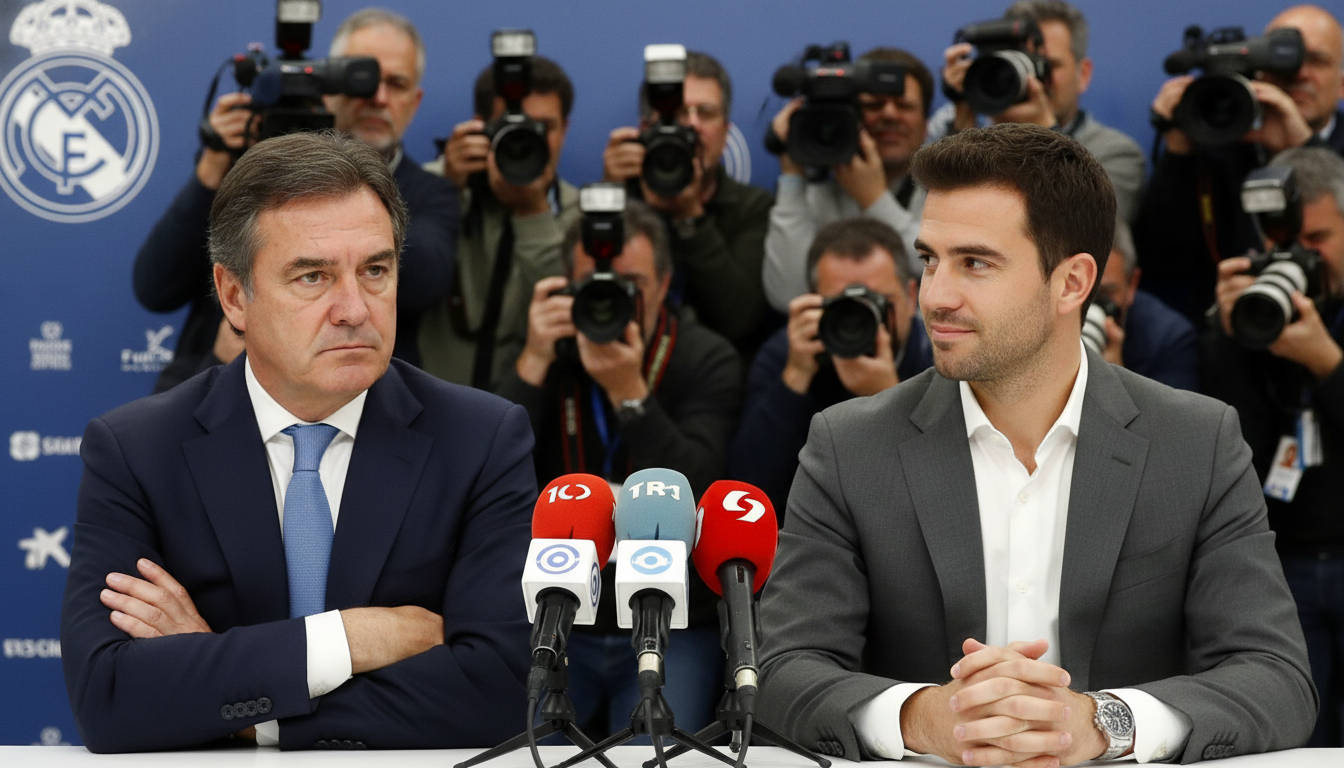
The Real Madrid presidential election that will pit Florentino Pérez against Enrique Riquelme in 2026 arrives amid a long tradition of theatrical campaigns, bold promises and high-stakes club politics. The presidential election is the focal point for members and observers who see club leadership as decisive for sporting direction, infrastructure projects and the club’s public image. From the vacuum left by Santiago Bernabéu to the modern era of media debates and multi-million euro transfers, successive contests have mixed serious governance debates with personal rivalries and headline-grabbing pledges. This article traces the main episodes and recurring themes that have shaped the Real Madrid presidential election across decades.
After Bernabéu: the 1978 opening
The death of Santiago Bernabéu in 1978 created the first major electoral test for the club’s membership in the modern era. That campaign produced a cautious continuity bid from Luis de Carlos, who served as treasury chief under Bernabéu, alongside a scatter of less conventional aspirants. Candidates ranged from established club figures to local businessmen and professionals, reflecting a period when formal nomination requirements were still taking shape. The contest set the tone for future elections: a mix of continuity, personal ambition and the need to secure large blocks of member signatures.
De Carlos prevailed as the candidate of stability and appointed Ramón Mendoza—an entrepreneur with a high public profile—as vice president, positioning him for future leadership. The nascent electoral procedures required aspirants to gather substantial backing from members, a threshold that began to filter out smaller bids. Early campaigns did not yet carry the heavy commercial dimension that would later dominate Real Madrid politics, but they introduced the competitive framework that continues to define the presidential election process. The aftermath also underscored how quickly controversies could reshape club leadership.
Ramón Mendoza: rise, controversy and consolidation
Ramón Mendoza emerged in the late 1970s and early 1980s as the most visible figure among a new generation of candidates aiming to run Real Madrid. After serving as vice president, Mendoza launched his own candidacy and became associated with a brash, media-savvy style that contrasted with more traditional club administrators. His campaigns blended ambitious sporting and infrastructure proposals with an emphasis on retaining the club’s financial independence from single benefactors.
Mendoza’s tenure and ambitions were not without scandal. He stepped away from the club after press reports linked him to intelligence agency allegations, a controversy that briefly derailed his trajectory. Nevertheless, he regrouped and returned to gather widespread support, demonstrating an ability to marshal signatures and mobilize members. By the mid-1980s Mendoza had consolidated his position and began to present large-scale projects, including stadium and training complex proposals that energized both supporters and critics in equal measure.
Through successive cycles Mendoza demonstrated how personality and publicity could drive a presidential campaign, a model that later aspirants would imitate. His victories and defeats reveal the double edge of high-profile promises: they can win votes quickly but also raise expectations that are difficult to meet. The Mendoza era therefore became a template for the role of charisma and controversy in the Real Madrid presidential election.
Big promises and the 1991 Ussía challenge
The 1991 contest brought an unusually theatrical duel when journalist and writer Alfonso Ussía mounted a serious challenge to Mendoza’s incumbency. Both candidates submitted the required backing and engaged in an unusually public exchange of criticisms and programmatic pledges. Promises covered stadium refurbishment, new sporting facilities and an expanded commercial strategy, turning the election into a contest of grand visions rather than only administrative competence.
Debates and public rhetoric escalated, with Mendoza dismissing his rival’s suitability while Ussía framed a campaign of reform and greater member representation. Voters responded by re-electing Mendoza, but the margins and the visibility of competing manifestos signalled that the presidential election had become a forum for wide-ranging ideas about the club’s future. The 1991 race also illustrated how the interplay of media, personality and policy can both clarify choices for members and amplify the stakes of electoral victory.
Florentino’s first emergence in 1995
The mid-1990s produced a turning point when Florentino Pérez entered the presidential conversation and quickly established himself as a major contender. The 1995 campaign unfolded against a backdrop of financial stress at the club and offered members an alternative framed around business credentials and a modernizing agenda. Pérez, along with other candidates, promoted large-scale development plans for facilities and commercial expansion, signalling a new era in which corporate-style management would be central to the Real Madrid presidential election.
Pérez’s bid introduced a new level of organizational muscle to the campaign, including extensive signature collection and engagement across media platforms. That initial push fell short in 1995 but highlighted the growing importance of fundraising, public relations and comprehensive manifestos in securing member support. The episode set the stage for future contests in which the lines between club stewardship, commercial strategy and sporting ambition would blur.
The Figo transfer and the 2000 turning point
The 2000 presidential election marked a decisive moment in the club’s modern history and in how presidential campaigns could reshape the team overnight. Florentino Pérez returned to the fray with a campaign built around making footballing headlines and leveraging high-profile transfers as electoral assets. His pledge to bring Luís Figo to the club proved transformational: the transfer itself became central to his pitch for transformative leadership and commercial growth.
Pérez’s promise to subsidize membership fees if Figo did not play epitomized the kind of dramatic, emotive pledges that could cut through public attention and mobilize voters. The gambit paid off; Pérez won the election and the subsequent presentation of Figo marked the start of a policy that blended marquee signings with ambitious stadium and commercial projects. The 2000 result underscored a new dynamic: the Real Madrid presidential election could directly influence sporting outcomes and transfer policy, with elected presidents using personal credibility to deliver headline acquisitions.
2004–2006: reform pledges, media battles and the end of postal votes
By the early 2000s the presidential election had evolved into a full-scale public spectacle, with candidates trading promises about stadium renovation, a new training hub and commercial complexes. Florentino Pérez’s 2004 landslide victory reflected the appeal of a platform promising infrastructure investment and global expansion. Yet the following years also revealed how fragile political capital could be when sporting performance or governance issues created disenchantment.
The 2006 cycle exemplified the intensity of modern contests. Multiple candidates presented elaborate sporting targets and recruitment plans, with endorsements from public figures and cultural controversies complicating the campaign narrative. Legal disputes over postal voting dramatically affected the process, as judicial decisions to annul mailed ballots altered turnout calculations and raised questions about electoral integrity. The result produced a narrow victory for Ramón Calderón in a contest that would prove to be the most recent fully contested election for a generation.
Postal voting disputes left a lasting imprint on club elections, prompting reforms and bitter challenges that discouraged frequent repeat ballots. The aftermath of 2006 closed a chapter in which on-site member turnout and face-to-face campaigning regained primacy, and it established a precedent that has shaped how contemporaries prepare for the Real Madrid presidential election.
From Calderón to the 2026 Real Madrid presidential election
The 2006 outcome and its subsequent disputes marked the last fully competitive ballot until the current period, as institutional changes and the club’s internal cycles reduced the frequency of contested votes. Over two decades the presidency returned repeatedly to Florentino Pérez, who reshaped the club’s commercial model, oversaw multiple stadium plans and presided over a string of sporting successes and renewed ambitions. Those developments have made the Real Madrid presidential election a referendum not only on short-term sporting policy but on an entire governance model.
The 2026 contest between Florentino Pérez and Enrique Riquelme revives many of the classic motifs of past campaigns: grand infrastructure plans, promises on transfers, debates conducted across traditional and social media, and the mobilization of members through signature drives. While the players and precise policy proposals differ from earlier eras, the core dynamics remain recognizable: leadership style, ability to fund projects, and trust from the membership determine outcomes. This renewal of electoral competition demonstrates how the Real Madrid presidential election continues to be a defining mechanism for choosing the club’s strategic direction.
The presidential contest has always reflected the club’s broader tensions between sporting glory and commercial modernization, and the 2026 election is no exception.
The coming weeks will test which combination of vision, credibility and organizational strength persuades the membership to entrust the club’s future to one candidate over the other.