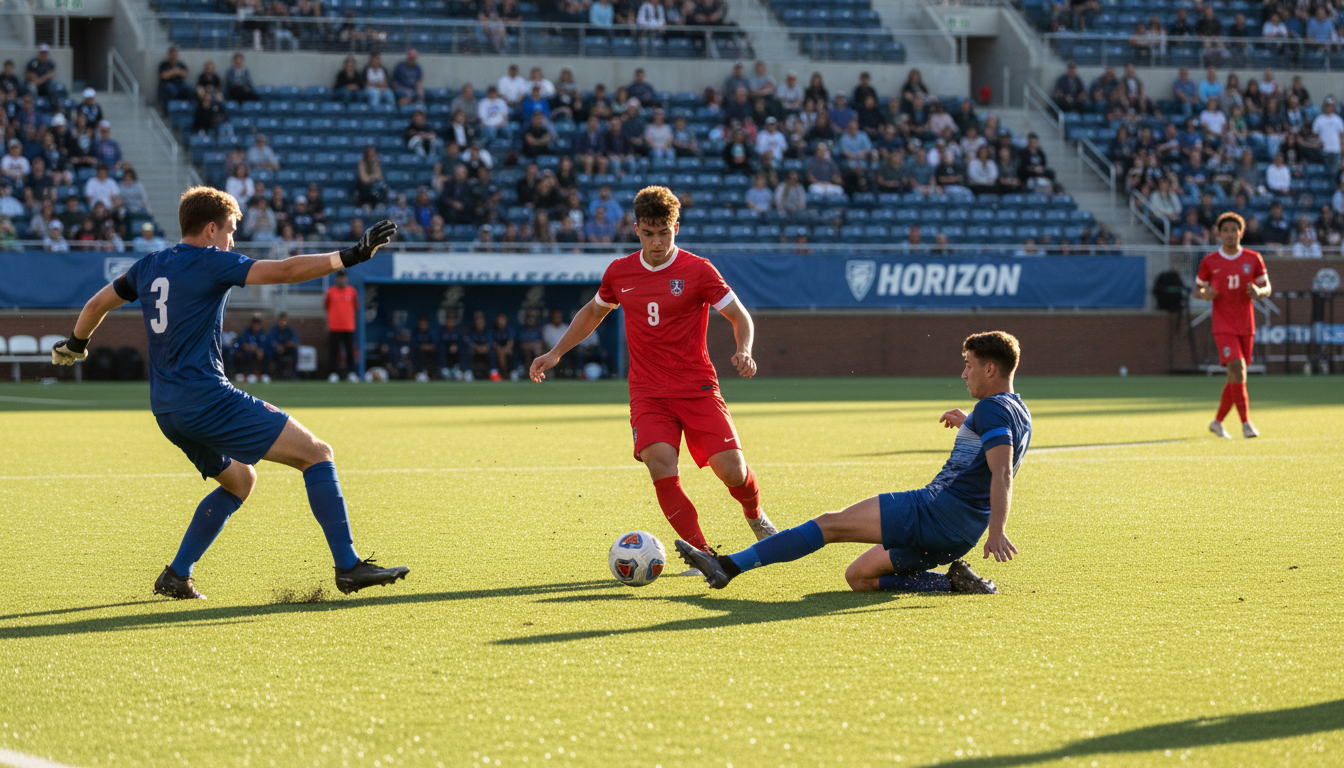
Horizon League Soccer: Mid‑Major Prospects Primed to Break Out
Horizon League soccer prospects preview: scouting the breakout candidates, positional standouts, and how the conference is producing pro-ready players now.


The Horizon League has emerged as one of the most fertile proving grounds for mid‑major college soccer talent, and a fresh crop of players looks ready to take that next step. This article examines the prospect landscape in Horizon League soccer, identifying the positional types, developmental trends, and professional pathways most likely to yield breakout stars. Coaches, scouts and analysts are paying closer attention as the conference combines competitive match play with growing exposure through streaming and regional scouting networks.
Top Rising Prospects to Watch
Scouting in the Horizon League has shifted from simple stat lines to a blend of analytics and live evaluation, and players who combine technical skill with tactical versatility are standing out. Prospects to watch this season are typically those who influence games beyond goals and assists — pressing triggers, progressive passing and transitional impact are all red flags for scouts. Teams returning experienced starters or integrating high-upside freshmen are where the most rapid development tends to occur.
The profiles attracting the most attention include athletic wide players with end product, midfielders comfortable in multiple roles, and ball-carrying defenders who initiate attacks. These archetypes suit modern professional systems that value flexibility and speed of play. Expect a handful of Horizon League soccer prospects to move into national conversations as they demonstrate consistent performances against quality opposition.
Defensive Standouts Building Professional Profiles
Center backs in the conference who combine physical presence with composure on the ball are increasingly marketed as professional prospects. Those defenders who can step into midfield with progressive passing or who regularly win duels while maintaining clean defensive positioning draw interest from USL and developmental scouting programs. Coaches emphasize anticipation, recovery speed and the ability to read opposition buildup as the core traits that separate future pros from solid collegiate players.
Fullbacks and wing-backs who contribute to both phases of play are another source of upside in the Horizon League. Players who provide dependable crossing accuracy, overlapping support and disciplined defensive work stand out in match footage and analytics. When defenders can show consistency across multiple metrics — tackles won, progressive carries, and successful pressures — they position themselves for invites to combines and preseason trials with professional clubs.
Attacking Talents Driving Results
Forwards and attacking midfielders in the Horizon League who combine finishing ability with intelligent movement are the most likely to convert strong college seasons into professional opportunities. Scouts look for players who create separation, time runs between defensive lines, and show a repertoire of finishes under pressure. Consistent goal threat in transition and set-piece effectiveness remain key differentiators for prospects across the conference.
Wingers who can beat an opponent one-on-one, deliver accurate service, and contribute defensively are markedly more valuable in professional evaluations. Attacking prospects who add secondary skills — such as pressing intensity or the ability to operate on either flank — broaden their appeal to scouts. Those who pair statistical production with high-level decision-making in tight spaces will likely be the first wave of Horizon League players to draw sustained professional interest.
Goalkeepers With Professional Upside
Goalkeepers from the Horizon League are gaining attention for their shot-stopping, command of the penalty area, and distribution under pressure. Modern evaluations extend beyond saves to include build-up participation, long-range passing accuracy, and the ability to act as an on-field organizer. Goalkeepers who limit high-danger chances and maintain concentration across full matches become strong candidates for pro club goalkeeper coaches scouting the conference.
Set-piece organization, one-on-one recovery, and consistent handling are the core attributes scouts catalogue in Horizon League shot-stoppers. Those who demonstrate leadership, both vocally and through efficient decision-making, often receive invitations to professional trials or open tryouts. With goalkeeper coaching in college programs improving, the pathway from Horizon League nets to professional rosters is increasingly realistic.
Coaching, Recruiting and Development
Coaching continuity and targeted recruiting strategies are central to why the Horizon League keeps producing notable prospects. Programs that invest in individualized development plans, modern video analysis, and strength and conditioning tailored to soccer needs see clearer progress in their top players. The conference’s combination of competitive scheduling and emphasis on player growth creates an environment where prospects can accelerate their readiness for the next level.
Recruiting pipelines into the Horizon League often blend regional talent with international additions, giving teams a range of technical and tactical profiles to develop. Clubs that balance early playing time for promising freshmen with veteran leadership create better conditions for breakout seasons. Investment in scouting, both domestically and abroad, helps identify players whose skill sets fit evolving professional demands.
What Scouts Are Looking For in the Horizon League
Professional scouts visiting Horizon League matches prioritize two broad categories: current impact and projection potential. Current impact evaluates measurable contributions in games — goals, assists, defensive actions and possession metrics — while projection potential judges a player’s capacity to improve within a pro setting. Scouts typically grade technical ability, tactical understanding, physical attributes, and psychological traits such as coachability and resilience.
Exposure matters: strong performances in conference tournaments, non‑conference fixtures against higher‑ranked opponents, and standout displays in televised matches increase a prospect’s chances of being noticed. Additionally, players who perform in pressure situations — late-match winning contributions or consistent play in difficult away venues — often receive higher marks from professional evaluators. For Horizon League prospects, combining measurable production with the right temperament remains the clearest path to a professional contract.
The Horizon League continues to grow as a platform for developing professional-level soccer talent, offering prospects the competitive minutes, coaching attention, and visibility needed to advance. As scouting methods evolve and professional clubs broaden their search beyond traditional power conferences, expect more Horizon League soccer prospects to earn opportunities at the next level.