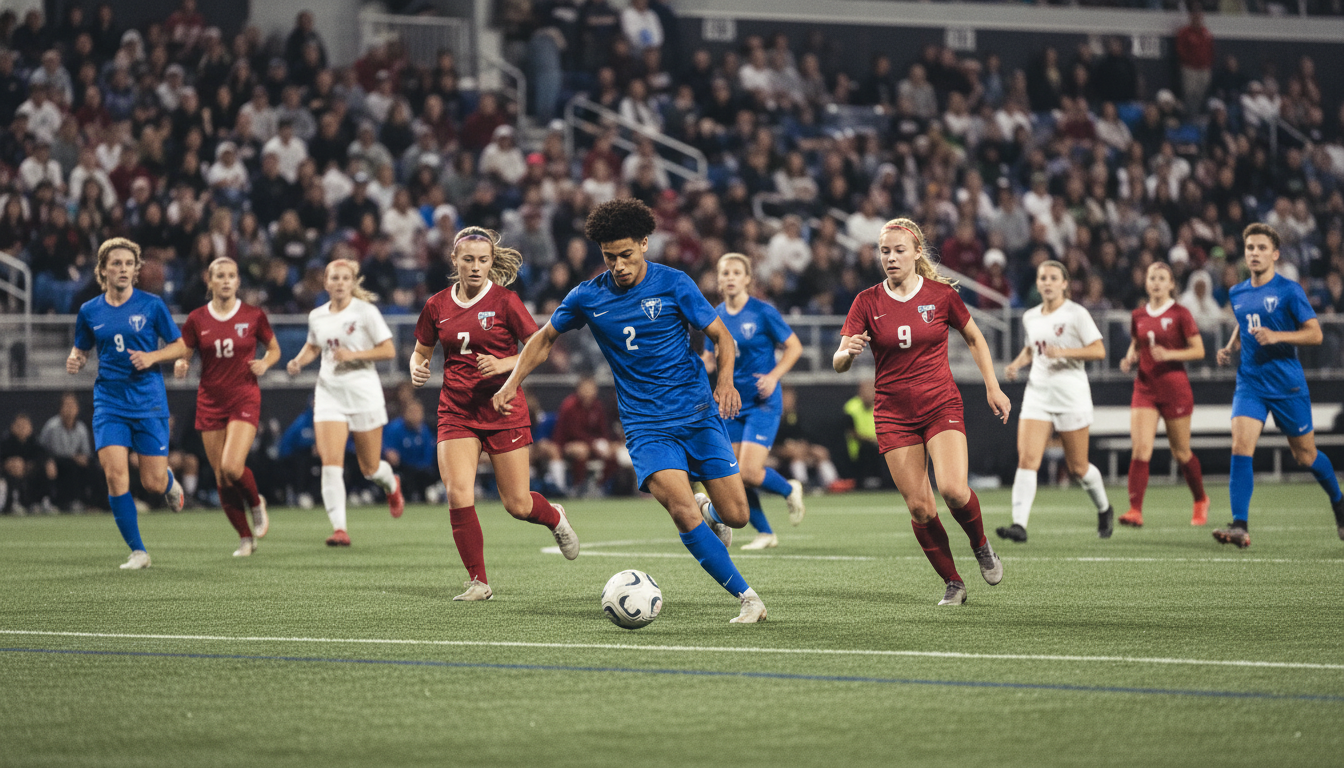
Horizon League Breakout Stars: Midwestern Colleges Poised to Produce the Next Soccer Standouts
Scouting the Horizon League breakout stars as Midwestern college soccer readies a new cohort of prospects poised to make waves for pro clubs and national programs.


Horizon League Produces Consistent Midwestern Soccer Talent
With a dozen mid-major programs spread across the Midwest, the Horizon League has quietly become a reliable pipeline for talent development. College coaches point to consistent competition and greater investment in training environments as reasons more players are ready to make the jump. The conference’s mix of technical development and physical preparation routinely yields prospects who can adapt to professional demands. That combination is central to why scouts are increasingly monitoring the Horizon League breakout stars.
Top Candidates for Horizon League Breakout Stars
Each season, a handful of players emerge from relative anonymity to become genuine prospects for pro teams and national youth programs. These candidates typically share attributes: tactical flexibility, consistent decision-making under pressure, and measurable physical traits such as pace or jump height. Teams that identify and give minutes to high-upside underclassmen often see those players post rapid statistical and scouting improvements. Tracking players across conference play and non-conference tests helps separate true breakout candidates from one-season performers.
Emerging Attackers Who Could Lead the Conference
Attackers who combine off-ball movement with composure in the box are most likely to claim breakout status in the Horizon League. Coaches value forwards who can create their own chances and also link play through compact midfield shapes, especially against disciplined mid-major defenses. Wide attackers with direct speed can stretch opposing backlines and force tactical shifts that reveal scoring opportunities. Midfield creators who marry high work-rate with precise final passes frequently become focal points of their teams and capture the attention of pro scouts.
Defenders and Goalkeepers Drawing Scout Interest
Defensive prospects from the Horizon League are gaining traction because of their adaptability to multiple systems and situational intelligence. Centerbacks who demonstrate calm under pressure, accurate long passing, and the ability to time challenges well often rise to the top of prospect lists. Fullbacks who contribute both defensively and in build-up play are especially valuable in today’s game where overlap and inverted runs create overloads. Goalkeepers who pair shot-stopping with command of the penalty area and strong distribution are increasingly seen as ready for professional environments.
Coaching, Facilities and Player Development
Improved coaching structures and upgraded facilities have accelerated player development across Horizon League campuses. Clubs that emphasize individualized training plans, GPS load monitoring, and video analysis help players make measurable year-over-year gains. Strength and conditioning programs oriented toward soccer-specific demands reduce injury risk while enhancing matchday explosiveness. The convergence of better coaching resources and collegiate competition creates an environment where Horizon League breakout stars can refine their tools in a sustained, measurable way.
Scouting Patterns and Why Pro Clubs Are Watching
Professional clubs and agents are expanding their scouting reach to include more mid-major conferences because the cost-to-reward ratio is attractive. The Horizon League offers a high density of playable talent in a geographically compact region, allowing scouts to evaluate multiple prospects across successive weekends. Scouts are particularly attentive to players who perform consistently against top non-conference opponents and in conference tournaments, where pressure and stakes rise. Data-driven scouting — combining event data, GPS metrics, and video — now provides clearer signals that certain college players are ready to take the next step.
College Competition That Tests Prospects
Conference play in the Horizon League forces players to adapt to varied tactical styles, from compact defensive blocks to high-pressing systems, which helps reveal true potential. Non-conference scheduling that pits Midwestern teams against power conference opponents also serves as a litmus test for readiness. Young players who can maintain efficiency metrics — expected goals involvement, progressive passes, or successful pressures — through that varied slate emerge as credible professional prospects. Those performances, more than isolated highlight moments, separate sustainable breakout candidates from one-off breakthroughs.
Pathways to the Professional Ranks
Multiple routes exist for Horizon League players aiming for professional careers, including domestic second-tier leagues, MLS drafts, and overseas trials. Clubs now look beyond headline conferences and are willing to invest in players who show high developmental ceilings and professional attitudes. Performance in conference tournaments and combines can accelerate exposure, while agents and college coaches play a role in arranging trials and showcase opportunities. For many Horizon League players, consistent collegiate production paired with measurable traits opens doors to summer contracts, developmental squads, and permanent professional offers.
Players who develop positional versatility often see the widest range of opportunities. A midfielder who can also operate as an inverted fullback or as a false nine brings roster flexibility that professional coaches prize. Likewise, defenders who can step into midfield during build-up or forwards who press as the first line of defense offer tactical solutions that make them more marketable. That tactical malleability, combined with consistent performance, is the hallmark of many recent collegiate success stories.
Professional evaluators also emphasize character and coachability when assessing Horizon League breakout stars. Players who demonstrate resilience, a strong training ethic, and tactical humility typically adapt faster to professional routines. College environments that simulate club expectations — daily training intensity, recovery protocols, and media responsibilities — accelerate that transition. Evidence of off-field maturity can be as decisive as on-field metrics during final recruitment stages.
College scheduling choices and academic calendars also influence where scouts allocate attention. Late-season tournaments and spring exhibition windows provide crucial additional touchpoints for evaluation. A player who peaks during those windows and maintains that form through the beginning of the professional pre-season presents a reliable recruitment profile. For many Horizon League prospects, strategic timing of peak performance is as important as the performance itself.
The conference’s geographic footprint remains an advantage for scouting density. Clubs can cross-evaluate players in consecutive matches without long travel, which reduces sampling error and allows scouts to watch contextual behaviors across different match states. That repeated exposure helps clubs identify players whose performance is reproducible rather than circumstantial. As a result, more players from the Horizon League have entered professional pipelines over recent seasons.
College coaches and program directors also play gatekeeping roles by preparing athletes for pro expectations. Mock interviews, agent workshops, and exposure to minimalist possession-oriented training help players acclimate. Programs that maintain relationships with former players who have turned professional create mentorship pathways that demystify the transition. Those institutional supports increase the likelihood that a promising Horizon League player will make a successful professional adjustment.
Many breakout candidates emerge from underclassmen who gain early minutes and are entrusted with key roles. Coaches who reward performance with responsibility give young players practical learning that accelerates development. Early professional outcomes often trace back to those minutes and the confidence that follows. For evaluators, minutes played in high-stakes conference fixtures frequently carry more weight than isolated statistical bursts.
Recruiting networks and scouting aggregators are helping to elevate Horizon League prospects to national attention. By aggregating performance data, highlight reels, and physical metrics, platforms and scouts can build richer dossiers on players previously overlooked. This layered intelligence reduces the uncertainty around mid-major recruits and makes clubs more willing to invest in trial periods or contract offers. As these systems mature, the number of Horizon League breakout stars progressing to pro levels is likely to grow.
The pathway from college standout to professional contributor is rarely linear, but it is identifiable by consistent indicators: match minutes, technical proficiency, tactical understanding, and professional temperament. Horizon League programs that embed those indicators into daily training and match preparation create predictable outcomes. For players, seizing the moment in conference play and leveraging exposure opportunities remains the most direct route to professional consideration.
Scouts, coaches, and agents will continue to monitor the Horizon League closely because the conference represents a compact, competitive, and increasingly resourced environment for talent discovery. Players who demonstrate repeatable technical skills, adaptable tactical profiles, and strong character traits are the most likely to become the next Horizon League breakout stars. The coming seasons should reveal a fresh cohort of prospects ready to test themselves at the professional level.
As the region’s programs continue to invest in player development, the Horizon League will likely broaden its role as a sourcing ground for pro clubs in North America and beyond. The next wave of breakout stars will emerge not just from isolated talent but from systems that combine coaching, opportunity, and exposure into a coherent pathway. That systematic approach is what will turn promising collegiate performers into dependable professional assets.