Ghana held to 1-1 draw by Wales in Cardiff after late Lewis Koumas equaliser
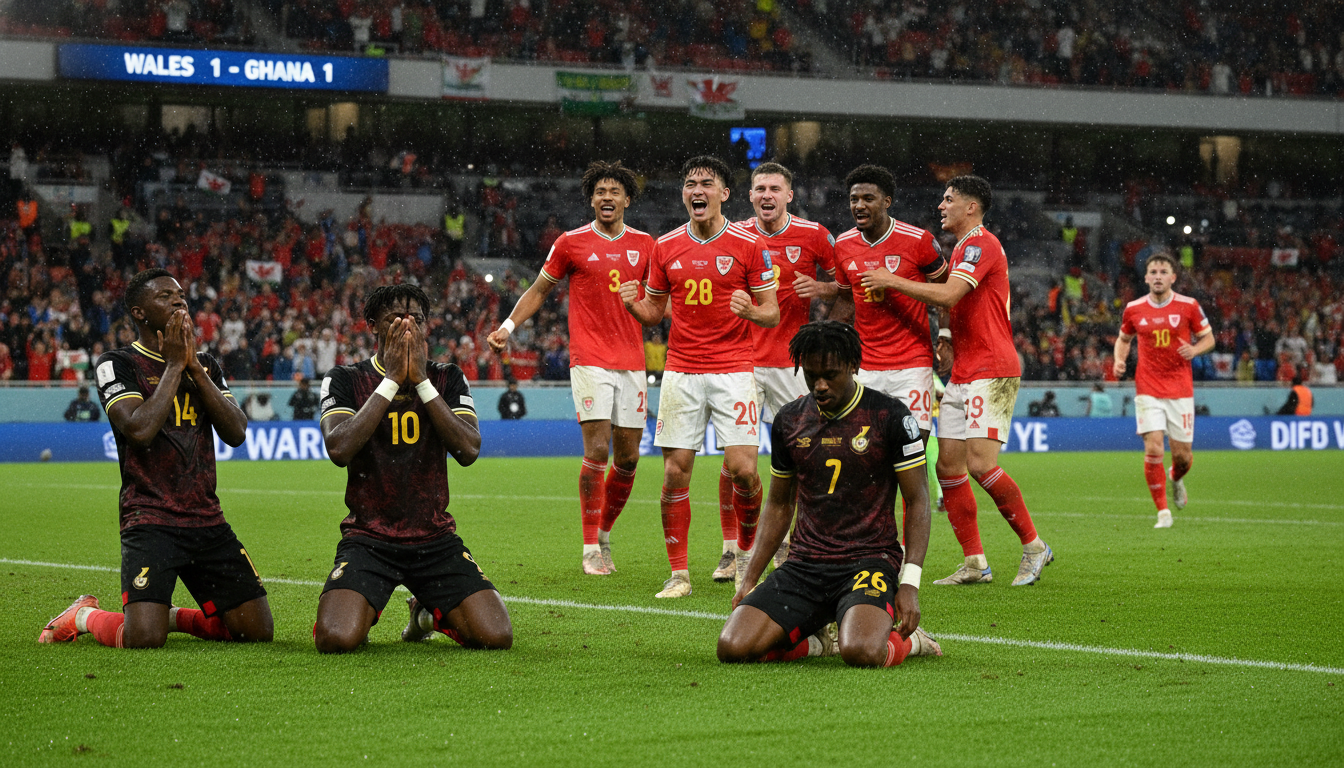
Ghana draw with Wales ended 1-1 at Cardiff City Stadium as Caleb Yirenkyi’s second-half strike was cancelled out by a stoppage-time goal from Lewis Koumas. The result capped a spirited showing from the Black Stars in a final warm-up ahead of the 2026 FIFA World Cup. Head coach Carlos Queiroz used the fixture to experiment with personnel and formations as Ghana fine-tune their preparations for Group L.

Late Koumas Strike Denies Ghana Victory
A seemingly assured win for Ghana was ripped away three minutes into stoppage time when Lewis Koumas bundled home to level the contest at 1-1. The goal arrived after sustained Welsh pressure in the closing stages and punished Ghana for a period of passive defending.
Wales’ late intervention ensured the match finished all square despite Ghana leading for more than 20 minutes following Caleb Yirenkyi’s finish. The timing of the equaliser will be a concern for Queiroz as he assesses his side’s concentration levels in the run-up to the World Cup.
Yirenkyi’s Quick Impact and the Goal Build-Up
Caleb Yirenkyi, on as a second-half substitute, needed only six minutes to make an impact after entering the pitch in the 60th minute. He tapped in from close range in the 66th minute after Ernest Nuamah’s penetrating attack unsettled the Wales defence.
The goal was the product of a quick Ghana transition and composed finishing, illustrating the value of fresh legs off the bench. Yirenkyi’s contribution provided a timely confidence boost for a player seeking to stake a claim for selection in the World Cup squad.
Line-up Choices and Second-Half Overhaul
Carlos Queiroz fielded a strong starting XI that blended experience and youth, with Lawrence Ati-Zigi in goal and a back four of Gideon Mensah, Marvin Senaya, Jerome Opoku and Jonas Adjetey. Thomas Partey partnered Elisha Owusu in midfield while Kamaldeen Sulemana and Abdul Fatawu Issahaku supplied width for the frontline pairing of Jordan Ayew and Prince Kwabena Adu.
The coach used the second half to rotate extensively, introducing attackers and defenders to test different combinations. Substitutions included the introductions of Brandon Thomas-Asante, Inaki Williams, Christopher Bonsu Baah, Baba Rahman and others as Queiroz sought to evaluate squad depth and tactical flexibility.
Nuamah and Bonsu Baah Spark Ghana’s Threat
Ernest Nuamah was a standout after coming on in the second half, operating primarily on the right flank and troubling the Welsh backline with direct dribbling and pace. His involvement in the move that led to Yirenkyi’s goal underlined his threat on the flank and his increasing importance to Ghana’s attack.
Christopher Bonsu Baah also caused problems when introduced late, offering another outlet on the break and combining effectively with Nuamah during sustained attacking sequences. The pair’s dynamism gave Ghana a number of promising chances and underlined the coaching staff’s options in wide positions heading into the tournament.
Tactical Takeaways and Defensive Concerns
Ghana’s shape showed signs of cohesion in transitions, with quick switches from defence to attack creating space for the forwards. Thomas Partey’s presence provided a stabilising influence in central midfield before his substitution, allowing more adventurous players to advance into attacking positions.
Defensively, the concession of a late goal highlights an area for improvement, particularly in dealing with set-pieces and scramble situations under pressure. Queiroz will likely focus on concentration and organisation in training to ensure the team can protect narrow leads in competitive fixtures.
World Cup Context and Group L Outlook
The draw comes within a week of Ghana’s departure for the 2026 World Cup, which begins on June 11, 2026, and with Ghana set to start their Group L campaign against Panama on June 17. The Black Stars are grouped with Panama, England and Croatia and will use the remaining preparation time to finalise tactics and personnel.
Queiroz will weigh the lessons from Cardiff as he prepares the squad to face varied styles in the group stage, from Panama’s direct approach to England and Croatia’s technically strong sides. The friendly provided opportunities to test game management and to confirm which players can perform under pressure.
Final preparations in the coming days will be crucial as Ghana balance fitness, form and tactical clarity ahead of their World Cup opener. The 1-1 draw with Wales leaves questions to be answered but also positives to build on as the team heads into the tournament.