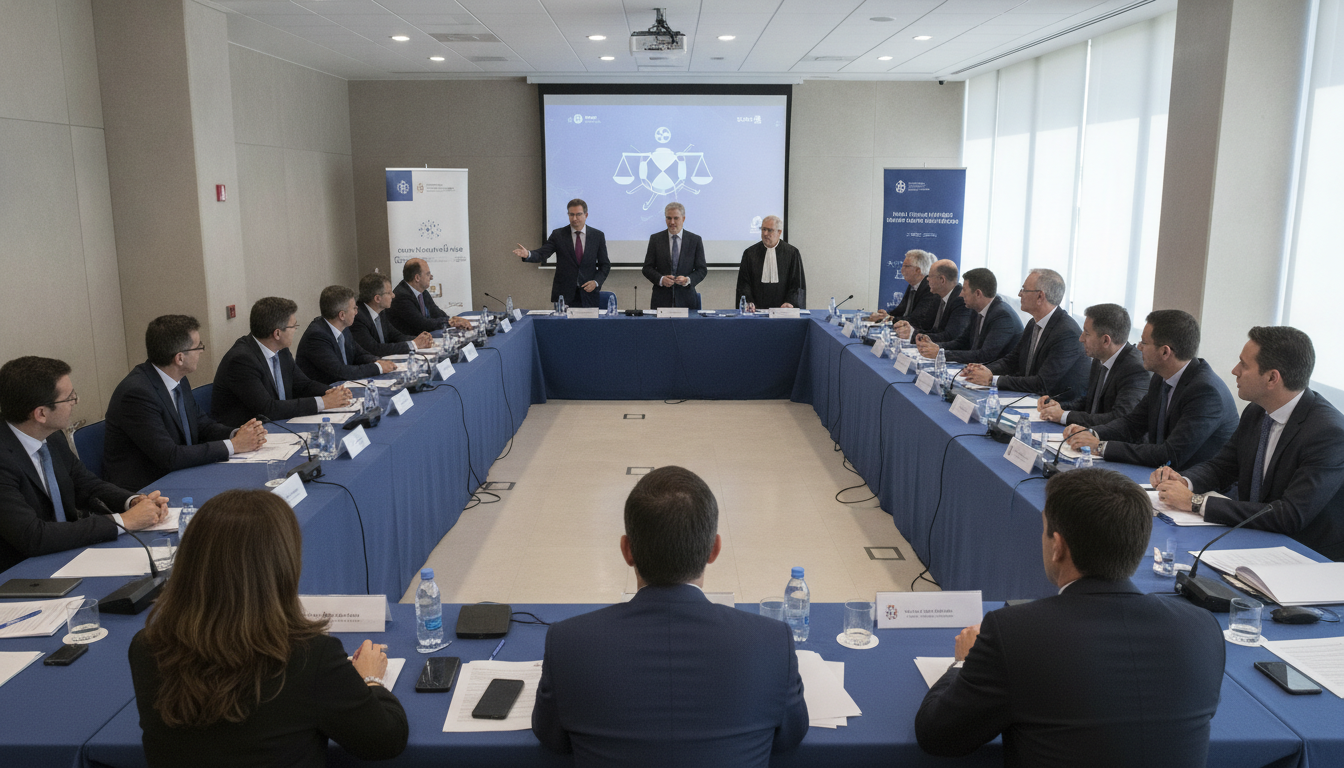
LaLiga and Spain’s Judiciary Hold Training to Tackle Hate in Sport
LaLiga and Spain’s CGPJ held training in Madrid on June 9–10, 2026 for judges, police and sports officials to bolster prevention and prosecution of hate in sport.


The Spanish top-tier league LaLiga and the Consejo General del Poder Judicial (CGPJ) convened a two-day training event in Madrid on June 9 and 10, 2026 that addressed the rise and complexities of hate in sport. Thirty judges and magistrates from across Spain took part alongside senior judicial, law enforcement and sporting representatives to discuss prevention, investigation and prosecution strategies. The sessions formed part of a standing collaboration agreement intended to strengthen cross-sector responses to discriminatory and hateful conduct linked to sport.
LaLiga and CGPJ convene 30 judges and national partners in Madrid on June 9–10, 2026
The program opened with institutional participation from LaLiga president Javier Tebas and CGPJ member Esther Rojo Beltrán, who also leads the Observatory against Domestic and Gender Violence. The training was jointly directed by José Montero, LaLiga’s director of Public Affairs and International Relations, with technical leadership from José Ramón Aparicio of the CGPJ training service. Organizers framed the workshops as a reinforcement of the existing cooperation protocol between the sporting body and the judiciary.
Sessions were attended by a cross-section of the justice system, including magistrates from the Supreme Court’s Criminal Chamber and judges from the Audiencia Nacional and various Tribunales Superiores de Justicia. Representatives of the Policía Nacional and Guardia Civil joined sports administrators and officials from the Oficina Nacional de Deportes to engage directly with legal practitioners. That mix of participants was designed to close operational gaps between prosecution, policing and sports governance when dealing with hate-motivated incidents.
Joint training targeted prevention, investigation and prosecution of hate in sport
Workshops explored the full range of institutional responses — sporting, administrative and criminal — available when incidents of hate occur in or around sports events. Participants examined how disciplinary measures within clubs and leagues intersect with administrative sanctions and criminal investigations. Emphasis was placed on ensuring that sporting sanctions and legal remedies operate in a complementary way to deliver both deterrence and justice.
A central focus was improving investigative practice in stadium environments, with attention to evidence collection, chain of custody and the use of audiovisual material. Delegates discussed challenges in identifying perpetrators among large crowds and the technical and legal hurdles of securing admissible proof. The training stressed the need for timely coordination so that investigative leads gathered by clubs and security teams can be effectively shared with prosecutors and courts.
Supreme Court and legal experts addressed digital and piracy-related offences linked to sport
Leading jurists, including Supreme Court magistrates Vicente Magro, Antonio del Moral and Eduardo de Porres Ortiz de Urbina, contributed to sessions that tied traditional hate offences to the evolving digital landscape. Speakers highlighted that incidents of hateful conduct increasingly migrate online, where audiovisual piracy, abusive content and coordinated harassment can exacerbate harm. The program included specialist presentations on prosecuting digital offences that intersect with hate conduct in the sporting sphere.
Legal panels considered precedent and doctrinal approaches to proving intent, establishing patterns of conduct and applying statutory provisions to hybrid cases that combine online and in-person elements. Attendees evaluated how existing criminal and administrative frameworks can be applied or adapted to new technologies and distribution channels. Experts urged clearer protocols for evidence preservation from digital platforms and for cross-border cooperation when content originates outside national jurisdictions.
Police, sports bodies and judicial services outlined coordination mechanisms and operational tools
Sessions devoted significant time to practical coordination between law enforcement, sports governance and judicial authorities, with the objective of speeding responses to incidents. Representatives from the Policía Nacional and Guardia Civil outlined field procedures for stadium incidents and stressed the importance of pre-established channels for information exchange. Sports officials described internal reporting frameworks and measures clubs can adopt to assist investigations without compromising spectator safety.
Delegates reviewed communication protocols between match security, club legal teams and prosecutorial offices to reduce delays that can undermine casebuilding. The training promoted standardized incident-report templates and recommended shared training exercises to test operational links. Organizers identified capacity-building in smaller regional courts and clubs as a priority to ensure consistent application of good practice across Spain.
Technical visit to Riyadh Air Metropolitano demonstrated stadium prevention and detection measures
As part of the program, participants conducted a technical visit to the Riyadh Air Metropolitano to observe stadium-level protocols and tools used to identify, prevent and manage incidents related to hate speech and discriminatory conduct. The visit provided a practical complement to classroom learning, allowing judges and investigators to see how CCTV systems, stewarding arrangements and entry controls function in a major venue. Delegates assessed how stadium evidence collection can be optimized to meet judicial standards.
Match-day logistics and spectator management practices sparked discussion on balancing security measures with crowd experience and civil liberties. The field visit allowed security managers to explain their decision-making processes and the technology they deploy, while judicial attendees raised questions about access to recordings and timelines for preservation. The exchange underlined that operational familiarity with stadium environments is essential for judges and prosecutors tasked with adjudicating sport-related offences.
LaLiga has framed the event as part of a sustained effort to eradicate hateful conduct within and beyond stadiums, linking sports integrity with public safety. The CGPJ positioned the training within its broader remit to equip the judiciary to respond to contemporary manifestations of violence and discrimination. Both institutions said the collaboration aimed to turn shared learning into clearer, faster and more effective on-the-ground responses.
The program combined plenary lectures, detailed case studies, roundtable discussions and practical demonstrations, enabling a mix of theoretical and operational learning. Organizers said the multi-disciplinary format was selected to reflect the complexity of hate in sport, which can implicate administrative law, criminal statutes and public order considerations simultaneously. Attendees praised the opportunity to engage directly with colleagues from other branches of government and from the sports sector.
Looking ahead, participants signaled the value of continued joint training and the development of standardized tools for incident reporting and evidence transfer. Recommendations emerging from the sessions stressed expanding similar initiatives to reach more regional tribunals, enhancing digital forensic capacity and creating formal channels for routine information sharing between clubs and law enforcement. The event also underlined the role of sustained public education and internal club policies in preventing recurrence.
This gathering in Madrid represents a concrete step toward institutionalizing a coordinated response to hate in sport through education, shared protocols and technical familiarity with stadium operations. By bringing judicial decision‑makers together with police, sports administrators and technical staff, the training sought to reduce friction between different actors and to speed effective remedies for victims. The exchange reaffirmed that combating hate at sporting events requires both legal clarity and operational readiness.