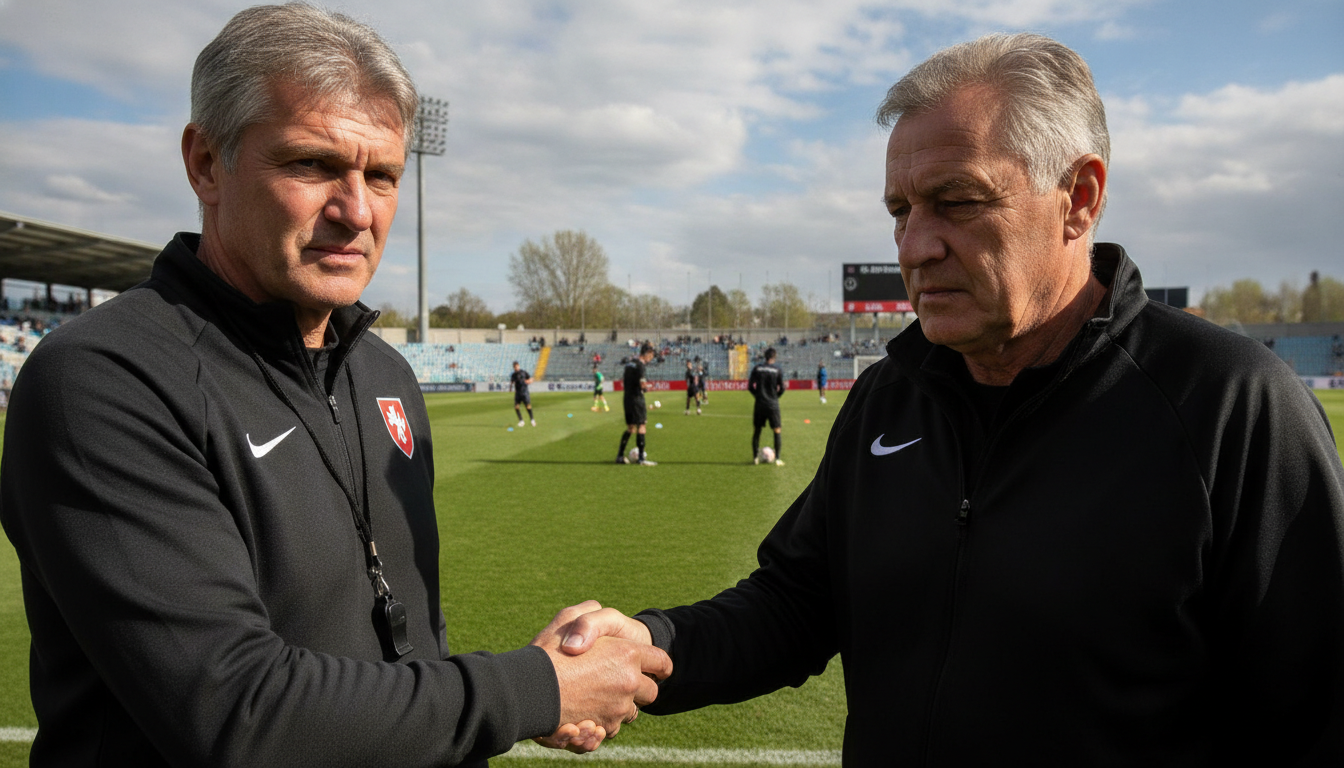
Czechia’s Miroslav Koubek becomes the oldest coach in the World Cup as records tumble in Group A
Czechia boss Miroslav Koubek broke the record for the oldest coach in the World Cup after South Korea defeated his side, following a brief spell at the top by South Africa’s Hugo Broos. The record is expected to change again when Dick Advocaat takes the Curaçao dugout this weekend.


Summary of the record shift
Miroslav Koubek’s appearance on the touchline for Czechia against South Korea on June 12, 2026, made him the newest holder of the title “oldest coach in the World Cup,” a mark that had been momentarily seized by South Africa’s Hugo Broos during the tournament opener. Both developments unfolded in Group A on the opening matchday as the 2026 tournament began in Mexico, the United States and Canada. (washingtonpost.com)
How Broos briefly took the record
Hugo Broos, who led South Africa in the tournament’s opening fixture against co-host Mexico, became the oldest coach to manage a World Cup match when he took his place in the Azteca Stadium dugout on June 11. His presence in the opening match briefly eclipsed the long-standing mark set by former Greece coach Otto Rehhagel. South Africa’s 2-0 defeat to Mexico nonetheless left Broos with the short-lived statistical footnote of having surpassed the previous benchmark. (apnews.com)
Koubek’s night in Guadalajara and the new milestone
Hours after the opening match, Miroslav Koubek managed Czechia in Guadalajara as they fell 2-1 to South Korea, and in doing so he moved past Broos and Otto Rehhagel to become the oldest coach to oversee a World Cup game. The match itself — a comeback victory for South Korea sparked by midfielder Hwang In-beom — carried wider consequences off the ball as Koubek’s presence reset the tournament’s age-related record for managers. The game was widely reported as the fixture that placed Koubek atop the list. (washingtonpost.com)
Rehhagel’s long-held mark and the historical context
The benchmark that stood for more than a decade belonged to Otto Rehhagel, who was 71 years and 317 days old when he managed Greece against Argentina on June 22, 2010. That Guinness-recognized figure has been treated as the official age record for the tournament until the recent sequence in Group A. Rehhagel’s 2010 side, and his lengthy managerial résumé, have been the reference point for every subsequent “oldest coach” calculation. (guinnessworldrecords.com)
Why the record unspooled three times in days
This World Cup’s expanded field and the presence of multiple veteran managers created the unusual scenario in which a long-standing record was broken repeatedly within a short span. Hugo Broos and Miroslav Koubek are both in their mid-70s and have international reputations built over decades, while Dick Advocaat — who will lead Curaçao — is significantly older. The tournament schedule placed their matchdays within days of each other, producing the rare statistical cascade that has drawn attention alongside the on-field action. (apnews.com)
Dick Advocaat and the likely next reset
Dick Advocaat, the veteran Dutch coach who guided Curaçao to their first World Cup, is due to take charge against Germany on June 14, and his return to the Curaçao job earlier this year means he will be in the dugout at 78 years old. Advocaat’s brief resignation earlier in 2026 and subsequent reinstatement received widespread coverage, and his scheduled appearance in Houston is expected to create a new high-water mark for managerial age at the finals. Media outlets and tournament previews have flagged Advocaat’s return as the next probable change to the record. (theguardian.com)
Reactions and the wider narrative
Reaction to the rapid succession of “oldest coach” headlines has been measured in footballing circles, with commentators noting that age is only one statistic among many that describe a manager’s profile. For teams like Czechia and South Africa, experienced coaches were appointed for their tactical nous and leadership rather than to set records, and coverage has balanced the novelty of the milestone with assessments of tactical decisions, player selection and match outcomes. Journalists and broadcasters covering the early rounds have placed the age headlines alongside standard match reportage. (washingtonpost.com)
Implications for tournaments and recordkeeping
The 2026 World Cup’s expanded format and the global reach of today’s media mean records are more visible, more quickly reported and therefore more likely to be reframed when closely positioned fixtures occur. Statistical authorities — from FIFA to Guinness and independent archivists — base records on precise birthdates and match timings, so the order and timing of matches can produce headline-grabbing shifts even where the age differences are measured in days or months. Officials and historians will log each appearance carefully to preserve the official sequence of record-holders. (guinnessworldrecords.com)
Miroslav Koubek’s elevation to the tournament’s oldest coach came amid South Korea’s comeback win in Group A, and the distinction is likely to pass once again with Dick Advocaat’s scheduled appearance for Curaçao on June 14. The rapid turnover of the title underscores how tournament timing and veteran appointments combined to rewrite a small corner of World Cup record books in the competition’s opening days. (washingtonpost.com)