Germany vs Curaçao: Germany cruise to a 7-1 win as Curaçao score historic World Cup goal
Germany vs Curaçao: Germany ran out 7-1 winners as Nmecha, Schlotterbeck, Musiala and Havertz starred, while Curaçao celebrated its first World Cup goal.


Germany opened their World Cup campaign with a comprehensive 7-1 victory over Curaçao in Houston, a match that combined early dominance with a brief but celebrated response from the debutants. The fixture, billed as one of the most lopsided matchups on paper, saw Felix Nmecha open the scoring inside six minutes and Kai Havertz finish with a brace as Germany asserted control after a momentary scare. Curaçao’s squad, making its tournament debut, stunned neutrals by finding the net through Jayden Comenencia and sparking jubilant scenes among the island’s supporters in the crowd. The result marked a commanding start for Germany while delivering a historic milestone for the smallest nation to reach the World Cup.
Fast start and early control
Germany set the tempo from the first whistle and quickly translated possession into a goal, demonstrating the clinical edge expected of a four-time world champion side. Felix Nmecha capitalized on a swift attack to give Germany a lead within the opening ten minutes, underlining the visitors’ intent. After that early strike, Germany continued to press, dictating tempo and probing for space behind the Curaçao backline. The initial period suggested a one-sided game as Germany’s structure and movement caused repeated problems for the underdogs.
Germany’s early control was defined by quick transitions and intelligent use of the flanks, forcing Curaçao to chase ground and defend in numbers. The visitors’ defensive work-rate prevented Germany from stretching the lead immediately, but the pattern of pressure was established. Curaçao’s goalkeeper and defenders had to remain alert to a steady stream of crosses and late runs into the box. That steady application eventually paid dividends for the hosts when fatigue and concentration lapses crept into Curaçao’s ranks.
Curaçao respond and celebrate a historic goal
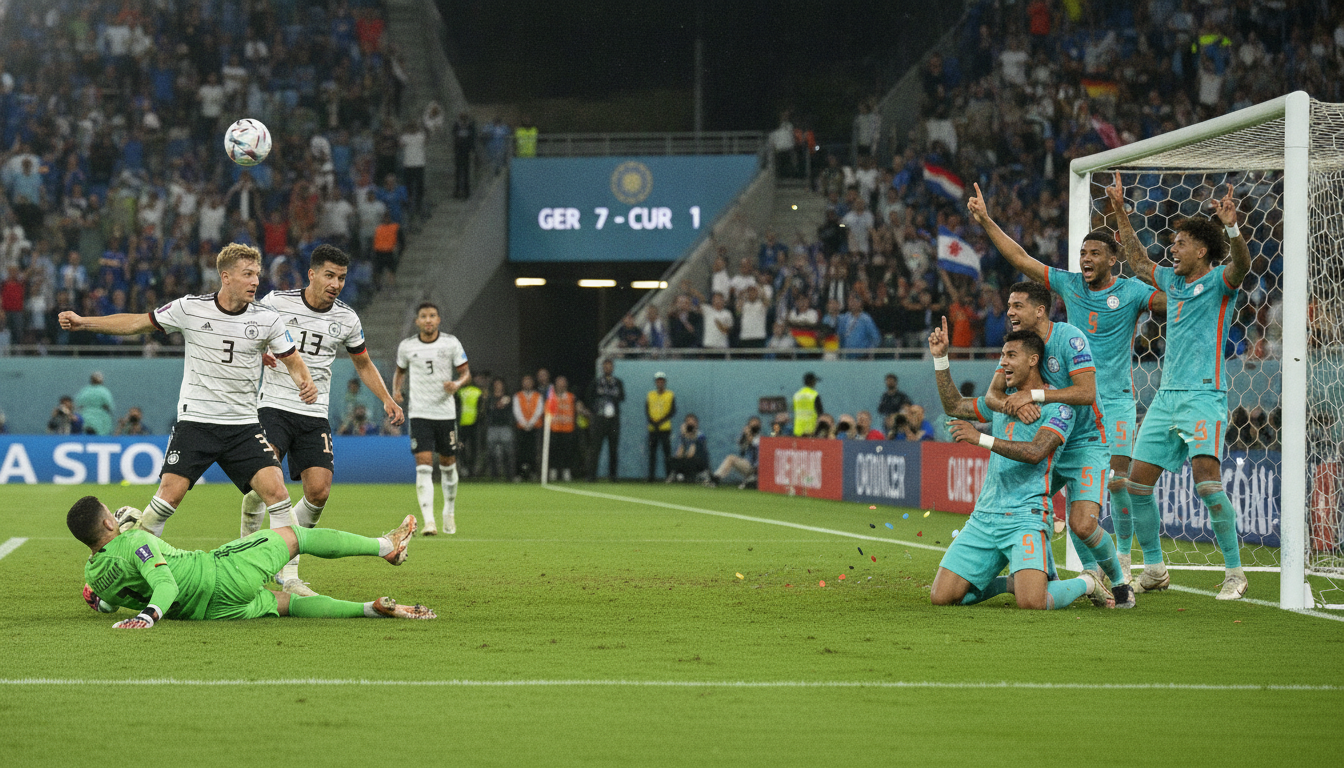
Against expectation, Curaçao answered with a goal that drew one of the loudest responses of the night and provided a stirring underdog narrative. Jayden Comenencia broke forward on the counter and finished clinically to register Curaçao’s first-ever World Cup goal, prompting scenes of euphoric celebration among the island’s supporters in the Houston crowd. The moment briefly swung momentum and served as a reminder that the smallest nations can produce memorable moments on football’s biggest stage.
The closed stadium in Houston amplified the atmosphere, with roughly 6,000 fans backing Curaçao and making their presence felt despite the scale of the occasion. Those supporters, joined by many neutrals, savored the rare sight of the debutants finding the net at a World Cup. The response also forced Germany to reassess the match’s rhythm and to commune on the field about avoiding complacency. For Curaçao, the goal was both a sporting landmark and an emotional payoff for a compact footballing nation.
Set pieces and Schlotterbeck’s aerial threat
Germany regained the lead through a method they had planned for: set pieces. The hosts turned to their aerial strengths and converted a well-delivered corner as Nico Schlotterbeck rose to meet a cross and head Germany back in front. The central defender’s presence on dead-ball situations had been a recurring theme, and his finish underscored how Germany exploited physical mismatches inside the box. Set plays remained a reliable avenue for Germany to manufacture chances against a compact defensive block.
Schlotterbeck’s contribution was emblematic of Germany’s multi-faceted attack, which combined individual finishing with structured patterns from wide positions and set-piece rehearsals. The goal also highlighted the importance of concentration in defending the penalty area; Curaçao struggled to contain the repetitions of crosses into inviting zones. Germany’s ability to convert from these situations reduced the visitors’ margin for tactical experimentation and nudged the game back toward a more one-sided outcome.
Halftime adjustment and Nagelsmann’s response
A stern halftime address from head coach Julian Nagelsmann appeared to sharpen Germany’s focus and intensity heading into the second half. The manager’s intervention followed a spell in which Curaçao had briefly disrupted Germany’s control, and the team returned after the break with renewed purpose. Tactical tweaks emphasized quicker circulation, more aggressive pressing in midfield, and tighter coordination between full-backs and wingers to overload wide channels. The adjustments were designed to suffocate any momentum Curaçao might have gained from their equalizer.
Those changes produced an immediate effect as Germany reclaimed dominance and built sustained phases of play in the opposition half. Players moved with clearer intent and the collective pressing limited Curaçao’s time on the ball, restricting dangerous transitions. The halftime response underlined the difference in depth between the squads, with Germany able to both analyze and remedy problems at pace. As the second half unfolded, Germany’s coherence blunted any hope of a comeback from the debutants.
Second-half control, substitutions and finishing touches
The second half increasingly came to resemble a training ground demonstration of Germany’s attacking depth, with Jamal Musiala adding a composed finish after a smart pass from Joshua Kimmich. Musiala’s goal opened a scoring sequence that saw multiple players get on the scoresheet, reflecting the team’s breadth of attacking options. Nathaniel Brown followed with his first goal for Germany, adding to the tally and emphasizing the squad’s ability to generate chances from varied patterns of play. Each strike consolidated Germany’s control and created space for late substitutions to make an impact.
Deniz Undav, introduced from the bench, took advantage of a flowing team move to score a debut goal, further extending the margin and handing a rare personal milestone on an international stage. Kai Havertz completed the scoring with a deft chip late on to secure a brace, capping a performance that mixed composed finishing with intelligent off-the-ball movement. The succession of goals underlined both the tactical superiority and the relentless finishing discipline of the German side. For Curaçao, the second half exposed the gulf in depth and experience but also contained moments of resilience worth building from.
Wider implications and next steps for both teams
The result offers a confident launch pad for Germany as they aim to translate group-stage promise into knockout-stage momentum. A dominant opening victory will buoy selection choices and tactical plans going forward, while the range of scorers provides Nagelsmann with pleasing options for rotation. The win also ends Germany’s drought of opening-day World Cup victories, a small statistical note with psychological value for the squad. For Germany, maintaining this level of attacking variety and defensive solidity will be central to sustaining their tournament ambitions.
For Curaçao, the match will be remembered chiefly for a landmark goal and for the experience of competing at the highest level against elite opposition. While the scoreline underlines the challenges of facing a top-tier nation, there are constructive takeaways: the team showed pace on the break, moments of sound defending, and the capacity to create clear chances against a superior opponent. Their debut will likely inform future development, investment, and the recruitment of players with World Cup experience. Curaçao now return to regrouping and preparing for the remainder of a tournament that has already provided them an unforgettable moment.
Germany will next face the Ivory Coast as they seek to build on this opening-day success, while Curaçao will take time to analyze the performance and extract lessons from their World Cup introduction. The match in Houston will be remembered for both the clinical nature of Germany’s attacking display and the historic significance of Curaçao’s goal, blending professional excellence with a storybook moment for the smallest nation on football’s biggest stage.