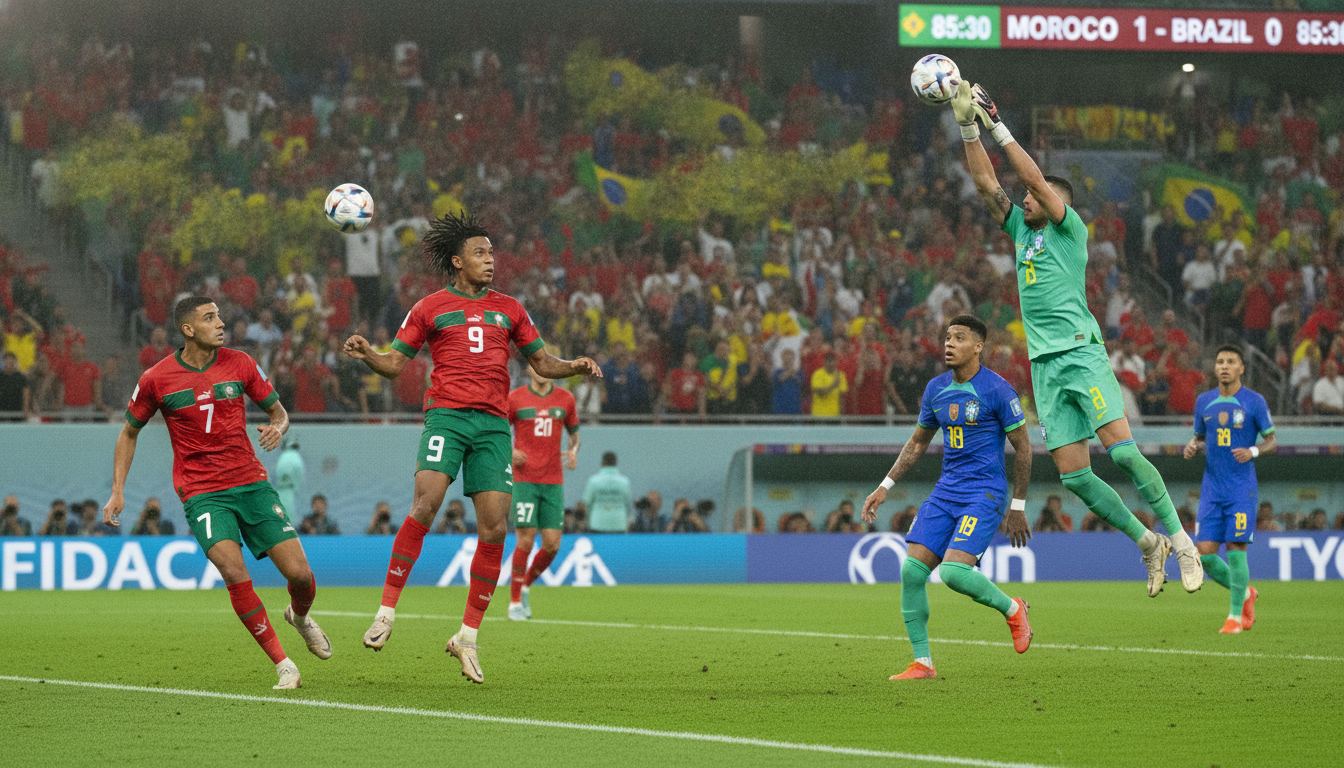
Oliseh says Morocco would have won Morocco vs Brazil draw if they had Osimhen or Lookman
Former Super Eagles captain Sunday Oliseh argues Morocco lacked the finishing punch to turn the Morocco vs Brazil draw into a victory, saying players like Victor Osimhen or Ademola Lookman would have made the difference.


Morocco held five-time world champions Brazil to a 1-1 draw in their 2026 World Cup Group C fixture, a result Oliseh praised for tactical discipline and organisation while suggesting the North Africans were unlucky not to take all three points. The contest featured an early strike from Ismael Saibari and a thunderous equaliser from Vinicius Junior, and it left Morocco with momentum as they prepare for their next group fixture on June 19.
Oliseh backs Morocco after Morocco vs Brazil draw
Sunday Oliseh, the former Super Eagles captain and ex-Nigeria coach, used social media to commend Morocco’s performance after the Morocco vs Brazil draw. He singled out the team’s collective structure, noting both defensive solidity and coherent attacking patterns.
Oliseh said Morocco displayed belief and evolution as a unit but lacked the kind of elite finishing that can convert control into a clear victory against top opposition. He argued that the presence of clinical, high-calibre forwards would have changed the margin of the result in Morocco’s favour.
Match turning points and key moments
The contest was decided by two moments in a tight first half where both teams showed their contrasting strengths. Morocco took the lead in the 21st minute when Ismael Saibari reacted to a defence-splitting pass from Brahim Díaz and finished with a delicate lob over Brazil’s goalkeeper.
Brazil responded within 11 minutes through Vinicius Junior, whose spectacular volley into the far corner restored parity and underlined why the five-time champions remain dangerous even when they appear off rhythm. The rest of the match featured disciplined defending from the Atlas Lions and opportunistic probing from Brazil as both teams sought a decisive breakthrough.
Attacking gap highlighted by Oliseh
Oliseh’s analysis focused less on Morocco’s organisation and more on a perceived deficit in finishing quality at the top end of the pitch. He suggested that a striker with Victor Osimhen’s penalty-area menace or Ademola Lookman’s directness and movement would have given Morocco the clinical edge required to turn opportunities into multiple goals.
The former Nigeria coach’s point rests on the idea that elite-level attackers change the dynamic of tight games by creating and exploiting half-chances that defenders treat as routine. Morocco’s front line showed intelligence and work rate, but Oliseh believes the team still lacks that final killer instinct to put elite sides away.
Brazil’s reliance on Vinicius and Raphinha
Oliseh also pointed to Brazil’s reliance on individual brilliance to rescue the result, singling out Vinicius Junior and Raphinha as the two players who altered the game’s complexion. Vinicius’s volley was a clear example of momentary quality resolving a contest where the collective game plan from both sides produced few clear-cut chances.
Raphinha’s presence and influence on the flank provided Brazil with an additional outlet in transition, and Oliseh argued that the pair’s attacking spark masked some of Brazil’s uneven performances. That assessment highlights a recurring theme in matches between elite teams: moments of individual excellence can override an opponent’s tactical control.
Tactical analysis of Morocco’s performance
Morocco’s approach against Brazil combined compact defending with rapid, organised transitions into attack, a pattern that has defined their recent international successes. The Atlas Lions looked comfortable in numbers behind the ball and patient when circulating possession, inviting Brazil to commit players forward and then probing the spaces left in transition.
Brahim Díaz’s assist for Saibari’s opener illustrated the value Morocco place on quick, penetrative passing to unlock compact defences. The team’s set-up allowed them to absorb pressure without panicking and to retain composure when engineering forward moves, attributes that Oliseh highlighted as evidence of the side’s maturation.
Implications for Morocco in Group C
Holding Brazil to a draw keeps Morocco in a favourable position as the group stage progresses and cements the perception that they are a dangerous, well-drilled unit. The result provides a confidence boost heading into their next Group C game against Scotland on June 19, a match that will be pivotal for points and group momentum.
Morocco’s capacity to stifle top attacking nations and to manufacture chances through disciplined buildup offers a clear blueprint for their campaign, but the team will likely continue searching for consistent high-end finishing to convert domination into larger goal returns. How the coaching staff addresses the attacking question, either through tactical adjustments or personnel changes, will be a storyline to watch.
Context from Morocco’s recent World Cup history
Morocco’s rise on the world stage has been rapid and historic, and their ability to compete with Brazil further underscores the nation’s progress. The Atlas Lions’ deep run at the previous World Cup marked a milestone for African football, and this draw serves as another signal that Morocco remain among the more organised and tactically astute teams in the tournament.
That historical perspective adds weight to Oliseh’s comments, which simultaneously praise the team’s development and propose one clear area for improvement. The balance between structural discipline and cutting offensive quality will likely define Morocco’s prospects as the tournament unfolds.
Morocco’s draw with Brazil produced a tightly contested match that showcased defensive organisation, intelligent buildup play, and moments of individual brilliance. Oliseh’s view that players with the scoring profiles of Victor Osimhen or Ademola Lookman could have produced a different outcome highlights the fine margins at this level of international competition.
The result leaves Morocco with valuable momentum but also a reminder that even the most cohesive teams can be affected by finishing deficiencies. As Morocco prepare for Scotland on June 19, the coaching staff will weigh whether to tweak attacking personnel or to emphasize different patterns that might better exploit the opponents they face in the remaining group fixtures.