Tunisia appoints Hervé Renard as head coach after Sabri Lamouchi exit at World Cup 2026
Tunisia names Hervé Renard to revive World Cup hopes after 5-1 opening loss; Renard will take charge ahead of the Group F meeting with Japan.
Tunisia have moved quickly to replace Sabri Lamouchi with veteran coach Hervé Renard following the ejection of the former boss after the Eagles’ heavy defeat to Sweden, the Tunisian federation said on Tuesday. (lapresse.tn)
Federation confirms Renard will lead Tunisia through the World Cup
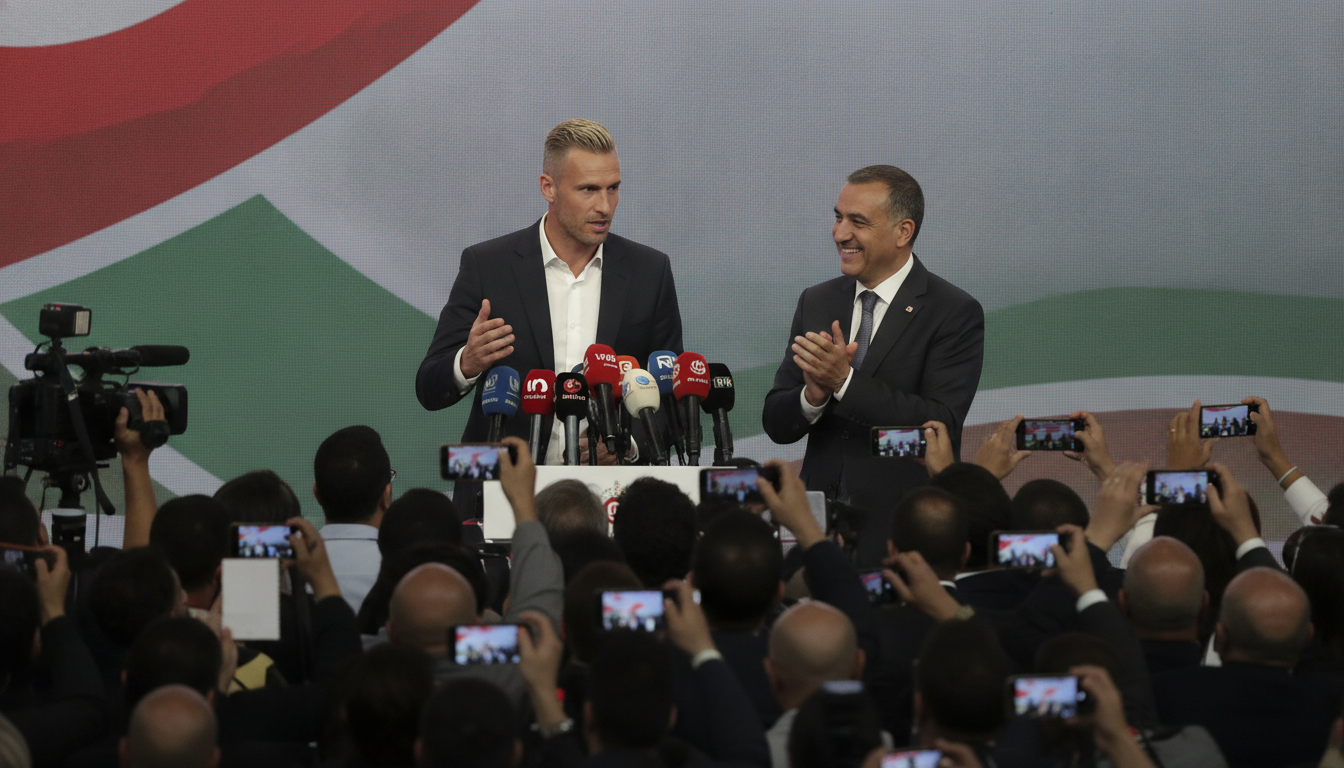
The Tunisian Football Federation announced that Hervé Renard has been appointed to take immediate charge of the national team for the remainder of their 2026 World Cup campaign. The federation said the initial agreement covers the duration of Tunisia’s participation at the tournament, with a post-competition evaluation to determine any extension. (lapresse.tn)
The move was confirmed publicly after the federation ended its collaboration with Sabri Lamouchi by mutual agreement, and it also entailed changes to the wider coaching staff. The federation indicated Renard will assemble his preferred backroom team, while national technical director Mondher Kebaier will remain involved in an oversight capacity. (lapresse.tn)
Immediate assignment: Group F clash with Japan in Monterrey
Renard’s first assignment is a crucial Group F fixture against Japan in Monterrey on 20 June, a match that will shape Tunisia’s short-term prospects at the tournament. The scheduling leaves little time for preparation, requiring rapid tactical adjustments and man‑management to steady a shaken squad. (en.wikipedia.org)
With only two group matches remaining after the Sweden loss, Tunisia must take quick strides to close gaps in organisation and mentality, and the federation has signalled urgency in expecting an immediate response on the pitch. The upcoming game is therefore both a tactical test and a measure of Renard’s ability to impose authority in a compressed timeframe. (en.wikipedia.org)
The collapse that prompted the change: Sweden rout and mounting pressure
Tunisia’s decision followed a damaging 5-1 defeat to Sweden in the group opener, a result that left the North African side bottom of Group F and prompted an immediate leadership review. The loss compounded concerns raised by a 5-0 pre-tournament friendly defeat to Belgium, intensifying scrutiny on Lamouchi’s brief tenure. (skysports.com)
Those results and visible defensive frailties convinced federation officials that a new voice was required to arrest the slide before qualification hopes were extinguished. The dismissal marked one of the earliest managerial exits at this World Cup and reflects the high-stakes environment federations face during the global tournament. (skysports.com)
Renard’s record: continental trophies and big-match experience
Hervé Renard brings a long résumé of international success, most notably becoming the only coach to win the Africa Cup of Nations with two different countries, guiding Zambia to the title in 2012 and Côte d’Ivoire in 2015. That pedigree on the continent underpins the federation’s hope that he can restore belief and tournament know‑how to the squad. (cafonline.com)
Renard has also managed in other high-pressure environments, including spells with Morocco and Saudi Arabia, and his teams have produced surprise results on football’s biggest stages. His ability to engineer short-term turnarounds and organise teams defensively is central to why Tunisia approached him for an immediate assignment. (cafonline.com)
High-profile moments and tactical approach
Renard’s career includes memorable upset victories and pragmatic, disciplined tactical setups that often neutralise more fancied opponents. While managing Saudi Arabia at the 2022 World Cup, his side produced a shock opening win over eventual champions Argentina — a result that remains among the tournament’s defining upsets and a reference point for Renard’s capacity to prepare teams for one‑off, high-pressure matches. (aljazeera.com)
That history suggests Renard will prioritise organisation, defensive compactness and set-piece threat as immediate levers to improve Tunisia’s results. He typically opts for a clear structure and fast transitional play, seeking to stabilise teams quickly rather than overhaul personnel in a short window. (aljazeera.com)
Squad condition, tactical priorities and selection dilemmas
Renard inherits a Tunisian squad with experienced individuals and some clear vulnerabilities, particularly at the back, where the Sweden game exposed lapses in concentration and coordination. Restoring cohesion and confidence will be a primary short-term objective, together with tightening shape and clarifying individual responsibilities. (lapresse.tn)
Selection decisions loom large: the coach must weigh whether to reward senior leaders for experience or to inject fresh energy with younger, in-form players. Time for training and tactical drilling is limited, so Renard’s early messages in team meetings and his capacity to simplify game plans will be crucial in readying the squad for the Japan match. (lapresse.tn)
Implications for Tunisia’s World Cup path and federation strategy
The appointment reflects a high-risk, high-reward calculation by Tunisia’s federation — placing short-term survival ahead of continuity. If Renard secures a positive result against Japan and then competes strongly versus the Netherlands, the federation will have bought time and created the conditions for a considered decision on his longer-term role. (lapresse.tn)
Conversely, failure to produce an immediate turnaround would leave the federation exposed to further criticism and raise questions about the timing and management of the coaching change. The arrangement, framed as a Champions‑on‑assignment short-term deal, will be judged both by results and by any visible improvement in team organisation and temperament. (lapresse.tn)
Tunisia face a compressed test of character and structure with Hervé Renard now in charge, and the coming days will determine whether the veteran coach can replicate his history of short-term impact under intense international scrutiny.