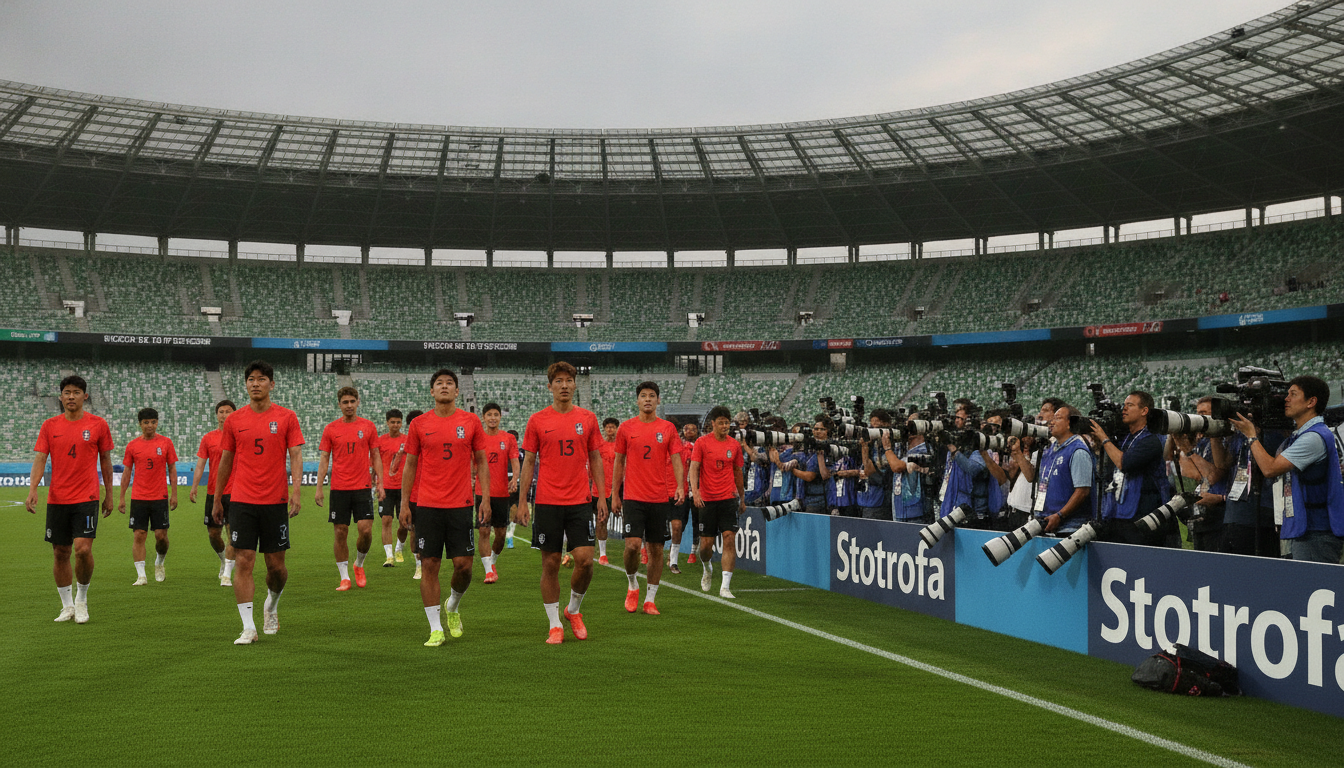
South Korea media boycott clouds preparations for World Cup clash with Mexico
South Korea media boycott disrupts pre-match build-up ahead of June 18 World Cup tie with Mexico, after derogatory comments about captain Son Heung-min sparked a dispute.

South Korea’s squad entered a partial media blackout on the eve of their FIFA World Cup group match against Mexico on Thursday, June 18, 2026, in Guadalajara. The South Korea media boycott followed widely reported disparaging remarks about captain Son Heung-min that were captured on camera, prompting players to limit contact with domestic journalists outside official commitments.
Squad boycotts national media after comments on Son Heung-min
Players were reported to have declined to speak to South Korean media representatives following the incident, maintaining dialogue only through scheduled, tournament-sanctioned channels. Several planned interviews were cancelled and routine post-training access appeared to be suspended as the team sought to contain the fallout.
The decision to restrict engagement with domestic outlets came after footage of the remarks circulated among press circles at the Guadalajara base camp, according to reporters covering the squad. Team sources said the action was meant to shield players and staff from further distraction ahead of the Mexico match.
The move has been framed by some within the camp as a short-term protective measure to preserve focus on the immediate sporting challenge. Officials and players have emphasized that on-field priorities remain unchanged, even as off-field tensions persist.
Reported resignation of team media officer
On Tuesday, June 16, 2026, one of the national team’s media officers was reported to have resigned in connection with the episode. The resignation has been circulated by news organisations present in Guadalajara, though the Korea Football Association (KFA) had not formally confirmed the personnel change at the time of reporting.
Media delegations reported being informed of the resignation informally, and the development contributed to a sense of disarray in the team’s press operations. Club and federation public relations responsibilities for a national squad are normally tightly coordinated during a World Cup, making any personnel disruption immediately consequential.
Federation insiders told journalists they expected clarification from the KFA, but until an official statement was issued the status of internal staffing and who now handles media liaison remained unclear.
KFA issues statement expressing regret over remarks
The Korea Football Association issued a public statement acknowledging the incident and expressing regret at the comments made by some media personnel during training at the Guadalajara base. The federation said the remarks had caused significant upset within the squad and reiterated a commitment to respectful engagement between players and the press.
The KFA also indicated it would seek to resolve matters through dialogue with media representatives and to protect the welfare of the players. The federation’s response framed the episode as a breach of conduct that needed to be addressed to restore professional relations.
Officials stopped short of naming individuals or prescribing disciplinary measures in the initial statement, signalling that any formal investigation or sanctions would be handled internally and communicated once conclusions were reached.
Impact on pre-match schedule and media access
There was no media access arranged for Tuesday, June 16, and a pre-match news conference was scheduled for Wednesday, June 17, ahead of the June 18 encounter with Mexico. Organisers confirmed that tournament-mandated press activities would continue, but allowed access elsewhere remained restricted as the situation unfolded.
The cancellation of player interviews and the suspension of informal press contact disrupted the usual rhythm of match-week coverage, complicating reporting for South Korean outlets in Guadalajara. International and Mexican media covering the game indicated they had been notified of changes to access protocols and were coordinating with tournament press officers for alternatives.
Federation and tournament officials have maintained that all parties must comply with FIFA media regulations, and that any internal disputes should not obstruct the mandated obligations to provide access for accredited journalists within the framework of the competition.
Meeting between media officers held, according to Mexican press
Mexican media reported that representatives of the host country’s press and the South Korean team’s media officers convened to discuss the incident and its immediate implications. Those accounts described the meeting as an attempt to defuse tensions and to agree on a path forward for coverage during the match week.
Details of the meeting’s content and any agreements reached were not immediately released by either side, leaving reporters to rely on secondhand accounts and statements from federation spokespeople. Observers noted that such meetings are standard practice when disputes arise, intended to restore working relationships and clarify expectations.
The reported negotiation highlighted a broader issue about the balance between media scrutiny and player dignity during high-profile tournaments, with organisers often caught between competing imperatives of transparency and player protection.
Potential consequences for team morale and public perception
The dispute places additional scrutiny on a squad that has placed heavy reliance on captain Son Heung-min as both a leader and a talisman on the field. Public criticism directed at a team captain can reverberate through dressing-room dynamics, but coaching staff have stressed the need to compartmentalise external issues and maintain focus on match preparation.
Sporting directors and analysts cautioned that while media relations incidents can be destabilising, professional environments typically absorb short-term shocks ahead of key fixtures. The immediate measure of consequence is whether the situation affects players’ concentration in training sessions and on match day actions.
Beyond the sporting implications, the episode raises broader questions about how national associations, media organisations and players negotiate accountability and respect during global events. The way the KFA, the press and the players handle the aftermath could shape public discourse at home in the days following the match.
What to expect ahead of Thursday’s match
Officials confirmed that tournament press obligations will proceed and that a pre-match news conference remained on the calendar for Wednesday, June 17. Team representatives are expected to address the media through the official FIFA channels ahead of kickoff in Guadalajara on Thursday, June 18.
For supporters and observers, attention will now be split between on-field preparations and how the parties involved resolve the dispute after the match. Any formal clarification from the KFA regarding the reported resignation or disciplinary actions would likely follow once immediate match commitments are complete.
The outcome of the Mexico game itself may either eclipse or amplify the controversy, depending on the result and the team’s on-field performance.
The South Korea media boycott underscores tensions that can emerge when intense national interest collides with the pressures of global competition, and both federation officials and media organisations face near-term tests in finding a constructive resolution.