World Cup matchday roundup: Belgium held, Spain dominate, Cabo Verde draw Uruguay
World Cup matchday roundup: Belgium were held to a 0-0 draw by Iran, Spain routed Saudi Arabia 4-0, and Cabo Verde fought to a draw with Uruguay as Group G drama continued.

Belgium frustrated by Iran’s resilience
Belgium, labelled by many as a golden generation, were left scoreless and searching after a stuttering display that produced a 0-0 draw with Iran. The result underlined questions about the team’s cohesion and finishing, as chances were created but not converted against a compact, organised opponent.
Iran’s goalkeeper was the standout figure, producing several decisive saves to preserve the clean sheet and earn his side a morale-boosting point. Off-field controversies and intense scrutiny had surrounded Iran before kick-off, but the players delivered a disciplined showing that neutralised many of Belgium’s threats.
Rudi Garcia’s side must now address a lack of clinical edge if they are to meet expectations placed on a squad packed with experienced talent. The draw leaves Belgium with work to do to prove they can translate ability into consistent tournament results.
Spain issue a statement with a 4-0 win over Saudi Arabia
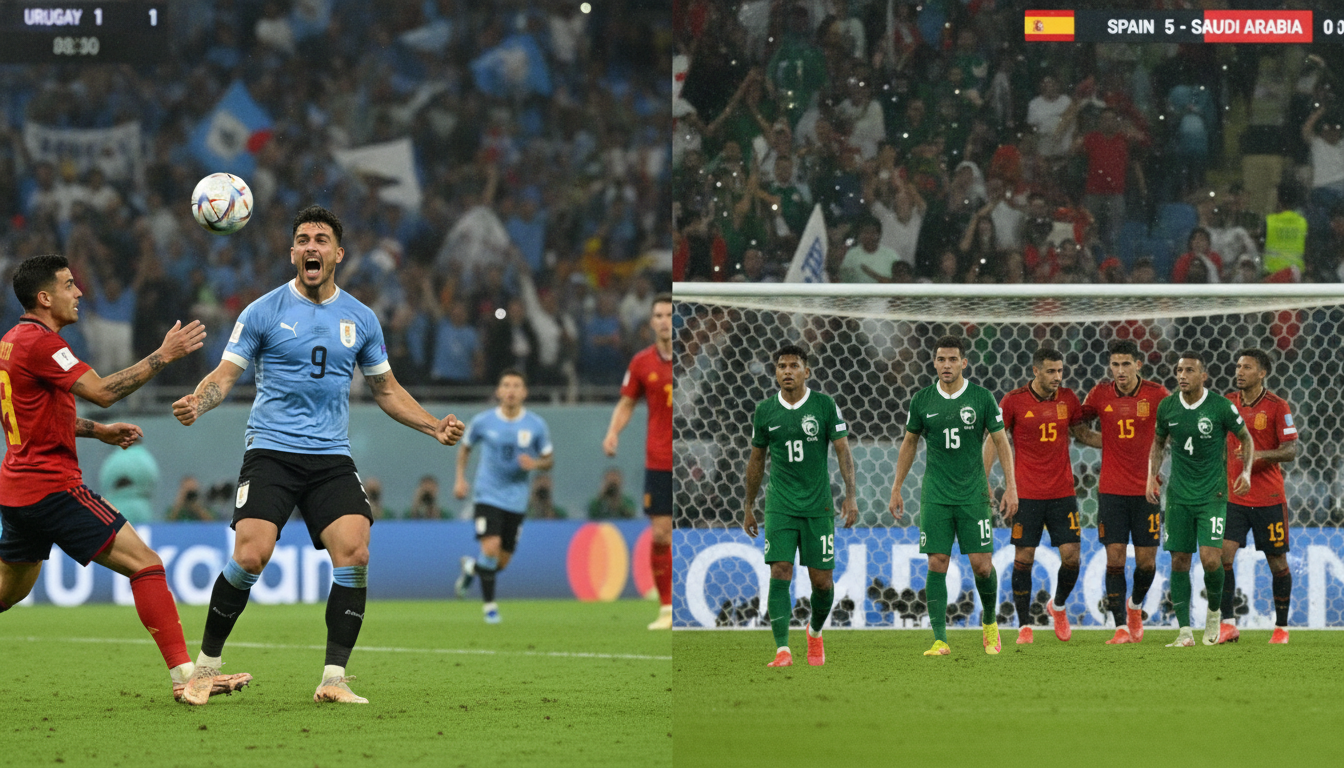
Spain answered some early tournament questions by dismantling Saudi Arabia in convincing fashion, producing a 4-0 victory that highlighted their attacking fluency. The win offered reassurance about Spain’s offensive balance, with movement and combinations producing a healthy goals return.
Still, the result will be measured against the quality of the opponent, and sceptics will reserve full judgement until Spain face more formidable competition. Luis de la Fuente’s selections and tactical tweaks will come under closer inspection in the matches ahead.
The comprehensive scoreline did, however, deliver confidence for the squad and supporters, giving Spain momentum as the group stage progresses. Clean sheets combined with a strong goal difference could prove decisive in the long run.
Cabo Verde and Uruguay share points in Miami
In Miami, a match that carried both symbolic and sporting weight ended with Uruguay forced to settle for a draw against determined Cabo Verde. The contest featured a late equaliser for Uruguay by Maxi Araujo, who ensured his side left with a point after a spirited performance by their opponents.
Cabo Verde’s goalkeeper and defensive unit earned plaudits for keeping the contest alive, and the presence of supporters including Ana Candida Evora underscored the emotional significance of the fixture. The game took place on Father’s Day in much of the United States, though for some attendees it was a personal celebration of family in a different key.
The draw will be hailed by Cabo Verde as evidence of growth and competitiveness at this level, while Uruguay will reflect on missed opportunities and moments of vulnerability. Both teams can extract positives, but each also knows improvement is needed in the coming fixtures.
Golden generations struggle with expectation and ageing squads
The pattern seen with Belgium — lauded as a golden generation yet delivering underwhelming results — is a recurring theme in international football. High expectations bring pressure, and teams with ageing cores often find their margins for error reduced as physical and tactical limitations become more apparent.
History offers parallels where talented groups have failed to coalesce at the right time, and that narrative now hangs over squads that have underperformed relative to their promise. Coaches face the twin tasks of extracting short-term results while also managing transitions to younger players who can carry the team forward.
For tournament organisers and national football federations, the challenge is to balance respect for experienced professionals with the imperative to build a sustainable pipeline of talent. How managers navigate that balance will determine whether such generations are remembered for triumph or for missed opportunities.
Group G picture and remaining fixtures
Group G’s dynamics shifted over the course of the matches, with draws and decisive wins mixing to keep the table unsettled. Belgium’s inability to convert chances and Iran’s defensive resolve combined to leave points shared, while Cabo Verde’s draw with Uruguay further complicated the outlook.
One of the remaining ties in the group — New Zealand versus Egypt — was scheduled to follow, with its own implications for qualification and momentum. Results in the next round of matches will be crucial in determining which sides can realistically challenge for the top spots and which must adopt a more conservative approach.
Goal difference, tactical flexibility and squad depth will all play prominent roles as the group stage progresses. Teams that can adapt mid-game and manage player fitness across congested fixtures will be best placed to advance.
Key players and tactical takeaways from the night
Iran’s goalkeeper stood out as the match-winner in his own right, turning in a performance that nullified Belgium’s attacking intent. Such goalkeeping displays can swing tight groups and offer low-ranked teams a platform to compete against technically superior opponents.
Spain’s attacking trio combined with disciplined build-up play to produce a high-scoring performance, but the test will arrive when they face teams that can press effectively and exploit transition moments. Cabo Verde’s defensive organisation and Uruguay’s reliance on moments of individual quality both shaped a game that was tense until the final exchanges.
Managers will be taking notes on substitution patterns and set-piece vulnerabilities, as marginal gains often decide tight group encounters. Teams that can convert a handful of created chances into goals will separate themselves from those that must scrape results.
The next matchdays will expose whether the results seen were signs of form, flukes, or accurate reflections of each side’s standing in the tournament. Adjustments made now are likely to influence not just group tables but the broader narratives that will define this competition.
The tournament remains open and unpredictable, with several teams showing resilience and others revealing problems that require urgent fixes. How nations respond to these early tests will shape the remainder of the group stage and determine which sides can realistically pursue deep runs in the competition.