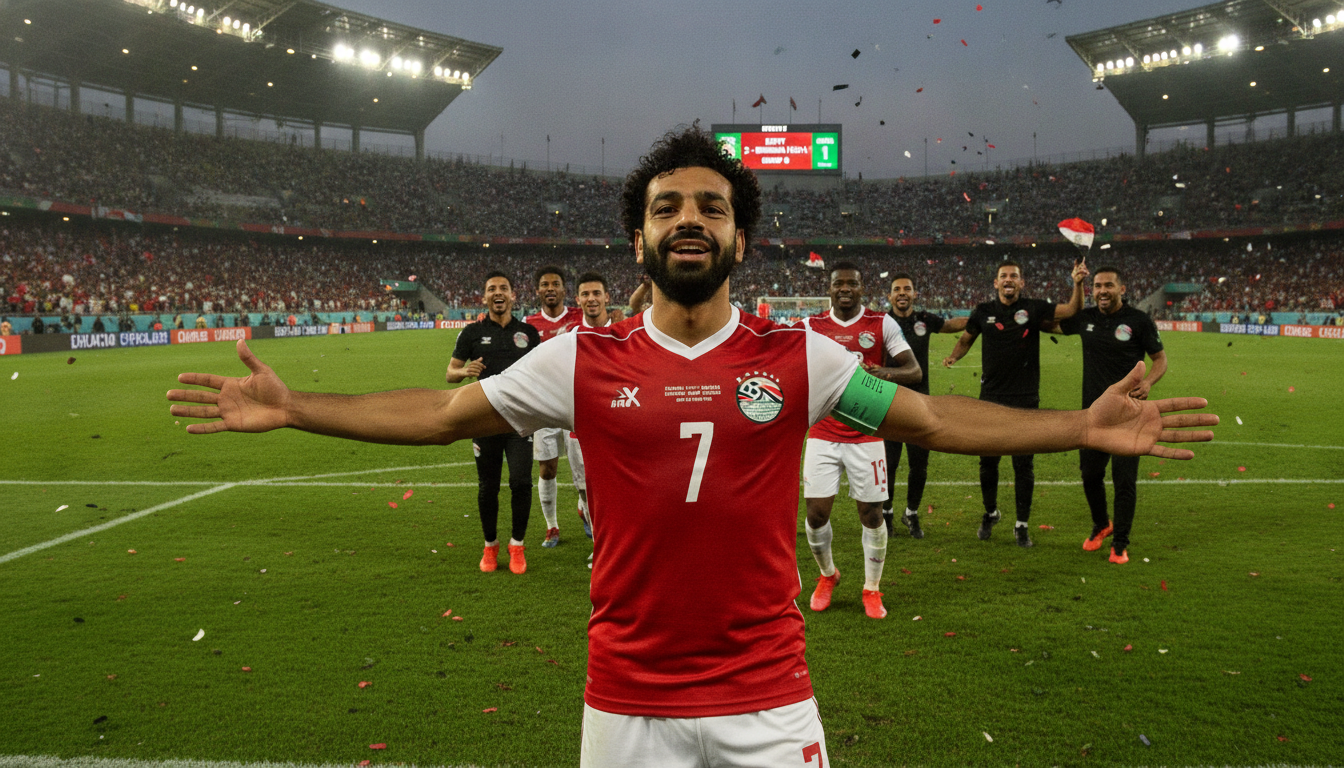
Egypt beat New Zealand to secure first-ever World Cup victory and top Group G
Egypt beat New Zealand 3-1 in a second-half comeback to record their first-ever World Cup win, with Mohamed Salah scoring and creating late goals to put Egypt top of Group G.


Egypt beat New Zealand in an encounter that flipped on its head after the interval as the Pharaohs dug in and produced a decisive second-half performance. Mohamed Salah was central to the turnaround, adding a goal and an assist to lift Hossam Hassan’s team to the summit of a tight Group G. New Zealand had led at the break through Finn Surman’s header but could not withstand Egypt’s pressure after the restart.
Salah inspires second-half turnaround
Mohamed Salah delivered the defining contributions after the break, dispatching one goal and setting up another to change the game’s momentum. His finish moved him clear as Egypt’s outright top-scorer in World Cup history with three goals in the tournament.
Salah’s influence extended beyond the scoresheet as his movement and decision-making created space for teammates and stretched New Zealand’s defensive shape. His involvement in both the equaliser and the winner underlined his status as the corner-stone of Egypt’s attacking thrust.
New Zealand take surprise lead
The opening half belonged to New Zealand, who took an early advantage through centre-back Finn Surman from a well-delivered corner. Tim Payne’s set-piece delivery found Surman, whose finish gave the All Whites a psychological edge going into the interval.
New Zealand’s organisation and set-piece execution offered a template for how the underdogs could challenge Egypt’s favoured frontline. The visitors defended resolutely through the first 45 minutes and forced Egypt to rethink its approach for the second half.
Momentum swing and decisive moments
Egypt levelled early in the second half when Mostafa Ziko rose to meet a cross and power home a header, bringing the game back on level terms. That strike shifted momentum and injected belief into a team hunting its first-ever World Cup victory.
The match’s decisive sequence unfolded after Egypt’s sustained pressure produced further chances, with Salah converting from close range to give his side the lead. Substitute Trézéguet added a fourth goal for the scoring margin when he found the net minutes after coming off the bench, sealing the three points.
Tactical adjustments and substitutions
Hossam Hassan’s adjustments at half-time helped Egypt impose greater intensity on the game, particularly in wide areas and in transitions. The coaching staff’s decision to introduce fresh legs later in the match paid dividends as Trézéguet’s presence unsettled New Zealand’s backline and allowed Egypt to close spaces more effectively.
New Zealand’s manager resisted radical changes but was forced to respond to Egypt’s sustained pressure, making a number of defensive alterations as the second half progressed. The timing and impact of substitutions on both sides were key to how the final third of the match played out.
Individual performances and squad notes
Mostafa Ziko impressed with his aerial presence and his headed equaliser, while Omar Marmoush completed 75 minutes and contributed to Egypt’s forward dynamics. The collective effort offered more than one attacking outlet for Egypt, reducing the burden on Salah alone.
For New Zealand, Surman’s goal stood out as a high moment, and Sarpreet Singh started before being withdrawn at the same time as Marmoush. Tim Payne’s delivery from set plays provided New Zealand with their clearest avenues to goal, but the team could not sustain their defensive resilience after the break.
Group G picture and remaining fixtures
The win moves Egypt to the top of Group G after two rounds, making them the only side with three points at this stage. New Zealand and the other teams in the section must now reassess their tactical plans as the group heads into its final fixtures.
Egypt will face Iran in their next match as they aim to consolidate their position, while New Zealand must regroup ahead of a meeting with Belgium. The outcome of those simultaneous fixtures will further shape the race for qualification out of what is proving to be a competitive group.
Post-match, Egypt and New Zealand will take stock of squad fitness and disciplinary records as they prepare for the next set of fixtures. Both teams will weigh rotation options and respond to any knocks picked up in a match that demanded high physical effort from starters and substitutes alike.
The result marks a historic milestone for Egypt at the World Cup and gives Hossam Hassan’s side a platform from which to press for a place in the knockout stages.