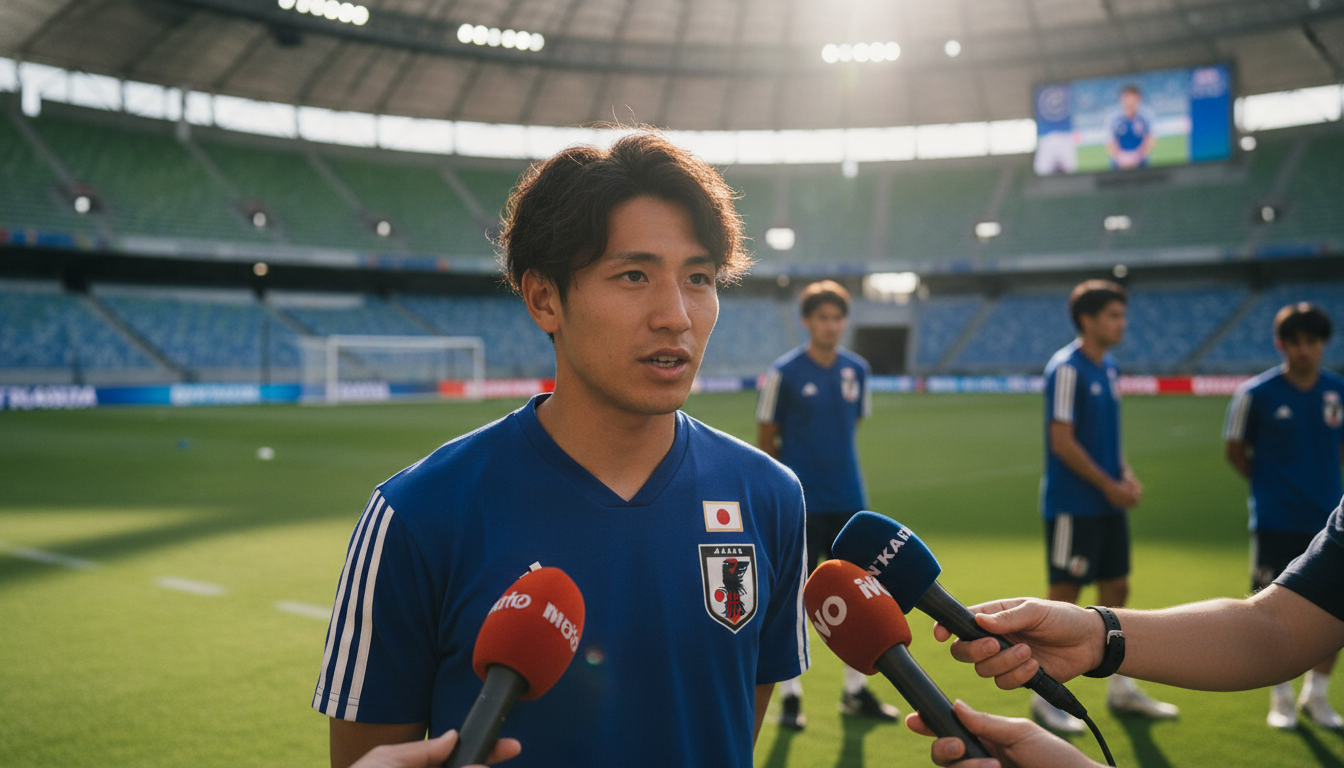
Japan World Cup hopes fade as Daichi Kamada urges football to become Japan’s top sport
Japan World Cup exit after a 2-1 loss to Brazil sparks Daichi Kamada’s call for football to become the nation’s primary sport to lift future trophies and youth focus.

Japan’s World Cup campaign ended in heartache as a late Brazil winner in the round of 32 sealed a 2-1 defeat that prompted midfielder Daichi Kamada to insist football must become Japan’s number one sport if the nation is to claim a first World Cup title. The loss, delivered in dramatic fashion in Houston, eliminated an ambitious Samurai Blue side that had arrived in North America with hopes of progressing deep into the tournament. Japan World Cup observers and officials now face immediate questions over development pathways and the domestic profile of the game. (scmp.com)
Kamada’s stark assessment after the elimination
Daichi Kamada said bluntly that Japan will “never win the World Cup” unless football rises to the top of the national sporting landscape and produces greater depth of quality. The Crystal Palace midfielder framed his comments as a call to intensify domestic investment, improve coaching structures and raise standards across the youth ranks. His remarks captured the frustration of a squad that repeatedly reaches the knockout rounds but has yet to overcome the hurdle of a first win on the World Cup’s elimination stage. (scmp.com)
How the match in Houston decided Japan’s fate
Brazil’s victory came late in the match, with the South Americans snatching the decisive goal in injury time to turn the tie on its head and send Japan home. Japan had carried momentum into the clash and showed resilience against a five-time champion, but a single lapse at the death proved decisive and negated the team’s earlier efforts. The manner of the defeat — late and unforgiving — intensified scrutiny of Japan’s game management in crucial moments and prompted immediate post-match reflection. (washingtonpost.com)
Japan’s recurring knockout-round disappointment
Japan’s inability to record a World Cup knockout victory has become a recurring storyline, with the latest exit extending a sequence of elimination-stage setbacks. While the national side has produced notable upsets and strong group-stage performances across tournaments, a breakthrough win in a World Cup knockout match has so far eluded the Samurai Blue. That historical pattern has turned into a central talking point for analysts and federation officials tasked with charting a course beyond the Round of 16. (fifa.com)
Domestic sporting culture and the competition for attention
Kamada highlighted a structural challenge beyond tactics and selection: football competes for attention and resources in a country where baseball traditionally commands mass participation and media focus. That competition affects everything from grassroots participation rates to sponsorship, broadcast deals and the perceived status of the sport in schools. The argument is that without a cultural shift that elevates football’s profile, efforts to accelerate elite development may be hampered by limited pathways and fewer young players committing to the sport long term. (straitstimes.com)
Where Japan can strengthen to close the gap
Coaches and technical directors point to a series of practical interventions that could help Japan convert promising talent into knockout-stage winners, including expanded high-performance centers, closer alignment between the J.League and youth academies, and targeted recruitment of specialist coaches in areas like physical preparation and set-piece defence. Tactical maturity, squad depth and the ability to control late-game scenarios were all exposed in the Brazil defeat, and those areas are now likely to shape federation priorities. Incremental changes in domestic scheduling, scouting and coaching education could yield a deeper talent pool able to withstand elite pressure. (fifa.com)
Immediate implications for the national programme
The exit will compel the Japan Football Association and coaching staff to review selection policies, preparation camps and the integration of overseas-based players with the domestic framework. There is also likely to be an intensified public debate about investment priorities and whether league structures should be reformed to foster a higher standard of competitive matches at home. Kamada’s public comments add urgency to those discussions by linking cultural status to competitive outcomes and suggesting that broader social commitment is a prerequisite for a genuine title challenge. (scmp.com)
Despite the pain of the elimination, Japan’s tournament performance offered positives: the team again demonstrated technical cohesion, disciplined pressing and the capacity to unsettle top-ranked opponents in the group phase. Those elements form a foundation that can be built upon if policymakers, clubs and the JFA act decisively to close identified gaps. The coming months will be a test of whether public and private stakeholders are willing to match on-field ambition with structural reforms and sustained investment.
The Brazil defeat and Kamada’s admonition have created a clear narrative for Japan’s footballing future: raise the domestic profile, deepen the player pipeline, and sharpen mental and tactical resilience in knockout scenarios. How quickly and comprehensively those changes can be implemented will determine whether Japan’s next World Cup campaign looks different from this one.
Longer-term, Japan’s pathway to a World Cup title will rest on expanding competition at youth levels, professionalizing more aspects of the talent pathway and ensuring the domestic game offers enough high-intensity matches to ready players for global knockout football. Public appetite, media coverage and education systems that support sport participation will all play a role if Kamada’s condition — that football becomes the country’s number one sport — is to be met.
The immediate task for the Japan national team is clear: review the loss, retain the strengths shown at the tournament, and translate lessons into concrete, measurable changes across coaching, domestic competition and youth development to ensure future Japan World Cup campaigns progress beyond the Round of 16.