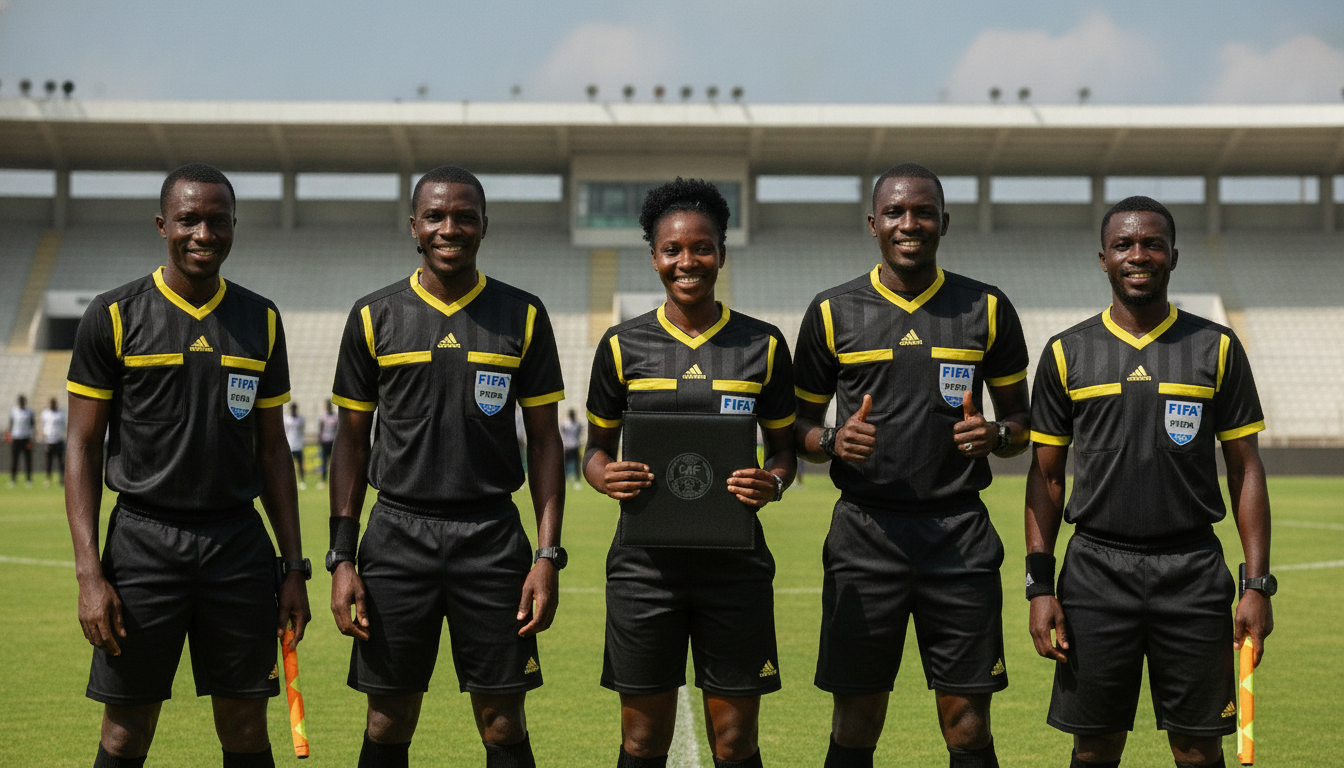
Liberian referees gain CAF and FIFA appointments amid hostile domestic conditions
Liberian referees are increasingly securing CAF and FIFA assignments even as they confront security risks, low pay, and limited resources at home, highlighting a juxtaposition of international recognition and domestic hardship.

For match officials across Liberia, recent selections to Confederation of African Football and FIFA competitions have become a source of national pride and a sign of progress. These international appointments, which include roles in youth World Cups and continental qualifiers, reflect improved training and visibility for Liberian referees. Yet the same officials continue to face intimidation, delayed payments, and unsafe venues in domestic leagues, creating a stark contrast between their global standing and local realities.
Referees Face Hostile Conditions Across Liberia
Local referees regularly work in environments where a single decision can provoke anger from players, club officials, and fans. Matches at the National County Sports Meet and key domestic fixtures often erupt into heated confrontations, placing officials in the center of volatile situations. Many referees travel long distances for modest indemnities and then return to full-time jobs and family responsibilities, making officiating a demanding secondary commitment rather than a secure profession.
Security at some venues remains a major concern, with officials reporting intimidation and bias from sections of the crowd and even from club stakeholders. Medical coverage and insurance are largely absent, and delayed or inconsistent match payments further compound the risks referees accept each weekend. Those hazards, combined with inadequate infrastructure at many stadiums, mean that the bravery required to officiate in Liberia extends well beyond physical fitness or technical knowledge.
International Appointments Signal Progress
In recent years, a growing number of Liberian match officials have been appointed to CAF and FIFA events, signaling recognition of their competency on the continental and global stage. Names such as Joel W. Doe and Emmanuel Mensah have become associated with international assignments, including tournaments at youth and under-age levels. These selections have been described by officials as career milestones that demonstrate both personal achievement and the maturing standards of Liberian refereeing.
Officials credit improvements to structured training, mentorship, and exposure through FIFA and CAF programs that were previously unavailable. The Liberia Football Association’s investment in referee development, bolstered by external funding and technical support, has helped lift fitness benchmarks and tactical understanding. Still, several referees argue that international selection must be matched by a formal domestic development pipeline to sustain long-term growth and replicate successes regularly.
A Long Tradition and New Development Pathways
Liberia’s refereeing roots extend more than six decades, with early FIFA badges issued in the 1960s laying the groundwork for later generations. Veteran referees recall eras when uniforms and rulebooks were scarce, and officials often relied on personal sacrifice to stay involved with the game. Over time, institutional support has increased, with grassroots recruitment and school-based initiatives expanding the pool of potential match officials beyond the capital.
Today’s pathway to international duty looks markedly different, featuring online modules, regular seminars, and structured physical assessments. The Liberia Football Association, with technical assistance from continental and global bodies, has broadened outreach into rural counties to find and nurture talent. Even so, officials say that formalizing a standalone referee department with dedicated staff and a clear roadmap would accelerate progress and professionalize the vocation further.
Women Officials Break Barriers and Raise Profiles
Female referees in Liberia have moved from rarity to prominence within the past decade, with trailblazers opening doors for a new generation of women officials. Sylvina Welma Garnett’s FIFA badge in 2019 is widely seen as a turning point, and subsequent appointments of all-Liberian female crews to CAF qualifiers signaled a rapid rise in international trust. Hannah L. Moses’s selection for the main WAFCON tournament marked another milestone and drew attention to the strides female referees have made.
Those achievements are credited to sustained training, mentorship, and growing acceptance within football circles. Women referees emphasize the need for ongoing technical education and regular assessments to sustain their progress and remain competitive on the continental stage. Their success also carries broader implications for gender inclusion in Liberian football, encouraging more women to consider officiating as a viable career or pathway into administration.
Accountability, Ethics and Remaining Bottlenecks
With international exposure comes intensified scrutiny and more rigorous accountability systems at home. The Liberia Football Association has tightened evaluations, disciplinary measures, and ethics training in response to concerns over match-fixing and biased performances. Officials judged culpable for serious errors or conduct breaches have faced suspensions or bans, reflecting a zero-tolerance stance intended to protect the game’s integrity.
Despite these reforms, persistent structural gaps remain. Low match indemnities, erratic payment schedules, and limited access to advanced training resources continue to frustrate referees. Leaders within the referees’ association have publicly called for better compensation, reliable logistics, and medical and insurance provisions to make officiating sustainable and safer. Many officials argue that without these core supports, progress at the international level will be difficult to translate into long-term improvements domestically.
From the Whistle to Leadership Roles
Retired referees in Liberia are increasingly moving into influential administrative and educational positions across national and continental football structures. Former match officials now serve as instructors, assessors, and general coordinators, providing technical expertise and leadership that help shape referee education. These career trajectories demonstrate that refereeing can be more than a transient role; it can offer a pathway to sustained involvement in football governance and development.
Such transitions also help institutionalize knowledge within Liberia’s football ecosystem, allowing experienced referees to mentor newcomers and contribute to curriculum development. Their presence in administrative circles bolsters the argument for more formal career progression and career security for active match officials. Observers say that the combined effect of practical experience and institutional roles can strengthen officiating standards and encourage younger officials to remain in the system.
Liberian referees now occupy a complex position: celebrated abroad for reaching CAF and FIFA assignments, yet still battling inadequate pay, safety concerns, and structural shortfalls at home. Sustaining international momentum will require not just individual excellence but coordinated investment in training, welfare, and protections. If governing bodies and commercial stakeholders commit to better funding and clearer development pathways, the same officials who have earned respect on global stages could help stabilize and professionalize refereeing across Liberia.
For officials like Joel W. Doe and others who have already broken international ground, the message is consistent: opportunity must be matched by performance and by an administration willing to provide the tools for success. The coming years will test whether Liberia can convert its growing international footprint into a durable domestic refereeing system that safeguards officials, rewards skill, and nurtures the next generation of match officials.