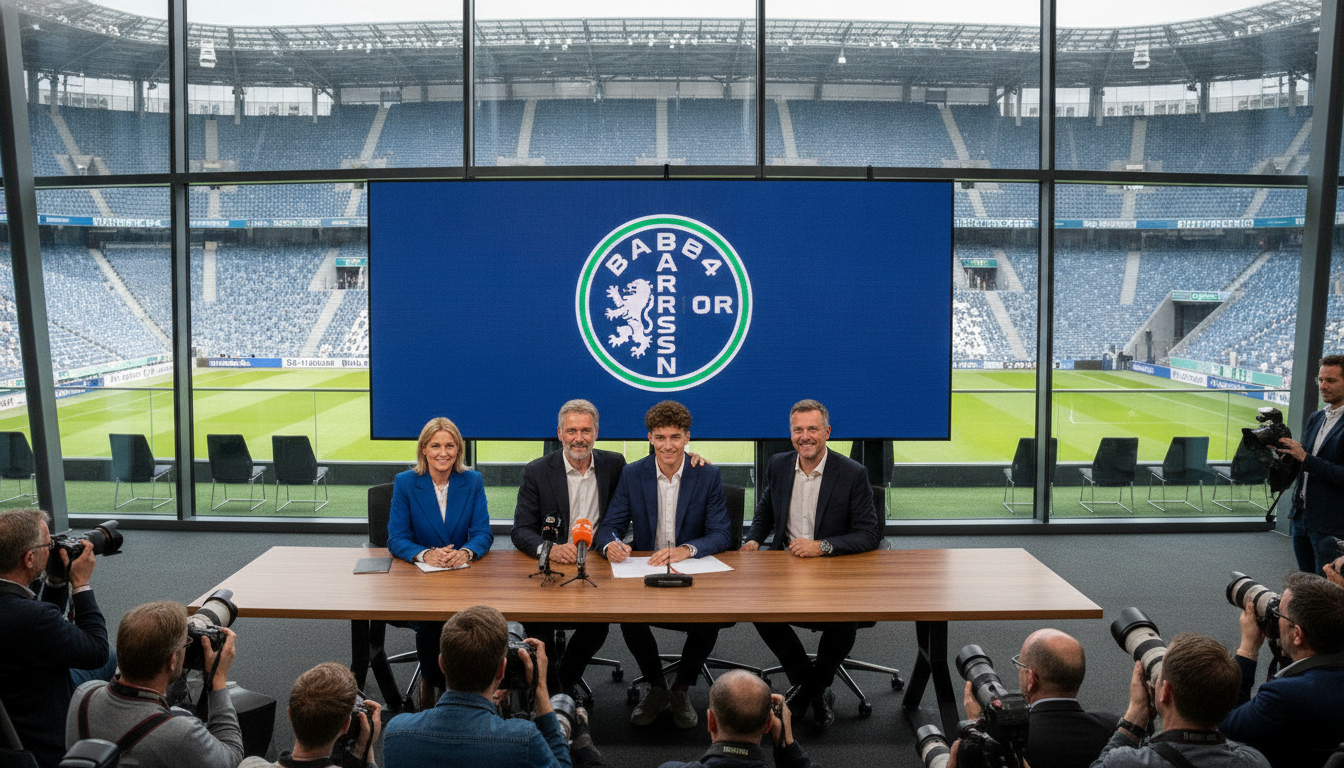
Kennet Eichhorn: Why Bayer Leverkusen Won the Race for the 16-Year-Old Midfielder
Kennet Eichhorn chose Bayer Leverkusen, with Simon Rolfes saying family ties, a decisive coach meeting and a club internship tipped the balance. The 16-year-old midfielder left Hertha BSC after attracting interest from Bayern Munich and Liverpool. Leverkusen’s active pursuit and integrated development plan secured a commitment that the club believes fits both sporting and educational goals.


Leverkusen’s recruitment edge revealed
Leverkusen’s sporting director Simon Rolfes said the club took a sustained and personal approach in talks with Eichhorn and his family. That relationship-oriented strategy, combined with an outline of the player’s pathway, helped Leverkusen stand out among top European suitors. Club sources described the effort as a coordinated push across academy and first-team staff to present a single, convincing plan.
The club emphasized direct contact and repeated visits, aiming to build trust well before any formal offer was made. Those steady interactions allowed Leverkusen to present detailed plans for training integration, education and welfare. For a teenager weighing multiple offers, the continuity and clarity of a single-club message proved influential.
Leverkusen also framed the move as a long-term investment rather than a short-term trophy chase for a promising talent. The recruitment pitch highlighted staged progression, close mentorship and measurable development milestones. That combination of structure and proximity appealed to both player and family.
Familial connections shaped negotiations
Rolfes explained that an existing rapport with Eichhorn’s family smoothed complex conversations about career and schooling. The family had followed Leverkusen’s work and met multiple staff members before negotiations escalated. That prior familiarity reduced uncertainty and allowed discussions to focus on practical details rather than trust-building.
Agents and advisors frequently push for maximum leverage in youth transfers, which can complicate decisions for players still in school. In this case, Leverkusen’s transparency on education, internship prospects and day-to-day life alleviated typical concerns. Club insiders say the family was particularly reassured by the club’s willingness to coordinate with the player’s academic schedule.
Leverkusen’s approach underlines a broader trend in elite youth recruitment where relationships and pastoral care matter as much as financial terms. Winning a 16-year-old’s signature increasingly requires convincing parents and educators, not just showcasing first-team opportunities. The club’s method in Eichhorn’s case may set a template for future signings.
Carles Martínez’s meeting proved decisive
A face-to-face meeting with new head coach Carles Martínez was pivotal in securing Eichhorn’s commitment, according to club accounts. The encounter allowed Martínez to outline the immediate and medium-term football plan for the midfielder, answering questions about playing style and integration. That personal assurance from the first-team coach added weight to the club’s proposal.
Rolfes attended the meeting and framed Leverkusen as a club where the player already knew significant parts of the set-up. The coach’s clear message about development pathways and playing opportunities resonated with Eichhorn and his advisors. Direct engagement from the coaching staff often reassures young players that promises on paper will translate into real training and match experiences.
Martínez’s role in the recruitment also signals the club’s commitment to aligning academy outputs with first-team needs. In competitive markets, tangible coach involvement can be the difference between signing or losing top youth prospects. For Leverkusen, prioritizing that continuity appears to have paid off.
Development pathway and first-team integration
Leverkusen presented a structured timetable for Eichhorn’s progression from academy to senior squads, emphasizing technical growth and tactical adaptation. The plan includes individualized training, monitored match minutes at youth levels and staged exposure to first-team sessions. This measured approach seeks to protect the player while accelerating readiness for higher-level competition.
The club also committed to cross-disciplinary support, involving sports science, nutrition and psychological services within the pathway. Young midfielders like Eichhorn benefit from tailored physical conditioning programs that reduce injury risk while building stamina for adult football. Leverkusen’s pitch emphasized these resources as part of a holistic development model.
Competition for elite youngsters often comes down to how convincingly a club bridges youth football and senior demands. By mapping out specific milestones and coaching touchpoints, Leverkusen offered a credible route to professional football. For Eichhorn, who left a capital-club academy, the clarity of that route was an important factor.
Education and internship integrated into the deal
A distinctive element of Eichhorn’s agreement is the planned combination of football training with a one-year internship after completing his Fachabitur. Rolfes confirmed the club expects the midfielder to undertake the internship with Bayer 04, aligning vocational education with his sporting commitments. That dual-track arrangement reflects Germany’s broader emphasis on combining education and elite sport.
The internship proposal provides Eichhorn with practical experience at the club and a fallback framework beyond playing years. It also reassures families that academic credentials will be preserved alongside a professional pathway. For Leverkusen, integrating education into contracts strengthens community ties and broadens the club’s role in a young player’s off-field development.
Clubs that accommodate formal schooling and vocational training often reduce dropout rates and ease the transition to senior football. Leverkusen’s willingness to adapt internship schedules around training and matches was highlighted as a selling point. The arrangement signals the club’s readiness to balance competitive ambitions with long-term welfare.
Transfer interest and market implications
Eichhorn’s decision to join Leverkusen despite known interest from Bayern Munich and Liverpool underscores the shifting dynamics in youth recruitment. Big-name suitors remain active, but academies that offer clear development pathways and personal attention can win out. That lesson is likely to ripple through negotiations for other high-potential teenagers across Europe.
The move also represents a strategic victory for Leverkusen in maintaining their reputation for nurturing young talent and integrating them into the first team. The club’s recent track record of giving youth minutes at senior level is a persuasive selling point for players seeking a pragmatic route to professional football. Competing clubs may recalibrate how they present academy-to-first-team opportunities as a result.
Market observers will watch whether Leverkusen continue to prioritize similar holistic packages—combining coaching continuity, family engagement and educational safeguards—to attract prospects. If the model proves repeatable, it could prompt more clubs to formalize internship and schooling options as standard in youth contracts. For now, Eichhorn’s choice is a high-profile endorsement of Leverkusen’s approach.
Kennet Eichhorn’s arrival completes a recruitment process that highlights the growing importance of relationships, education and clear coaching pathways in elite youth transfers. Leverkusen’s coordinated strategy between academy staff, senior coaches and the player’s family delivered the decisive edge in a crowded market. The next steps will focus on translating commitment into on-field progress and measured integration into the club’s sporting project.