Benjamin Weber hails Thomas Tuchel as "perfect coach" to lead England to World Cup glory
FC Augsburg sporting director Benjamin Weber says Thomas Tuchel is the ideal leader for England at the 2026 World Cup, praising his tactical acumen and man-management.


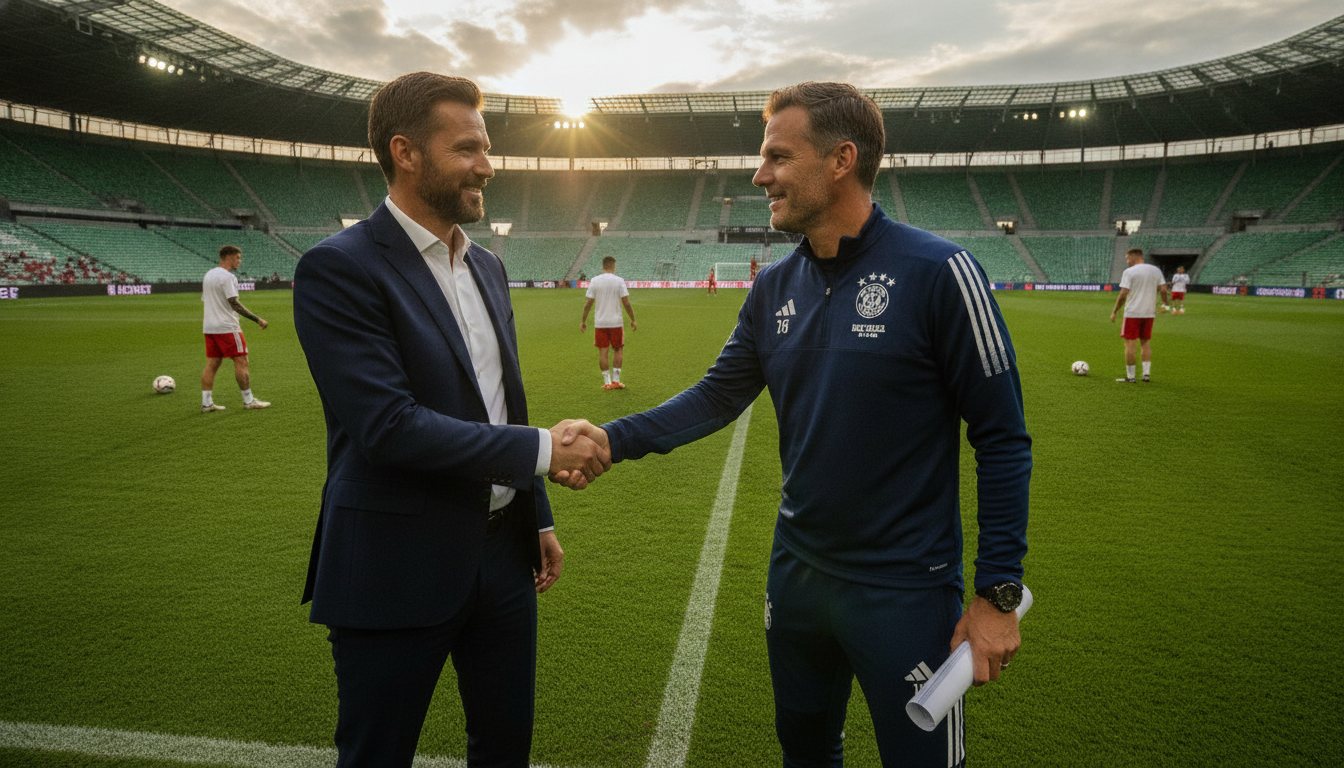
Thomas Tuchel’s credentials as England head coach were endorsed this week by FC Augsburg sporting director Benjamin Weber, who called Tuchel the “perfect coach” to guide the Three Lions at the 2026 World Cup. Weber, who spent more than a decade working alongside Tuchel as a video analyst, framed his assessment around Tuchel’s adaptability, tactical detail and ability to prepare teams for knockout football. The endorsement arrives as England prepare for a round-of-32 meeting with DR Congo in Atlanta, a match Weber described as an early but meaningful test of the English side’s tournament readiness.
A 13-year professional partnership
Weber’s relationship with Tuchel stretches back to the beginning of the coach’s managerial rise, when Tuchel was building his reputation in Germany. Over 13 years the two worked together across several clubs, moving from Mainz 05 to Borussia Dortmund, then to Paris Saint-Germain and ultimately Chelsea. That long working relationship gave Weber not just tactical insight but a close personal understanding of Tuchel’s methods and motivations.
The connection lasted beyond the training ground, with Weber describing a friendship that endures into Tuchel’s current role with England. Their shared experiences include major domestic and European campaigns, and culminated in success at the highest level during their time at Chelsea. Those years together, Weber says, informed his belief that Tuchel combines technical preparation with an emotional intelligence that helps players perform under pressure.
From analyst to sporting director: Weber’s vantage
After leaving the coaching environment, Weber moved into sporting management, which reframed how he views coaching impact at the elite level. He took the managing director role at SC Paderborn in early 2023 before being named FC Augsburg’s sporting director in the summer of 2025. That transition gave Weber a wider perspective on how a head coach’s decisions affect recruitment, squad balance and long-term planning.
Weber has remained in contact with Tuchel by text and phone, allowing him to follow England’s preparations closely without being on the inside. His current position in club management also means he evaluates Tuchel not only as a former colleague but as an external observer who understands the structural challenges of international tournaments. That dual perspective informs his view that Tuchel is uniquely suited to the particular demands of a World Cup campaign.
Tactical traits Weber highlights
Central to Weber’s praise is Tuchel’s tactical versatility and meticulous match preparation. He argues that Tuchel builds teams that can dominate possession when required but also defend compactly and exploit transitions — traits that are critical in the knockout stages. Weber singled out set-piece organization and transition football as areas where Tuchel’s England can gain decisive advantage in tight matches.
Tuchel’s reputation for video-led analysis and nuanced game plans is well known from his club career, where opponents were routinely dissected and matched with tailored strategies. Weber pointed to that studio-level preparation as an asset at a tournament in which marginal gains decide results. He stressed that in knockout football, where control of key moments matters more than sustained dominance, Tuchel’s attention to detail and ability to instill tactical discipline are invaluable.
England’s tournament profile and challenges
England’s run through the group phase exposed moments of both promise and frustration, particularly when facing compact defensive setups that limited clear chances. That pattern has sharpened debate over whether the squad’s attacking structures can consistently unlock low-block opponents. Weber acknowledged those issues but framed them as solvable with the tactical tweaks Tuchel has at his disposal.
The English squad, in Weber’s assessment, offers a balance of youthful energy and experienced heads, with players capable of both possession play and rapid transitions. He emphasized the mental attributes of the group — hunger, resilience and a competitive mentality — as equal to the technical qualities. For Weber, the question is less about personnel and more about execution in moments where games are decided by set pieces and counter-attacks.
The DR Congo fixture as an early measuring point
England’s round-of-32 clash with DR Congo in Atlanta is the first knockout hurdle and, according to Weber, a useful barometer for how well Tuchel’s methods have taken hold. The fixture presents a classic test of England’s ability to break down a disciplined opponent and adapt when space is limited. Playing in a tournament setting, with travel and atmosphere adding layers of complexity, will also test squad rotation and in-game management.
Weber flagged that these early knockout matches often force coaches to make quick tactical calls and to trust certain players in defining moments. For Tuchel, the selection choices and substitutions in Atlanta will show whether England can shift smoothly between possession phases and rapid transitions. A measured performance there, Weber suggests, will provide confidence that England can navigate the progressively tougher challenges ahead.
What success would mean for Tuchel and England
A sustained run by England under Tuchel would reinforce the coach’s credentials at international level and vindicate the methods that propelled him through the club game. For England, deep progress in the World Cup would validate recent structural decisions around squad construction and tactical flexibility. Weber framed success as the convergence of preparation, player trust and in-game management — areas where Tuchel, he believes, excels.
Beyond immediate results, a title for England would likely reshape narratives about the national team’s approach to big tournaments, emphasizing tactical adaptability over a single stylistic orthodoxy. It would also cement Tuchel’s status as a manager capable of translating club-level systems to the international stage, where short preparation windows and diverse opposition demand rapid adjustment. Weber’s public backing amplifies that possibility, signaling confidence from someone who knows Tuchel’s strengths intimately.
England go into the knockout phase with questions to answer and attributes to leverage, and Benjamin Weber’s endorsement highlights the coach’s perceived fit for that exact environment. Tuchel’s capacity to marry detailed analysis with decisive man-management is the core of Weber’s argument that England possess the tools to mount a genuine challenge. As the World Cup progresses, the Atlanta fixture will offer the first clear indication of whether that conviction translates into results on the field.