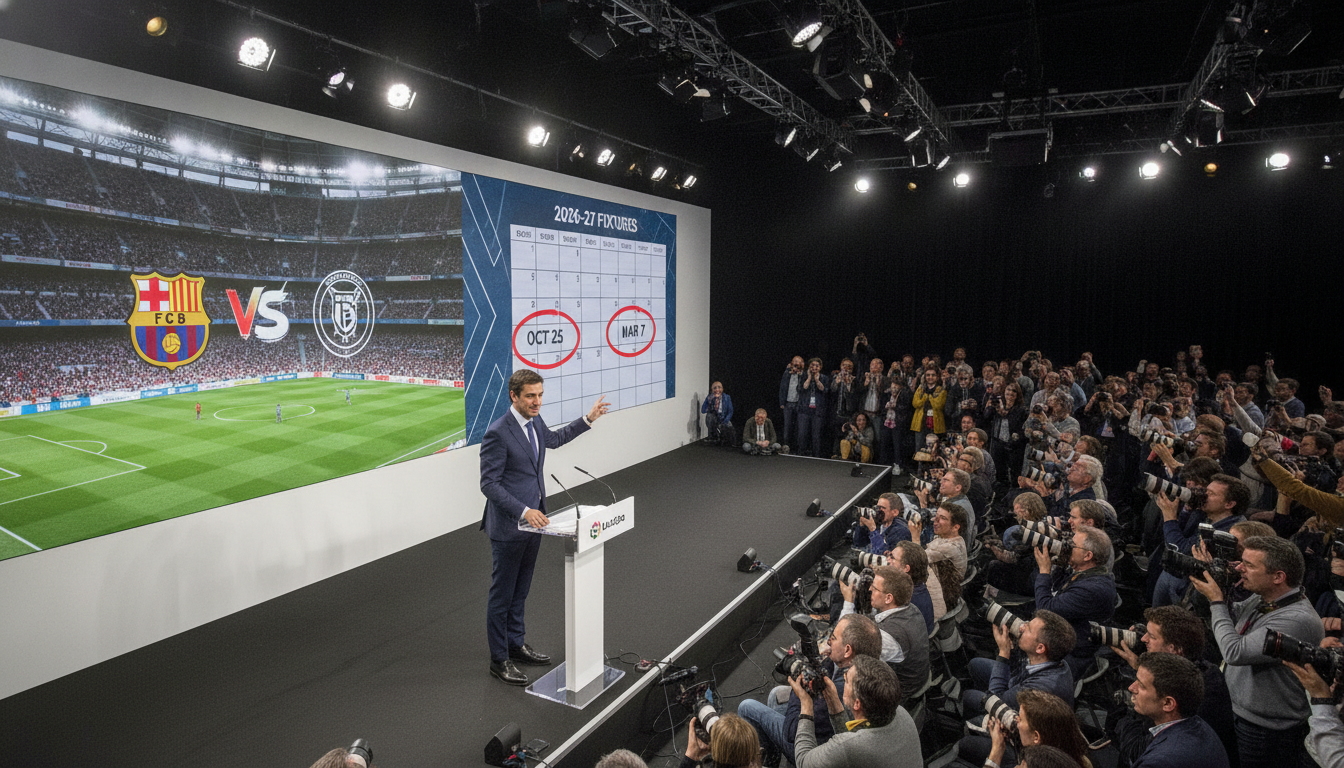
LaLiga EA Sports calendar draw delivered live on June 30, 2026
LaLiga EA Sports calendar draw on June 30, 2026 unveiled the domestic schedule for the season, setting out marquee windows, derby clusters and likely congestion points for top clubs.


The LaLiga EA Sports calendar draw was held live on June 30, 2026, laying out the structure for the coming season and giving clubs, broadcasters and supporters their first look at when the biggest fixtures will fall. The draw formalizes matchday pairings and sequencing under the league’s established constraints, shaping travel plans and competitive rhythms across Spain. Clubs immediately began reviewing the calendar to plan squad rotation, ticketing and logistics for the months ahead.
Live production and how the draw unfolded
The draw was streamed live, with LaLiga presenting the matchday allocations and key scheduling principles to a worldwide audience. The production combined automated scheduling tools with the league’s rule set to ensure security, local event coordination and television windows were respected. League officials explained the procedure in real time and confirmed that the published schedule accounts for teams competing in European and domestic cup competitions.
Viewers were shown the layout of matchdays and pairing sequences rather than every single kickoff allocation, a format that allows LaLiga to finalise exact kickoff times in coordination with broadcasters. The live presentation also reiterated established protections — such as avoiding consecutive home fixtures for some clubs and spacing high-risk derbies — while leaving room for adjustments once television schedules and policing requirements are confirmed.
Scheduling mechanics and competition constraints
LaLiga’s calendar draw does not operate in isolation; it must accommodate UEFA club competitions, Copa del Rey dates, international windows and municipal events. The draw therefore places teams likely to play in the Champions League, Europa League and Europa Conference League into sequences that seek to mitigate fixture congestion. This approach gives clubs and sporting directors the transparency needed to plan training blocks and transfer window priorities.
The calendar also incorporates blackout periods and local constraints designed to manage policing resources and crowding in cities that host multiple major events. These mechanics influence when high-profile fixtures such as local derbies and Madrid or Catalan rivalries appear on the schedule, and they can affect ticket sale timetables, travel plans for supporters and stadium staffing needs.
Marquee match windows and derby scheduling
While the draw does not fix every kickoff time immediately, it does identify the matchdays on which marquee encounters will take place, allowing broadcasters to plan headline slots. Traditional marquee clashes — including El Clásico, Madrid derby and the Seville derby — are distributed to balance television interest across the season and to avoid creating prohibitively difficult runs for any single club early on. Fans will now scrutinize those matchday placements to identify stretches of the campaign where momentum can be built or momentum could be lost.
Derbies and regional rivalries also carry operational challenges for local authorities and clubs, and LaLiga’s schedule reflects efforts to stagger high-risk fixtures for policing and public-safety reasons. The result is a season blueprint that seeks to maintain competitive spectacle while reducing the likelihood of consecutive high-stakes matches within the same short window.
Implications for clubs with European commitments
Teams engaged in continental competition face particular pressure from a packed fixture list, and the calendar draw offers a first assessment of potential overload periods. Clubs with commitments in the Champions League and Europa League will analyze the sequencing to decide where to rest senior players and when to prioritize squad rotation. Sporting directors and coaches will use the calendar to map transfer targets and to assess whether additional depth is required in key positions.
The draw also affects preparation for early-season form. A difficult cluster of fixtures against top opponents can force tactical choices and accelerate integration of new signings, while a more favorable early run can allow managers to ease new arrivals into their systems. For clubs balancing European nights and domestic travel, the draw is an operational as well as a sporting document.
Broadcasting, commercial effects and supporter planning
Television partners will now begin negotiations over exact kickoff times for the most valuable windows, and those decisions will drive ticketing releases, hospitality packages and travel itineraries. Broadcasters typically select a limited number of marquee fixtures for prime-time slots, and those selections can amplify matchday revenues and international exposure for selected clubs. Sponsors and commercial partners will also align activation plans to the locations of high-profile fixtures identified in the draw.
Supporter groups and local businesses rely on the calendar to coordinate travel, accommodation and matchday staffing. Clubs must communicate ticketing timelines quickly after broadcasters lock kickoff times, and supporters’ associations will monitor any late changes that could affect group travel arrangements. Municipalities, meanwhile, use the calendar to deploy public services and transport plans for peak matchdays.
Next steps: confirmations, kickoff times and ticket sales
Following the draw, LaLiga will continue consultations with broadcasters, clubs and public authorities to finalize exact kickoff times and matchday logistics. Kickoff times are usually confirmed in the weeks that follow, with staggered announcements to give broadcasters and clubs time to finalize plans. Clubs will then open ticketing windows in line with the confirmed schedule, with priority access typically available for season-ticket holders before general sale.
Fans should watch for official club communications outlining ticketing deadlines, safety measures and recommended travel advice. Teams will also begin publishing their pre-season plans and fixture-specific promotions once kickoff times are confirmed. For clubs competing in Europe, squad announcements and rotation strategies will become clearer as managers weigh the calendar against transfer market activity and fitness assessments.
The LaLiga EA Sports calendar draw on June 30, 2026 provides the framework for a season of high-level competition and logistical complexity, offering clubs and supporters a first reliable roadmap for matchday planning.