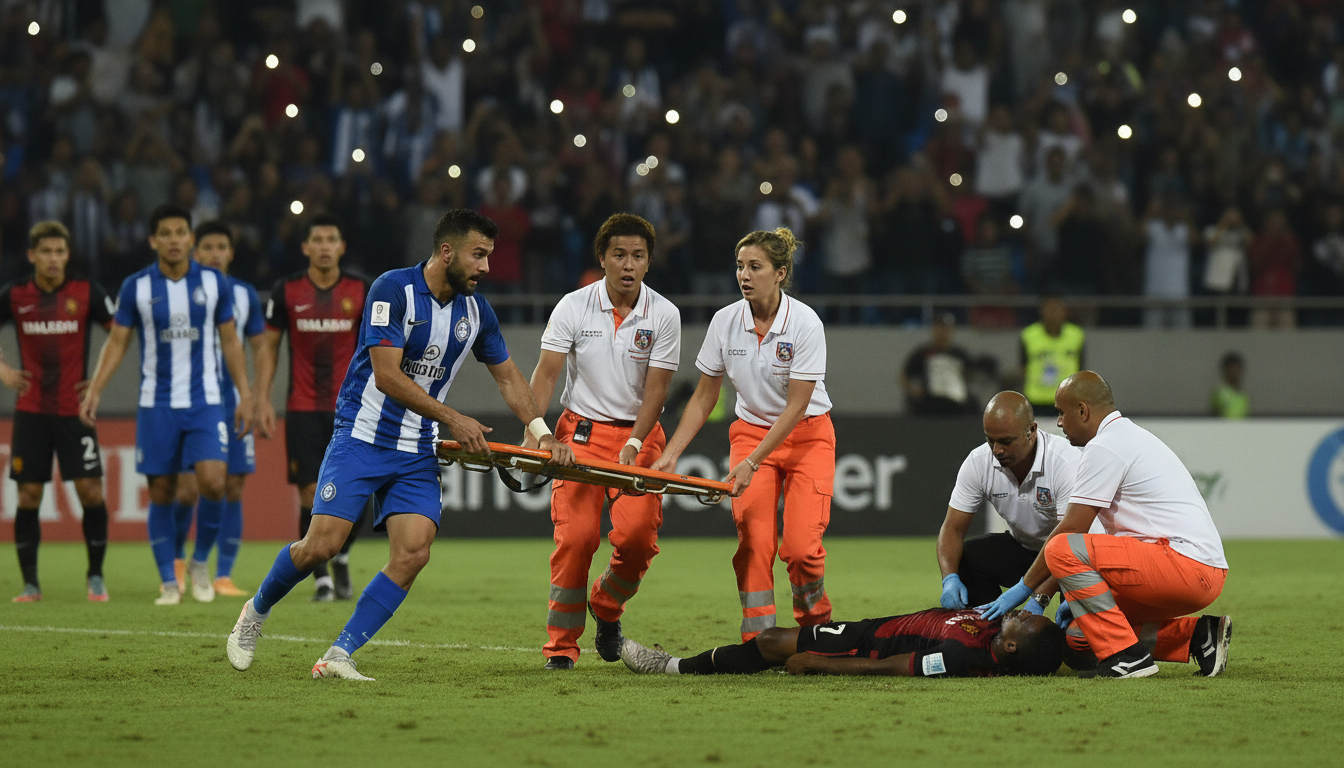
Natxo Insa grabs stretcher after Jairo collapses in King Abdullah clash
JDT captain Natxo Insa grabbed a stretcher to help his collapsed teammate Jairo after a 37th-minute collision; slow medical response and refereeing decisions have sparked criticism and an AFC review.

Al Hilal’s King Abdullah Sports City staged a dramatic stoppage on Friday when JDT striker Jairo Da Silva was struck in the face during an attempted bicycle kick and collapsed unconscious in the 37th minute. Natxo Insa, the Malaysia-naturalised captain of Johor Darul Ta’zim, ran to the sideline, seized a linesman’s flag to attract attention and then took a stretcher onto the field to press for urgent treatment. The incident, which left Jairo briefly motionless, occurred after Al Ahli defender Ali Majrashi was sent off for violent conduct, and it has since provoked intense debate over on-field medical protocols and officiating. The Asian Football Confederation said it would await official match supervisor and medical reports before taking further action.
Collision in the 37th minute leaves Jairo unconscious
The incident that halted play began when Al Ahli defender Ali Majrashi attempted a clearance with an acrobatic bicycle kick in the 37th minute. The boot made contact with JDT forward Jairo, who fell immediately and appeared to lose consciousness on the grass. Teammates crowded around the striker and signalled desperately for quicker attention from stadium medical staff. Referee Adham Makhadmeh issued a straight red card to Majrashi for violent conduct before tending to the injured player.
Jairo remained motionless for several tense seconds while the medical team approached, a delay that amplified the urgency among JDT players and staff. Television footage showed teammates pointing and shouting toward the touchline as the home crowd and wider viewing audience watched on. The stoppage disrupted the rhythm of a heated knockout fixture and infused the match with a heightened sense of alarm. Players and officials were forced to wait while Jairo was stabilised and prepared for transport.
Natxo Insa seizes stretcher amid delayed medical response
Insa’s intervention became the defining image of the stoppage when he sprinted to the sideline, removed the flag from a linesman to attract attention, and then moved into the medical area. Frustrated by the perceived sluggishness of the response, he overturned a chair and carried the stretcher onto the field himself to ensure his teammate received immediate care. The captain’s actions were driven by the visible condition of Jairo and by a determination to bypass what his side saw as an unacceptable delay. Broadcast and social media footage circulated rapidly, showing Insa’s urgency and the emotional intensity among JDT players.
Match officials reacted by booking Insa with a yellow card for contravening medical entry protocols, which prohibit non-medical personnel from entering the pitch without permission. The card drew criticism from some quarters who argued the regulations should be flexible in clear emergencies, while others defended the enforcement of protocol designed to maintain orderly medical intervention. Teammates and fans later praised Insa’s quick judgment in prioritising a colleague’s welfare. The episode has prompted broader questions about how strict adherence to procedure should be balanced against the immediate needs of an injured player.
Referee Adham Makhadmeh’s decisions spark debate
Referee Adham Makhadmeh’s handling of the sequence attracted scrutiny beyond the initial red card for Majrashi. While the sending-off was clear to many observers, critics argued the wider management of the stoppage and ancillary bookings—such as the yellow for Insa and a warning issued to JDT defender Jonathan Silva—reflected a rigid application of rules at a time when player safety was paramount. Former referee analysts and pundits highlighted inconsistencies in how the match was controlled during the medical episode. The perception that discipline took precedence over the immediacy of treatment amplified post-match criticism.
Some commentators contended that the referee’s priority appeared split between issuing cards and commanding the scene, and that this imbalance prolonged player and team anxiety. Others defended Makhadmeh’s choices, saying that enforcement of regulations preserves the integrity of the match and sets clear boundaries for conduct during stoppages. The debate has underscored the persistent tension in football between strict officiating and flexible, situation-specific decision-making. With video and public reaction circulating widely, the referee’s performance will likely receive formal review alongside the medical timeline.
Medical response and hospital updates on Jairo’s condition
Following the on-field treatment, Jairo was stretchered off and transported to a local hospital for further assessment of head and facial trauma. Club and match reports later confirmed that he was in stable condition but remained under observation for concussion and facial injuries. Medical staff conducted scans and monitoring as a precautionary measure given the head impact, and the club provided updates that sought to reassure supporters. The timing and content of those updates reflected both concern and a careful approach to communicating a player’s medical status.
Social media reaction to the incident focused heavily on the perceived slowness of on-field care, with many fans and pundits describing the response as “painfully slow.” The criticism drew attention to stadium medical resourcing, ambulance access and the coordination between match officials and medical teams. Sports medicine experts note that rapid assessment is critical in suspected head injuries and that protocols require a coordinated interface between medical staff and referees. The AFC’s pending review of the medical timeline is expected to examine whether response times and procedures met tournament requirements.
Match outcome and impact on the competition
Despite playing much of the second half against ten men, Al Ahli held on to a 2-1 victory to progress to the semifinals, with goals coming from Franck Kessie and Wenderson Galeno after JDT had opened the scoring through an own goal. The result will be analysed by both clubs and their supporters, but the match’s legacy will be overshadowed by the medical emergency and subsequent controversy. Majrashi’s red card and the emotional aftermath saw him pictured distraught and in tears after the final whistle, underscoring the personal toll such incidents can take on players. For JDT, the loss ended their campaign in this knockout tie, but attention has quickly shifted to player welfare and procedural lessons from the day.
Club officials from both sides will likely file observations and records as part of the formal match report process, and disciplinary panels may review the sending-off and bookings. The competitive consequences for Al Ahli are immediate, with progression to the semifinal round, while JDT must now re-evaluate both on-field tactics and post-incident protocols. Governing bodies and competition organisers often use high-profile incidents to reassess arrangements and enforce improvements, and this match may prompt such a response. Supporters from both clubs have expressed mixed emotions, combining relief for Jairo’s stabilisation with frustration over how the episode unfolded.
AFC to review match supervisor and medical reports before action
The Asian Football Confederation announced it will wait for official submissions from the match supervisor and the medical staff before issuing any findings or sanctions related to the incident. That formal review will examine the timeline of events, the medical team’s response, the actions of match officials and any breaches of tournament regulations. AFC procedures typically include a careful analysis of video evidence, incident reports and witness statements to determine whether rules were applied correctly and whether additional measures are required. The confederation’s statement signalled a methodical approach rather than immediate punitive action, reflecting the gravity and complexity of the circumstances.
Independent analysts also weighed in, with former international referee Saad Al-Kathiri describing the officiating as seriously flawed and suggesting critical errors by both sides affected the match’s flow, according to media accounts. Al-Kathiri pointed to an earlier JDT opening goal that he believed should have been disallowed and to an unpunished dangerous tackle in the build-up to Al Ahli’s winner. Those assertions have further fuelled debate over VAR usage, on-field discretion and retrospective review. The AFC review will be expected to address these broader officiating concerns as well as the handling of the medical emergency.
The incident at King Abdullah Sports City has already prompted renewed discussion across the region about the coordination of medical teams, the authority of referees during emergencies and the responsibilities of players and support staff. With Jairo reported stable in hospital and AFC investigators collecting reports, clubs, officials and supporters now await formal findings that could clarify accountability and recommend procedural changes. The images of Natxo Insa carrying the stretcher will remain a stark reminder of how quickly a football match can shift from competitive contest to urgent human concern.