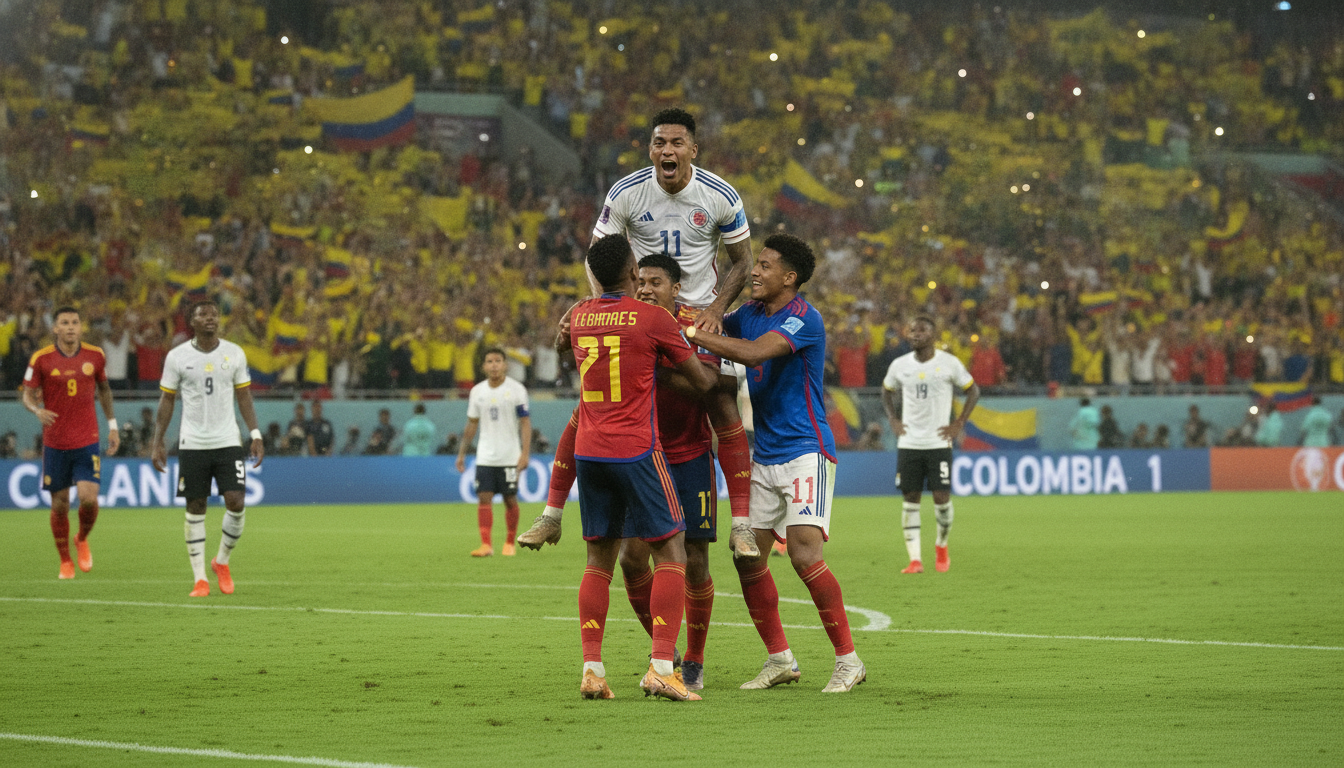
Colombia reach World Cup last 16 with 1-0 win over Ghana
Colombia reach World Cup last 16 after Jhon Arias’ early goal sealed a 1-0 victory over Ghana in Kansas City, moving Nestor Lorenzo’s side into the knockout phase. The decisive moment came in the 14th minute when substitute Luis Suarez delivered a cross that Arias tucked into the bottom corner, and Colombia’s defence held firm for the remainder of the match. The result extends Colombia’s unbeaten run at the tournament and sets up a round of 16 meeting with Switzerland.

Arias strike settles tight contest
Jhon Arias produced the solitary goal of the match with a composed finish that proved decisive in a closely fought contest. The winger arrived unmarked at the back post to meet Luis Suarez’s cross and guided the ball into the net with time to pick his spot. That early breakthrough allowed Colombia to control the game tempo and force Ghana to chase openings against a compact defensive structure.
Substitute Luis Suarez’s delivery was the product of an unexpected sequence of events after an early injury change, and Arias’ movement exploited a momentary lapse in Ghana’s marking. The goal arrived against the run of expectation because Suarez and Arias had not been anticipated to combine in that exact way before kickoff. From that point Colombia prioritized maintaining structure while probing for opportunities to extend their lead.
Defensive discipline powers Colombia
Colombia’s backline showed the sort of collective discipline that has underpinned their run through the group stage. Defenders stayed compact and disciplined their positioning, denying Ghana the space required to operate between the lines and forcing the visitors into low-percentage chances. The midfield screened effectively, reducing the threat of quick transitions and limiting opportunities for Ghana’s more direct outlets.
Goalkeeper and full-backs were alert on crosses and set pieces, neutralizing most of Ghana’s aerial attempts and second-ball situations. Colombia’s defensive shape repeatedly closed down passing lanes and allowed the team to absorb pressure in the middle without becoming disorganized. That defensive resilience proved crucial once they moved to protect the one-goal lead and manage the game in rising heat.
Substitute call turns decisive for Colombia
The match turned on a substitution made after an early injury forced Jhon Cordoba off the field, bringing Luis Suarez into the game sooner than planned. Suarez was only on the pitch for a short period before his cross found Arias, yet that intervention altered the complexion of the match. The decision to keep Suarez high and attack the right flank created the opening that produced the goal.
Coach Nestor Lorenzo’s willingness to adapt to the early change and keep his team’s approach proactive paid dividends despite the disruption. His setup emphasized balance, asking full-backs to support without leaving gaps and asking central midfielders to hold positions. That clarity of instruction allowed substitutes to make immediate contributions without unsettling the collective plan.
Stifling conditions in Kansas City influenced play
Players from both teams contended with hot, demanding conditions that affected tempo and rotation as the match progressed. The weather required careful energy management and conditioned how coaches chose substitutes and tactical adjustments. Colombia appeared marginally better prepared to cope with the physical toll, using shorter passing sequences and measured pressing to conserve stamina.
Ghana’s game plan, which relied at times on bursts of pace and direct running, was blunted by the heat and by Colombia’s ability to slow phases of play. Possession swings became less frequent later in the second half, and both teams sought to limit risks as fatigue set in. The conditions therefore magnified the importance of Colombia’s early goal and disciplined defending.
Colombia’s unbeaten run and knockout draw with Switzerland
This result extends Colombia’s unbeaten run at the tournament, a sequence that began with results against Portugal, Uzbekistan and DR Congo in the group stage. Topping Group K, Colombia demonstrated consistency and a pragmatic approach that has made them a dangerous outsider in knockout calculations. The reward for that consistency is a last 16 tie against Switzerland, a compact and tactically adept opponent.
The matchup with Switzerland will test Colombia’s ability to break down a disciplined defensive unit while maintaining their own structural strengths. Switzerland’s organization and experience in big matches present a different challenge to Ghana’s more direct style. Colombia will need to manage possession well, create overloads in wide areas, and remain defensively vigilant to progress further.
What the result means for Ghana and coaching staff
For Ghana, a narrow defeat ends their tournament hopes and prompts reflection on margins and tactical choices made across the group stage. The team showed moments of attacking intent but lacked the cutting edge and cohesion needed to overcome a disciplined Colombian side. Coaching staff will likely examine set-piece organization and transition defense as areas for targeted improvement.
Ghana’s players can draw positives from their competitive spirit and willingness to press in phases, but the elimination highlights a need for greater control in possession and clearer patterns when building from the back. The narrow scoreline suggests that small tactical tweaks and sharper execution could have altered the outcome. The team will depart the tournament with unfinished business but with lessons to inform future cycles.
Colombia’s progression underlines the team’s collective identity and the capacity of individuals like Arias to influence decisive moments. Their approach blends tactical caution with timely attacking intent and positions them as a threat in the knockout rounds. As preparations begin for the Switzerland match, Lorenzo and his staff will likely refine set-piece routines and consider how to sustain intensity across 90 minutes and beyond.
Tactical analysts will now scrutinize where Colombia can gain marginal advantages against Switzerland, whether through exploiting the flanks, targeting transitional moments, or capitalizing on set-piece opportunities. The balance between defensive solidity and attacking ambition will be central to their next planning phase. Meanwhile, the players who stepped up in Kansas City will carry confidence into training and recovery ahead of a match that promises to be tightly contested.
Colombia’s fans and neutrals alike will view this victory as confirmation that the side can combine structure with moments of individual quality, creating a platform for a deeper run in the tournament. The team’s disciplined performances have turned them into credible outsiders capable of challenging established contenders. As the knockouts loom, Colombia’s blend of defensive organization and opportunistic finishing will be under the microscope.