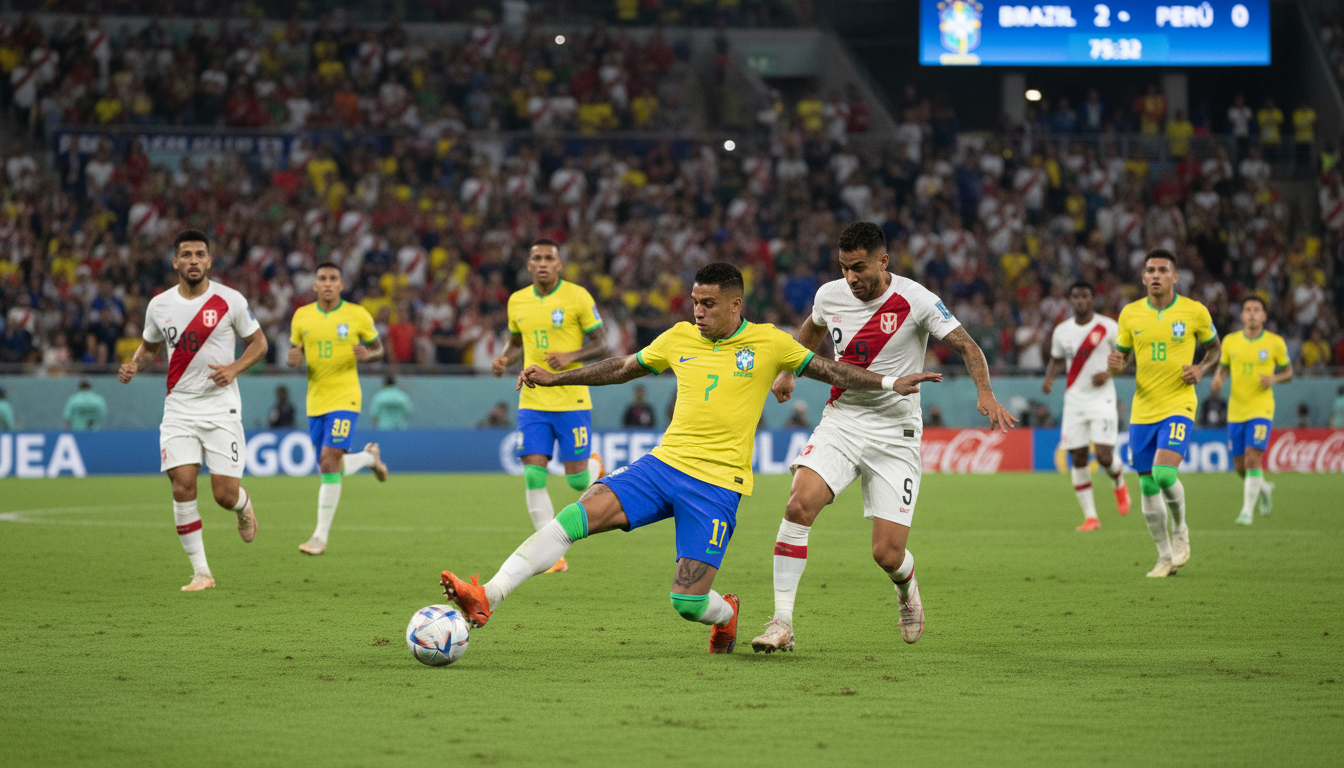
Peru vs Brazil Copa America: Brazil cruise to 4-0 victory as Peru bloods youngsters
Peru fell 4-0 to Brazil in their Copa America opener, a result that left Ricardo Gareca weighing selection and system changes ahead of the Colombia match. The Peru vs Brazil Copa America clash saw an early Alex Sandro strike and a Neymar second-half goal finish off a dominant Brazilian performance. Peru showed fight but were exposed by Brazil’s movement and clinical finishing, while Gareca used the match to introduce several young players into a side in transition.


Early breakthrough sets tone
Brazil struck after 12 minutes when Alex Sandro converted a low cross from Gabriel Jesus to put the five-time champions in front. The goal gave Brazil control of the match and forced Peru to chase possession and shape for counter-attacks. Peru’s plan to sit in a compact 4-1-4-1 and frustrate the hosts unraveled as Brazil probed repeatedly down the flanks and exploited gaps between the lines.
Peru had arrived in the tournament off a morale-boosting 2-0 win in Quito, but Quito’s altitude and that result did little to blunt Brazil’s speed of play in this fixture. Brazil’s passing rhythm and off-the-ball movement stretched Peruvian defenders, who struggled to maintain concentration across the full 90 minutes. The early setback shaped the remainder of the contest and forced substitutions that changed the game’s dynamic late on.
Cueva stands out amid controversy
Christian Cueva again emerged as Peru’s most dangerous creative outlet, repaying coach Ricardo Gareca’s faith despite off-field distractions in the build-up. Cueva’s ball retention and runs between midfield and attack created the clearest opportunities for Peru, and he worked hard defensively to try to stem Brazil’s advances. His influence was one of the few positive notes for Peru, illustrating why Gareca kept him in the starting lineup.
Alongside André Carrillo, Cueva supplied the principal attacking impetus when Peru managed possession and looked to transition quickly. Yet Cueva often found himself isolated, with Gianluca Lapadula receiving limited support as the lone striker. The midfield unit struggled to generate sustained pressure or to create the overloads necessary to unsettle Brazil’s backline.
Neymar and late strikes close contest
After ending the first half level on possession percentage, Brazil tightened control following the interval and Neymar produced a decisive contribution in the second half. Neymar’s influence—both in creating chances and finishing them—helped Brazil turn a single-goal lead into a commanding advantage. The Brazilian captain’s goal quelled any realistic hope of a Peruvian comeback and shifted the focus to damage limitation for Gareca’s side.
Two additional goals in the dying moments put gloss on the scoreline and underlined Brazil’s ability to press and pounce when opportunities appeared. Those late strikes reflected the growing fatigue in the Peruvian ranks and the quality Brazil possessed from the bench. The final scoreline left little doubt about the balance between the teams on the night.
Gareca’s substitutions and youth integration
Gareca reacted to falling behind by bringing on Luis Iberico and Alex Valera as part of his first double substitution, followed by Martín Távara and Alexis Arias, signalling a clear move to evaluate younger options. Those changes were less about overturning the result than about testing players in a high-intensity South American environment. For a Peru squad that has relied on an older core, the Copa America presents a useful laboratory to accelerate a planned transition.
The new personnel showed glimpses of composure and physical presence, and their minutes against Brazil will inform selection for the next fixtures. Gareca’s willingness to hand game time to younger forwards and midfielders suggests a forward-looking approach in the tournament. The match provided a low-risk setting to observe how these players cope tactically and mentally against elite opposition.
Defensive concerns and full-back competition
Aldo Corzo struggled at right-back, repeatedly caught by Brazil’s pace and movement, prompting questions about the full-back slot for the remainder of the tournament. With Luis Advíncula absent after returning to Rayo Vallecano for club commitments, Peru needed reliable width and recovery speed that night’s performance exposed. Jhilmar Lora, recently added to the squad after breaking into Sporting Cristal’s first team, appears the natural candidate to step into that role moving forward.
Lora’s youth and comfort on the ball offer a different profile from his more experienced counterparts, and giving him minutes in forthcoming matches seems likely. The full-back decision will be critical against Colombia, a team that still creates chances even when failing to finish them. Defensive balance and the ability to handle quick, overlapping full-backs will shape Peru’s tactical approach in the next phases.
Tactical outlook ahead of Colombia clash
Peru are expected to adopt a more offensive posture against Colombia, shifting away from the deep counter-attacking setup used against Brazil. Ricardo Gareca may move Sergio Peña into a more advanced No. 10 role to provide support for the striker and connect midfield and attack more effectively. Meanwhile, central midfield options such as Martín Távara and Wilder Cartagena could contest for starts alongside Renato Tapia if Yoshimar Yotún is rested.
A change in formation to accommodate an extra attacking presence would aim to increase chances for a forward who can hold the ball and bring midfielders into play. Colombia’s previous game, in which they controlled possession but struggled to break down a disciplined Venezuela, offers a different challenge than the one Brazil posed. Peru must balance the need for attacking impetus with defensive solidity to avoid another heavy defeat.
Peru’s striker debate intensified after the match as Santiago Ormeño’s name dominated pre-match conversation and will continue to do so ahead of selection decisions. Ormeño, eligible for Mexico through family ties and enjoying an impressive Liga MX season that earned him a move to León from Puebla, offers a contrasting profile to Gianluca Lapadula. At 6ft 1in, Ormeño can act as a focal point and could prompt a tactical shift to field three attacking midfielders with two holding players behind them.
Selecting Ormeño would not be merely about pedigree but about reshaping how Peru attack in the tournament’s next fixtures. A forward capable of occupying central defenders and bringing others into play would permit Gareca to alter the team’s structure without necessarily sacrificing defensive cover. The decision will reveal whether Peru pursue a short-term gamble for goals or stick with a more conservative plan founded on experience.
Peru’s Copa America campaign begins with a clear set of lessons: defensive work rate and concentration gaps must be addressed, and the tournament represents a timely opportunity to trial emerging talents on a big stage. The Peru vs Brazil Copa America game exposed weaknesses but also highlighted players who can grow from the experience.
Peru now face Colombia with tactical adjustments and personnel questions to resolve, while Brazil consolidate their position as favourites after an efficient display. The tournament calendar allows Gareca to make changes, and how quickly those adjustments take hold will determine whether Peru can salvage points and gather momentum.