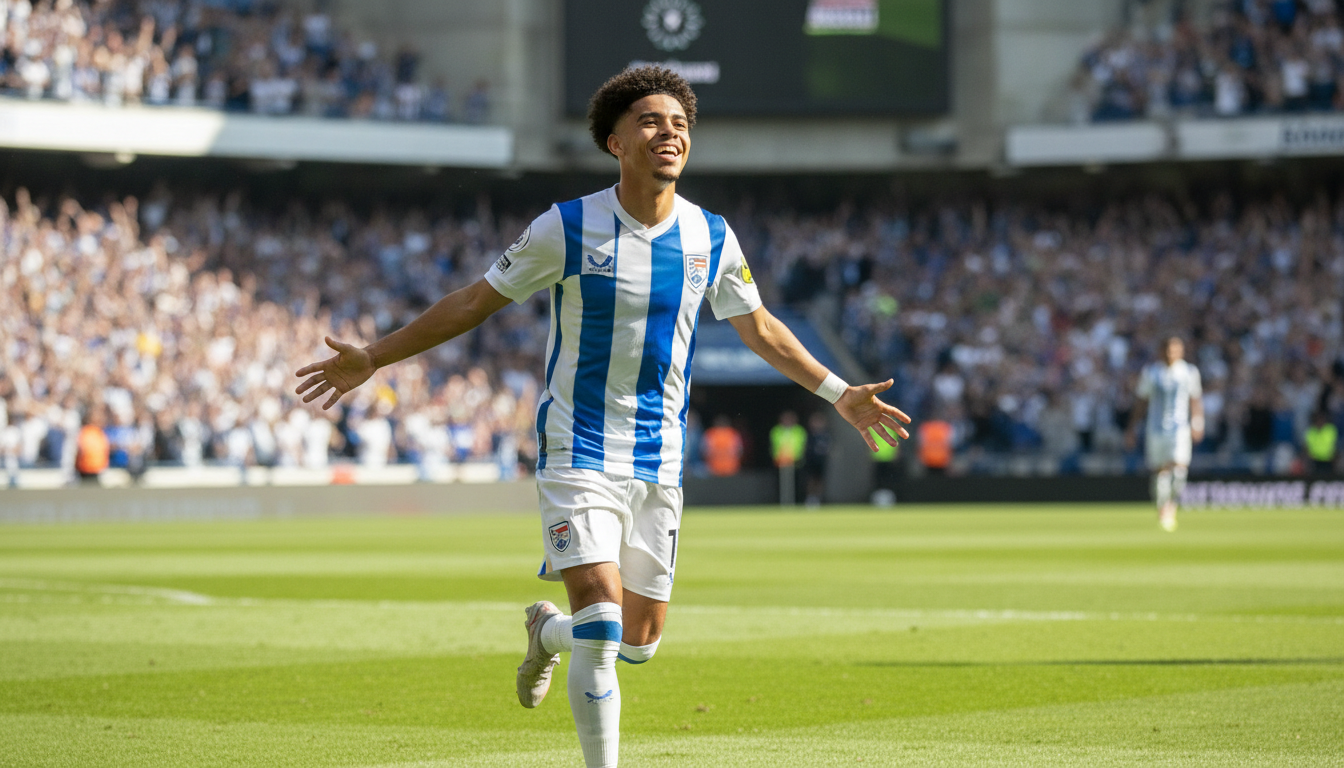
FIFA suspends Folarin Balogun’s one-game ban, clearing him to face Belgium in World Cup knockouts
FIFA has suspended Folarin Balogun’s one-match ban, allowing the forward to play for the United States against Belgium in the World Cup round of 16 under a one-year probation. The decision was announced on Sunday and sets a conditional reprieve for Balogun pending his conduct over the next 12 months. US Soccer confirmed the player would not be made available for comment, while political figures and fans have reacted to the ruling. The case raises immediate sporting and disciplinary questions ahead of Monday’s knockout tie.
FIFA’s suspension decision and probation conditions
FIFA said the implementation of Balogun’s match suspension will be suspended for a probationary period of one year. The governing body warned that if Balogun commits another infringement of a similar nature and gravity during that period, the suspension will be revoked and enforced, with the possibility of additional sanctions for any new offense. The language used by FIFA frames the measure as a conditional stay rather than an annulment of the original sanction.
The ruling makes Balogun eligible for selection for the United States’ round of 16 fixture against Belgium scheduled for Monday. FIFA’s statement emphasized the disciplinary framework and the contingent nature of the relief, underscoring that the one-game ban remains enforceable if further misconduct occurs. The decision was issued late on Sunday and circulated to the parties involved ahead of the upcoming match.
Immediate impact on United States team selection
Balogun’s reinstatement gives the United States coaching staff an extra option in attack for a high-stakes knockout match. The forward had been preparing with the squad and now can be named in the matchday lineup or used as a substitute, depending on the tactical plan adopted by the coaching team. His availability alters selection dynamics and provides additional depth against a Belgium side known for its experienced defensive corps.
Coaches typically weigh disciplinary context alongside form and fitness when finalizing lineups, and Balogun’s conditional clearance will be part of that calculus. The United States faces a tactical challenge in breaking down Belgium’s organization, and the presence of Balogun introduces a different attacking profile the coaching staff can exploit. How heavily he features will depend on pre-match assessments and strategic priorities for the knockout encounter.
US Soccer Federation response and player availability
The US Soccer Federation declined to make Balogun available for comment on Sunday, stating the organization would not facilitate media access to the player regarding the disciplinary matter. The federation’s approach kept the immediate focus on FIFA’s ruling rather than on the player’s personal account, a common stance when disciplinary hearings or conditional rulings are involved. That posture also limits public insight into Balogun’s reaction ahead of the match.
Federation officials will be managing communications around selection and team strategy while adhering to FIFA’s disciplinary framework. With the player permitted to take part, US Soccer must balance transparency about team decisions with respect for the disciplinary process and the privacy of individuals. The federation’s decision not to release a comment from Balogun suggests a desire to contain the narrative to official statements for now.
Disciplinary precedent and possible consequences
FIFA’s statement highlighted the potential for revocation of the suspended ban if Balogun commits a comparable offense during the probationary year. That provision places a clear behavioral condition on the player and signals that FIFA intends to enforce consequences for repeat infractions. The wording also allows for the imposition of additional sanctions tied to any new misconduct, increasing the stakes of Balogun’s conduct on and off the field.
Legal and regulatory experts in sport note that suspended implementations are used to balance punitive measures with opportunities for rehabilitation or corrective behavior. In this case, the one-year probation creates a watch period during which both the player and his national association must ensure compliance with conduct standards. Any future incident of the same kind would trigger the original sanction and could lead to supplementary disciplinary action.
Public and political reaction to the ruling
The suspension of Balogun’s ban drew attention beyond sporting circles when US President Donald Trump publicly thanked FIFA for the decision on Sunday. Political responses to disciplinary matters in high-profile sporting events are uncommon but reflect the wider public interest when national teams and marquee players are involved. The president’s acknowledgement injected an additional dimension into the conversation as supporters and commentators weighed in.
Fan reaction has been mixed, with some viewing the ruling as a welcome boost for the United States ahead of a crucial knockout game and others raising questions about consistency in disciplinary enforcement. Social media and sports commentary channels have amplified the debate, focusing both on competitive fairness and on the message sent by conditional sanctions. The interplay between sport, governance and public sentiment is likely to persist while the probationary period remains in effect.
Match implications and what to watch against Belgium
Monday’s round of 16 tie against Belgium shifts from a pure tactical contest to a narrative-rich encounter with Balogun’s availability adding intrigue. The United States will need to integrate him into a cohesive offensive plan that can create clear goal-scoring opportunities against a disciplined opponent. Observers will watch how the coaching staff uses him—whether as a starter to change the attacking shape or as an impact substitute to exploit late-game spaces.
Belgium’s defensive structure and transitional play present specific challenges that will test the United States’ forward options. Balogun’s positioning, movement between lines, and link-up with teammates will be focal points for analysts tracking the match. The tactical decisions made before kickoff will reflect a blend of sporting evaluation and the broader context of the disciplinary decision that permitted his selection.
Longer-term ramifications for player conduct and governance
Beyond the immediate match, the ruling raises questions about how governing bodies and national associations manage disciplinary matters involving high-profile players. FIFA’s use of a suspended implementation with a probationary clause may be studied as a template for future cases where context and conduct warrant conditional relief. The balance between deterrence and proportionality in sanctions remains central to ongoing debates in football governance.
For Balogun personally, the coming year will carry increased scrutiny of his conduct in competitive and public settings. The probationary period effectively attaches a disciplinary shadow to his professional activities, and any future incident of comparable severity would carry swift and decisive consequences. National associations, clubs and player representatives may also view this episode as a reminder of the reputational consequences tied to on-field conduct.
The United States enters Monday’s match with its selection options broadened by FIFA’s decision, but also with a disciplinary framework that will follow Folarin Balogun for the next 12 months. How the team integrates him on the field and how he responds off it will shape both immediate match outcomes and longer-term perceptions about conduct and accountability in the sport.