Spain win World Cup as Ferran Torres extra-time strike defeats Argentina 1-0
Spain win World Cup as Ferran Torres’ extra-time goal beats Argentina 1-0; coach Luis de la Fuente hails team-first mentality and an unbeaten 38-match run.

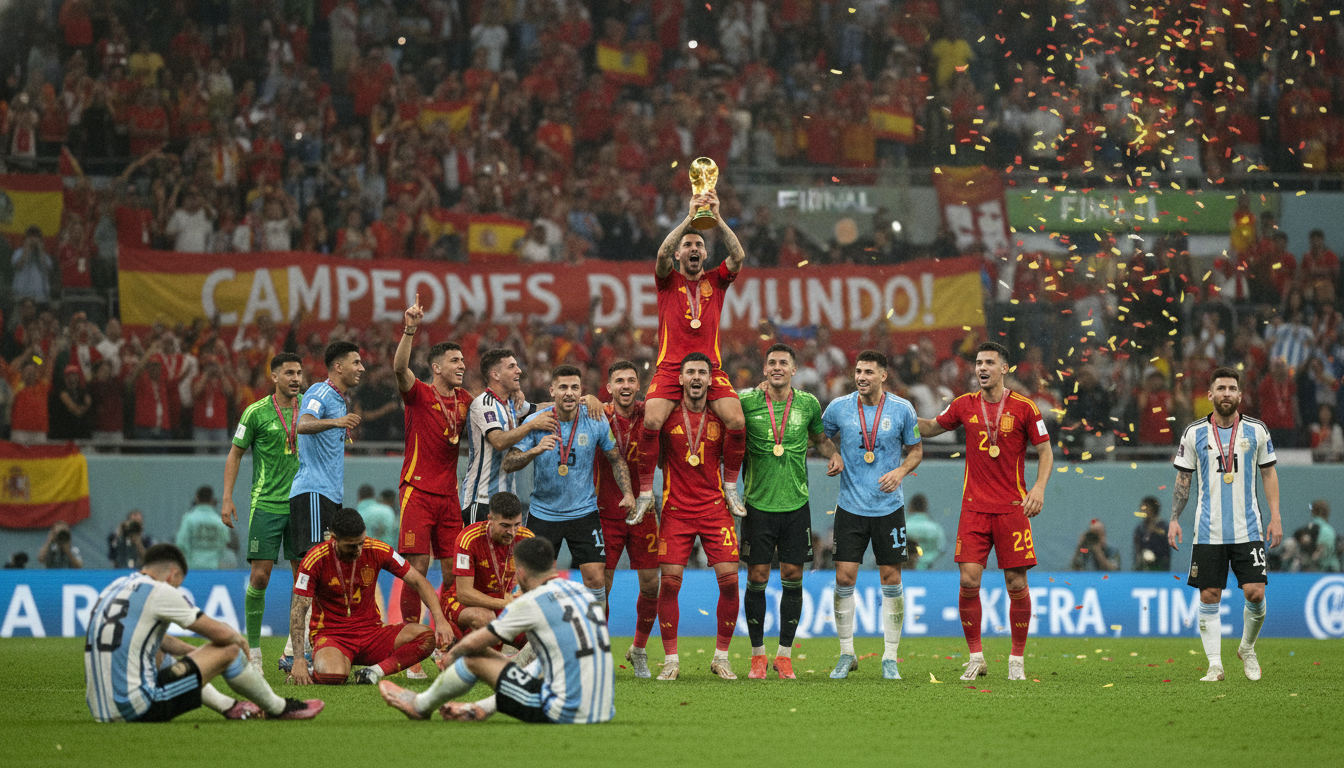
Spain completed a tense, tightly contested final by beating defending champions Argentina 1-0 after extra time, ensuring Spain win World Cup glory once again and cementing their status at the summit of international football. Ferran Torres, introduced from the bench, produced the decisive intervention late in extra time to settle a match that had few clear chances and intense defensive focus from both sides. Coach Luis de la Fuente, who at 65 became the oldest manager to lift the World Cup trophy, credited a collective, team-first mentality for the victory and for the nation’s recent run of success.
De la Fuente credits team-first mentality
Luis de la Fuente told reporters that the squad’s unity and collective values were the driving force behind Spain’s victory and the team’s sustained excellence. He emphasized that the players have grown within a shared philosophy and that solidarity on and off the pitch has been central to their identity. The coach said, “We are the most united team,” and he praised the group for remaining true to principles that have produced both Euro 2024 and now World Cup triumphs. De la Fuente described the achievement as the culmination of a generation’s work, calling the players “excellent, world-class footballers” who have set an example through their comportment and results.
Ferran Torres seals victory from the bench
Ferran Torres entered as a substitute and supplied the decisive moment, converting a late extra-time opportunity to give Spain the lead and ultimately the trophy. The goal underscored the depth and tactical flexibility of the Spanish squad, which has relied on impactful bench contributions throughout the tournament. Torres’ intervention was emblematic of a side that has blended youth and experience effectively, with substitutes prepared to change the course of high-stakes games. The finish – clinically taken and expertly timed – capped a match in which scoring chances were at a premium and decisive margins were earned rather than gifted.
A tactical and physical final between champions
The final unfolded as a low-scoring, tense contest defined by aggressive pressing, disciplined defensive shape and narrow margins in the attacking third. Both teams showed respect for each other’s strengths, resulting in extended spells of possession exchanges and carefully measured forward moves rather than all-out open play. Spain’s ability to sustain a cohesive structure in extra time proved crucial, allowing them to exploit moments when Argentina briefly vacated space. The match demanded physical resilience and concentration, and Spain’s organisation in critical moments allowed them to survive several spells of pressure before seizing the winning chance.
Spain’s unprecedented 38-match unbeaten run
Spain’s World Cup triumph arrived amid a remarkable unbeaten streak that now stands at 38 matches across competitions, a record for teams from Europe or South America. That sequence includes Spain’s European Championship success in 2024 and a succession of competitive and friendly results that reflect continuity and growth under de la Fuente. The run is both a statistical milestone and a statement about the consistency of identity within Spain’s national setup, from tactical planning to squad selection and player development. At 65, de la Fuente’s leadership has been pivotal to translating a long-term vision into enduring success on the field.
Player development and the new Spanish generation
This Spain side represents a generation of players who came through academies and youth national teams indoctrinated in a possession-based, technically assured style that values teamwork above individual heroics. Many of the squad members have been part of a sustained national pathway that prioritised cohesion, tactical intelligence and adaptability, and the World Cup victory demonstrates the payoff of that approach. Spain’s mix of technically gifted starters and versatile substitutes allowed them to adapt in-game and maintain intensity late into matches. The triumph will now be viewed as the confirmation of a developmental model that other federations may study for lessons on producing consistent international contenders.
Reactions and implications for Argentina and global football
The result will prompt reflection in Argentina, where a strong title defence fell short despite a campaign that carried the weight of expectation. For Spain, the victory elevates the country to a new level of contemporary dominance in international football, following continental success with the ultimate global prize. The psychological impact of prevailing in a final against the reigning champions cannot be overstated; it reinforces Spain’s belief in their methods and places fresh responsibility on other national teams to respond with tactical adjustments or renewed emphasis on player pipelines. Football federations, coaches and analysts will now reassess how Spain combined tactical consistency with squad depth to achieve this result.
This World Cup success closes a chapter of major-tournament dominance for Spain and opens another focused on sustaining standards, managing transitions and preparing for the next international cycle. The players and staff will return home to celebrations, but they also face the practical task of maintaining form, integrating emerging talents and preserving the culture that produced this double of European and global titles. With the trophy now secured, Spain’s national team must balance the immediate acclaim with the longer view of how to remain competitive as other nations seek to narrow the gap.