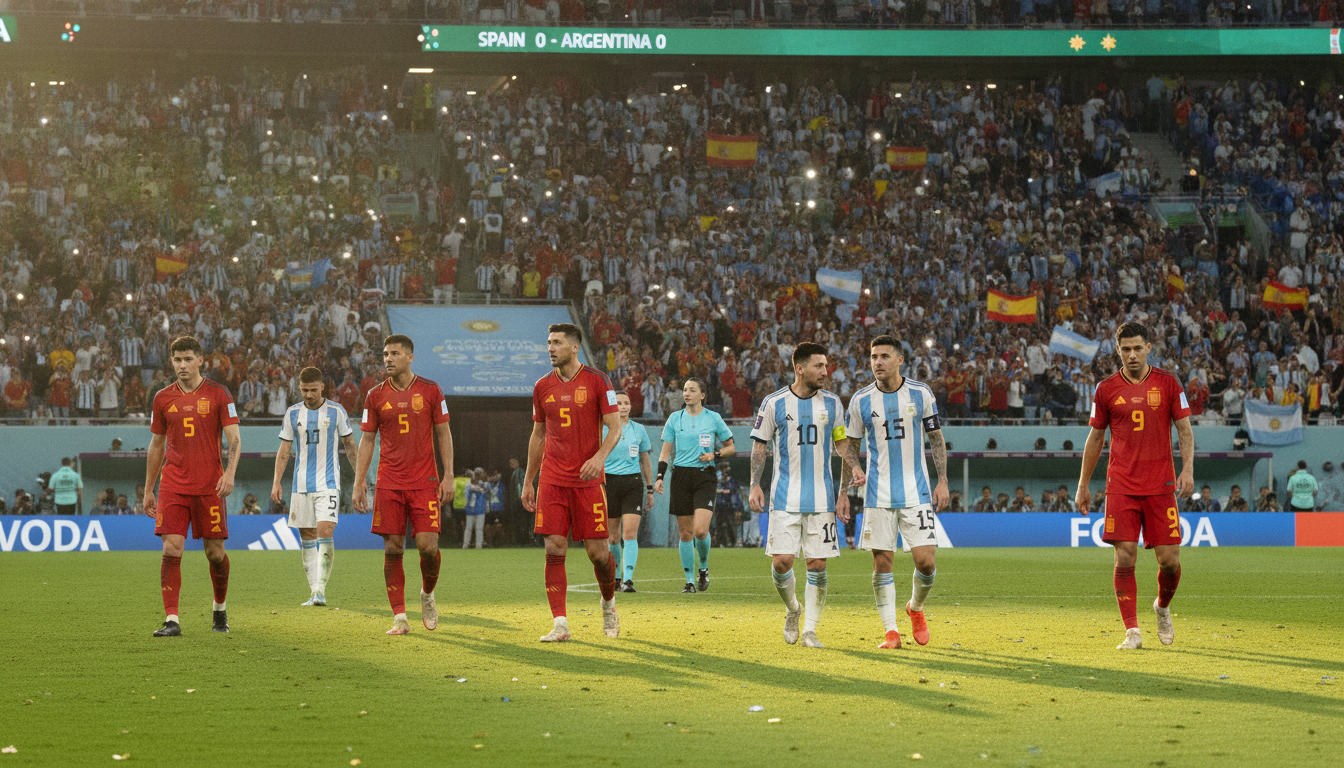
Spain vs Argentina World Cup final: Scoreless at half as defenses hold at New York New Jersey Stadium
Spain vs Argentina World Cup final deadlocked 0-0 at half-time; tense first half featured strong defensive work and a 41st-minute yellow for Lisandro Martínez.


Spain vs Argentina World Cup final delivered a tense, scoreless first half at the New York New Jersey Stadium, with neither side able to convert possession into a clear breakthrough. The match, level at 0-0 at the interval, was defined by cautious build-up play and disciplined defending from both teams. Spain pressed for control of the ball while Argentina absorbed pressure and sought chances on the counter. The second half now looms as the likely decisive phase in a final that has matched pre-match expectations for intensity.
Scoreless First Half at New York New Jersey Stadium
Both teams produced periods of control but few high-quality scoring opportunities during the opening 45 minutes. Spain enjoyed extended spells of possession inside Argentina’s half but struggled to craft clear-cut chances against a compact defensive block. Argentina, content to drop deeper, threatened on transitions but were unable to sustain prolonged pressure on Spain’s goal.
The tempo of the match remained measured and deliberate, with the ball often recycled across the midfield as each side probed for an opening. Defenders and midfielders won most of the duels, and set pieces provided the only faint outlines of danger on either end. As half-time approached, the pattern of the game left the outcome very much poised for the second period.
Tactical Battle and Midfield Control
Spain set out with a possession-based structure designed to stretch Argentina across the pitch and create pockets for penetrating passes. The Spanish midfield rotated frequently to overload channels, with full-backs tucking inside at times to support central combinations. Argentina countered by compressing the center and inviting play wide, trusting in quick vertical passes to launch counters.
Both teams showed tactical discipline in transitions, with midfielders tracking runners and full-backs recovering swiftly to prevent overloads. This chess match limited the number of clear one-on-one situations in the attacking third and forced chances to come from longer build-ups or set-piece situations. The managers’ plans were evident in the patient approach taken by their teams.
Defensive Resilience on Display
Defensive organization proved the dominant theme through the opening period, with both backlines executing disciplined marking and timely interventions. Spain’s defensive unit maintained a high level of concentration, blocking shots and cutting out passes before they could become dangerous. Argentina’s defenders, meanwhile, displayed physicality and positional awareness, neutralizing many of Spain’s intricate passing sequences.
Goalkeepers from both sides remained largely untested by shots that troubled their positioning, but they were alert to potential threats and ready to respond. Defensive midfielders played a vital role in screening the lines and disrupting rhythm, limiting the opposition’s time on the ball near the penalty area. The result was a first half that favored containment over risk.
Key Incident: Martínez Booked
Argentina defender Lisandro Martínez received a yellow card in the 41st minute after a strong challenge that earned the referee’s attention. The booking represents a tactical caution as Martínez will need to manage his aggression should he remain on the pitch, with the risk of a second yellow forcing an early exit. The caution also highlighted the physical edge of the encounter, with refereeing decisions set to be influential.
Martínez’s booking arrived at a delicate moment when both teams were vying to assert control before the break. For Argentina, the defender’s discipline and ability to avoid further cautions will be important if they are to sustain their compact approach. For Spain, the incident may alter how attackers probe that flank in the second half, possibly increasing pressure on Martínez’s side.
Second Half Prospects and Managerial Decisions
The second half presents both managers with a range of tactical adjustments to break the deadlock, from introducing fresh attacking legs to shifting formations for greater verticality. Spain may look to increase the tempo and commit more players forward, seeking combinations in the final third to unsettle Argentina’s back line. Argentina, as reigning champions, could respond by sharpening their counterattacks and targeting space left by Spain when they push higher.
Substitution choices will be pivotal: attackers who bring directness and pace could change the rhythm, while midfield changes might be made to regain or disrupt control. The bench will also offer defensive options should either side seek to protect a late lead. Managers must weigh the game-management risks of opening up play in a final where a single moment can decide the outcome.
Set-Pieces and Margins Between the Teams
With open play yielding few chances, set-pieces could become decisive in the second half, offering both sides structured opportunities to test aerial presence and organization. Corners and free-kicks around the box will demand concentration, and coaches may deploy specialist routines to exploit any slight lapses in marking. Small margins in delivery and positioning often determine finals, making dead-ball situations potentially match-defining.
Both teams showed early awareness of these margins, defending set plays tightly while seeking to create them from opposition fouls. As the match progresses, the importance of composure in these moments will rise, particularly as fatigue and urgency influence decision-making. The final’s outcome may hinge on a single well-executed set-piece or a defensive slip.
Historical Context and Tournament Stakes
The 2026 World Cup final carries significant historical weight for each nation, with Argentina aiming to retain the title they secured at the previous tournament. For Spain, the final represents a chance to return to global glory and assert themselves among elite international sides. The stakes ensure that tactical caution is balanced against the necessity to seize decisive moments.
Beyond the trophy itself, the match will shape narratives about squad development, managerial legacy, and the international standing of both federations. Players who excel in high-pressure moments can elevate their reputations, while those who falter may find scrutiny intensified. This final is therefore not just a single match but a fulcrum for careers and national football histories.
As the second half approaches, both teams and their supporters will be acutely aware of the narrow window for influence and the need to manage risk. Tactical nuance, substitution timing, and individual bravery will all contribute to how this tight contest unfolds. The remainder of the game promises to reward the team that balances calculated aggression with defensive solidity.
The second half is set to determine whether this final follows the pattern of a cautious chess match or breaks into open, end-to-end drama demanded by the occasion. Both managers face difficult choices, and the players will be expected to deliver moments of clarity under pressure. Whatever the outcome, the remainder of this match is poised to produce defining scenes for the 2026 World Cup final.