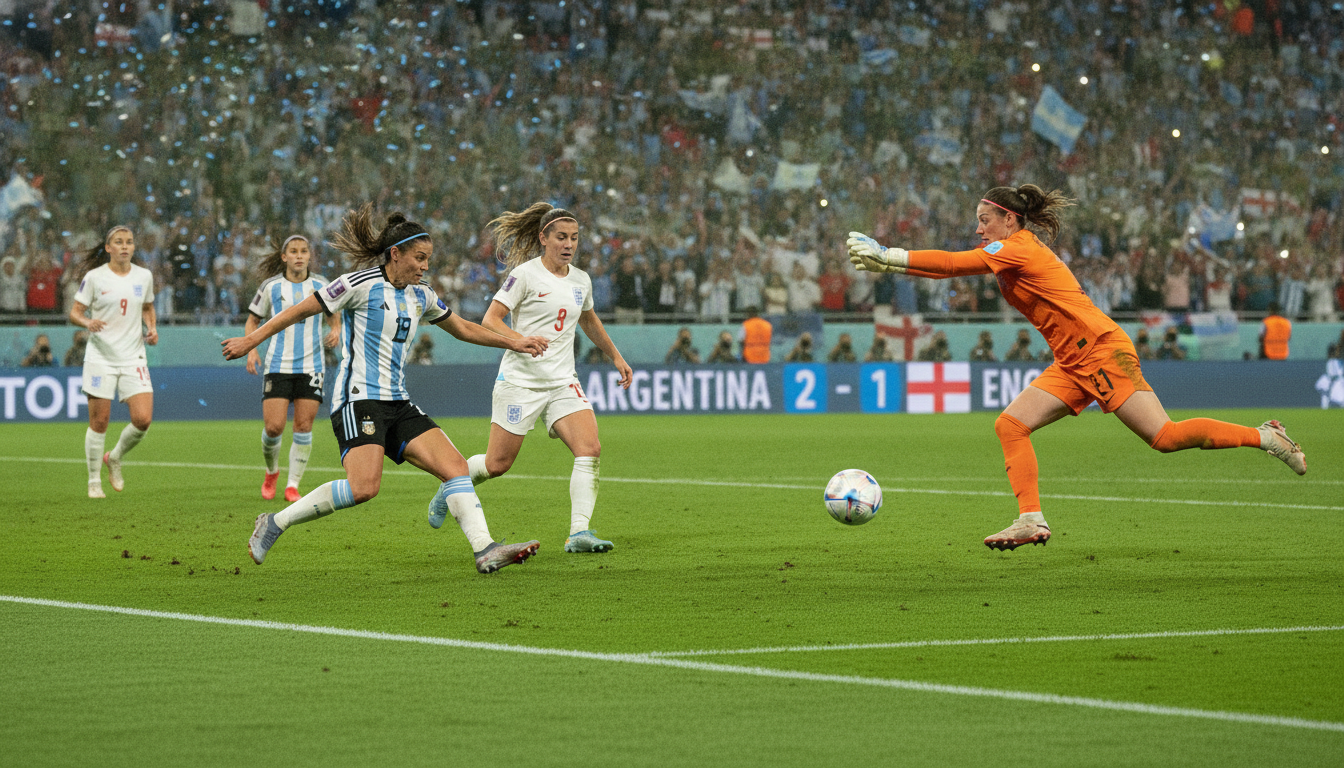
Argentina beat England 2-1 to reach 2026 World Cup final
Argentina beat England 2-1 in Atlanta on July 15, 2026, as a stoppage-time Lautaro Martínez header from Lionel Messi’s cross sealed a place in the World Cup final.


Late Martínez header sends Argentina into final
Argentina came from behind to defeat England 2-1 at Mercedes‑Benz Stadium in Atlanta on July 15, 2026, securing a berth in the World Cup final. Anthony Gordon gave England the lead early in the second half before Enzo Fernández levelled the match as Argentina turned the game back in their favour. Lionel Messi delivered the decisive cross in stoppage time and Lautaro Martínez rose to head home the winner, sparking jubilant celebrations among the travelling supporters. The result sets up a final at MetLife Stadium in New Jersey on July 19, 2026, where Argentina will face Spain.
England struck first and looked composed in possession during long stretches, but Argentina’s persistence and late-game composure proved decisive. The defending champions have now reached consecutive World Cup finals, an achievement that places them among an elite group of national teams. Argentina will attempt to become the first nation to retain the World Cup since Brazil’s back-to-back triumphs in 1958 and 1962. The match underlined Argentina’s resilience and their ability to produce moments of quality when the occasion demanded it most.
Match timeline and decisive moments
The game was level at half‑time after a cautious opening phase that saw both sides probe but not commit to prolonged stretches of pressure. Anthony Gordon broke the deadlock in the 55th minute with a well-timed run and finish that rewarded England’s early second‑half intent. Argentina responded by increasing their tempo and, after finding a foothold, Enzo Fernández converted a chance to bring the scores level and swing momentum back toward the Argentines.
The defining sequence arrived in stoppage time when Messi, who has been integral throughout the tournament, delivered a precise cross from the right flank. Martínez attacked the near post with intent and connected with a powerful header that left England’s goalkeeper stranded. That moment not only decided the match but also highlighted Argentina’s capacity to create and finish chances from set plays and open play despite sustained pressure from England.
Tactical shifts and midfield control
Argentina’s comeback was underpinned by a shift in midfield dynamics as the second half progressed, with Fernández and his teammates managing the tempo and circulation. Accurate short passes and a willingness to take the ball through central areas allowed Argentina to bypass England’s initial pressing lines. That control enabled the team to generate the attacking opportunities that eventually culminated in the equaliser and the winner.
England’s midfield showed periods of dominance, particularly in the opening stages after the break, but their control waned as Argentina tightened marking and reclaimed loose balls in the middle third. The clash ultimately turned on transitional moments and the capacity of both sides to convert brief windows of opportunity. Tactical substitutions also influenced the flow, with alterations from both benches reshaping attacking patterns in the closing stages.
England’s chances and what went wrong
England started the second half with momentum and earned the opening goal through an incisive move down the flank that left the visitors exposed. After taking the lead, England created further opportunities but failed to convert clear-cut chances, a shortfall that would prove costly. Defensive lapses in the final minutes allowed Argentina to exploit space, most notably during the decisive cross that led to the stoppage-time winner.
As the match entered its final phase, England struggled to maintain concentration on transitional defence and to deny Messi the time and space to influence play. Attempts to reorganise defensively in the dying minutes created gaps that Argentina identified and targeted. In knockout football, a single moment can overturn the balance, and on this occasion England were undone by one such late swing.
Messi’s role and veteran influence
At 39 years old, Lionel Messi once again proved pivotal in a major tournament, delivering the assist that produced the winning goal. His ability to read the finish and pick out a decisive pass remains a critical asset for Argentina, and his presence on the pitch altered how England defended in the final third. Messi’s leadership and calm under pressure provided his teammates with the platform to execute the decisive plays.
Messi had not previously faced England in a competitive match until this semi-final, and his impact underlined the enduring quality he brings to Argentina’s squad. Beyond the assist, his movement and ball retention helped Argentina sustain attacking phases and draw opposing defenders out of position. The veteran forward’s influence will be central to Argentina’s hopes of defending their title in the final on July 19, 2026.
Road to the final and historical context
Argentina’s progression to the 2026 final marks back-to-back appearances in the World Cup final, a rare feat in modern international football. Their victory in Atlanta continues the narrative of a team capable of producing dramatic late results across tournament stages. The pressure of defending a title is significant, and Argentina now carry that burden into a final against Spain in New Jersey.
This edition of the World Cup is the first held with a 48-team format, and the tournament’s expansion has produced a more crowded knockout phase and new scheduling dynamics. Argentina’s run through the field has combined moments of tactical discipline with individual brilliance, and their capacity to find late winners will be a talking point heading into the final. The historical stakes are clear: retaining the trophy would place Argentina alongside the few nations to secure consecutive World Cup successes.
Final preview and what to expect against Spain
Spain will be waiting at MetLife Stadium on July 19, 2026, providing Argentina with a stylistically different challenge from England. Spain’s game typically emphasizes possession control and probing movement, which will test Argentina’s defensive organisation and capacity to press in concert. Argentina’s coaching staff will need to prepare a balanced approach that limits Spain’s time on the ball while retaining the quick transitions that have produced decisive moments.
The matchup between Argentina and Spain will likely be determined by midfield control and set-piece delivery, where both teams boast creative playmakers and aerial threats. Expect a tactical chess match with both sides aiming to negate the other’s strengths and exploit any lapses in concentration. Argentina’s recent ability to convert high-pressure situations into goals provides them with an edge, but Spain’s possession discipline and technical quality make the final a finely poised encounter.
Argentina beat England to reach the World Cup final and will now prepare for what promises to be a fiercely contested title match in New Jersey on July 19, 2026.