Arsenal victory parade in Malawi cancelled after police decline to provide security
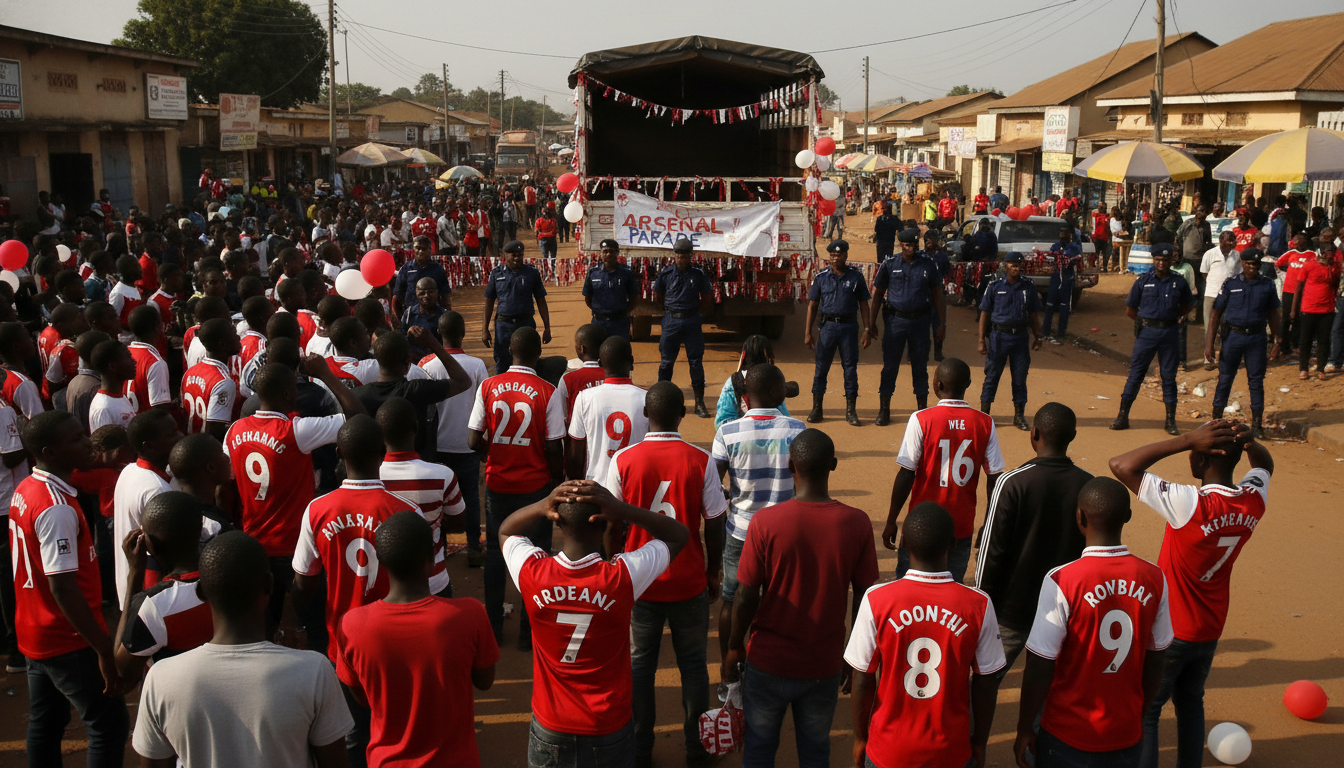
Arsenal victory parade in Malawi was called off after the Malawi Police Service said it could not provide security, prompting disappointment among fans in Lilongwe.


Arsenal supporters in Lilongwe were left stunned and angry after organisers announced the cancellation of a planned Arsenal victory parade that had been scheduled for 30 May 2026. The Arsenal Fans Malawi Chapter said the parade would not proceed after the Malawi Police Service informed organisers it could not commit officers to secure the event. Fans and committee members said the decision came after a stakeholders’ meeting at the Lilongwe Council Chambers and followed a directive from local authorities.
Police cite SARPCCO commitments in Lilongwe
The Malawi Police Service told organisers its manpower and operational resources were tied to preparations for the Southern African Regional Police Chiefs Co-operation Organisation meetings scheduled for 9 to 12 June 2026. Police officials said those regional security commitments would limit their ability to provide the level of policing a large public celebration would require. Organisers reported the position to supporters during a public statement, noting the official security rationale given by district authorities.
Supporters and committee members immediately questioned the timing and logic behind the refusal, arguing the parade date was several days before the regional meetings. The organising committee said it had raised those concerns during the stakeholders’ meeting with the Lilongwe District Commissioner but ultimately felt compelled to accept the official position. Committee representatives framed their decision as reluctant compliance with a lawful directive rather than voluntary withdrawal.
Authorities have not released a detailed public timeline of their deployment plans for the SARPCCO meetings, leaving some fans seeking clearer justification for the cancellation. The absence of a formal, publicly shared explanation from the police has deepened frustration among those who had already funded and planned the celebrations. Supporters emphasised that the parade would have been a peaceful show of unity for Arsenal fans in the capital, underscoring their desire for transparency.
Organisers say they comply reluctantly
In a strongly worded announcement, the Arsenal Fans Malawi Chapter made clear the committee was acting out of respect for law and order. The statement emphasised that the decision did not reflect the wishes of many supporters who had prepared enthusiastically for the event. Committee officials said they felt they had no alternative but to obey the directive, even as they acknowledged the disappointment it caused among fans.
The organisers stressed their intention to convene soon to decide how to handle funds raised for the parade and related activities. They assured members that all financial contributions would be accounted for and that decisions about refunds or alternative uses would be communicated transparently. The committee’s public messaging sought to balance legal compliance with a commitment to protecting supporters’ interests.
While the committee accepted the need to follow police instructions, it used the statement to highlight the morale cost of the cancellation. Members described weeks of planning, fundraising, and logistical work that had mobilised large numbers of people. The organisers reiterated their dedication to keeping Arsenal’s profile high in Malawi despite the setback.
Fans express anger after weeks of preparation
Many supporters expressed bitter disappointment, saying they had invested time and money into what they expected to be a high-profile celebration of Arsenal’s success. Social media and local fan networks filled with messages of frustration after the announcement, with some fans calling for clearer explanations from the authorities. Others said the cancellation felt like a denial of the club’s supporters to publicly celebrate in their own capital.
Fundraisers, vendors and volunteers who had planned to take part reported financial and emotional losses from the sudden cancellation. Several grassroots groups had sold tickets, collected donations for banners and organised transport for supporters from surrounding districts. The loss of anticipated income for small vendors and community organisers has become a pressing concern for local pocketbook-level stakeholders.
Despite their frustration, many fans vowed to remain visible and vocal in their support for Arsenal using other channels and events. Supporter groups pledged to organise smaller gatherings, watch parties and community outreach activities that would comply with local regulations. The determination to maintain an active fan presence underscores how deeply embedded the club is within parts of Malawi’s urban social life.
Funds and logistics now under review
The organisers said they would hold an internal meeting to determine the fate of funds collected for the parade, including whether to refund contributors or redirect money to alternative celebrations or charitable causes. Financial transparency was presented as a priority, with the committee promising to publish its decisions and accounting details to reassure donors. Several fans asked for a timeline for that disclosure to avoid prolonged uncertainty.
Vendors and service providers who had accepted deposits for staging, sound systems, and security arrangements are pressing the committee for clarity on payments. Some local businesses said they had already incurred costs in preparation for the event and would seek compensation if organisers cancelled contracts. The practicalities of unwinding event logistics now sit alongside broader questions about how to salvage community momentum.
Alternatives under discussion include scaled-down, regulated watch parties in licensed venues, a postponed public march with confirmed security guarantees, or redirecting funds to community causes that align with supporters’ values. Committee members said they would consult widely before making a final decision, balancing legal compliance, supporter sentiment, and the need to protect local partners who had invested in the event.
Political and security context in Lilongwe
The cancellation sheds light on the broader balance authorities are trying to strike between facilitating public gatherings and managing security resources ahead of an international policing event. Regional cooperation meetings such as SARPCCO typically require significant logistical support and can attract heightened security measures. Local officials must therefore prioritise national and regional safety commitments, especially when multilateral delegations are involved.
Civil society groups and event organisers argued that clearer advance coordination between local authorities and community stakeholders might have avoided the abrupt cancellation. They called for better advance planning and communication protocols to ensure major civic celebrations are not derailed at short notice. Observers say improved stakeholder engagement would help both the police and community groups allocate resources and set realistic expectations.
The episode highlights how international-level engagements can have knock-on effects for local civic life, sometimes constraining community events that appear unrelated on the surface. For Lilongwe, which routinely hosts a mix of diplomatic, sporting and cultural gatherings, the incident may prompt a review of how public festivities are approved and scheduled around higher-priority security commitments. Advocates pressed for formal mechanisms to prevent similar clashes in the future.
What supporters plan next
Despite the setback, Arsenal supporters in Malawi signalled they will seek alternative ways to mark the club’s achievement and sustain their local organising efforts. Committees and informal groups pledged to meet in the coming days to map out replacement activities that comply with local regulations. Ideas on the table include community outreach projects, coordinated viewing events, and a rescheduled public celebration contingent on guaranteed security arrangements.
Supporters also indicated they would hold the organisers accountable for clear and timely communication about finances and any planned replacement events. Many said they would welcome involvement in the decision-making process to ensure funds are used in line with contributors’ expectations. The commitment to transparency and inclusive planning is intended to rebuild trust after a decision that many described as abrupt and disappointing.
Local fan networks invoked a long-term perspective, noting that a single cancelled parade would not erase the club’s presence or the passion of supporters in Malawi. They vowed to continue building community around Arsenal through grassroots activities, charitable actions and public gatherings that meet regulatory standards. That resolve suggests the chapter will remain active even as it navigates the practical and reputational fallout from the cancellation.
The cancellation of the Arsenal victory parade in Lilongwe has left supporters and organisers grappling with practical, financial and emotional consequences, while raising questions about coordination between civic groups and security authorities ahead of major regional events.