


Nigeria vs Côte d’Ivoire: Flying Eagles must shore up defence ahead of WAFU B U20 semi-final
Nigeria vs Côte d’Ivoire WAFU B U20 semi-final — Flying Eagles must fix defensive lapses to halt unbeaten hosts and secure a place in the final and AFCON berth.


Nigeria’s U20 team, the Flying Eagles, face hosts Côte d’Ivoire in a high-stakes WAFU B U20 Championship semi-final, with the keyword Nigeria vs Côte d’Ivoire at the centre of the contest. The match, scheduled for Wednesday at the Stade Charles Konan Banny in Yamoussoukro, will decide who reaches Sunday’s final and earns qualification to the next Africa U20 Cup of Nations. Head coach Abdu Maikaba has signalled changes to his starting XI as he targets greater defensive discipline against an Ivorian side that has conceded nothing so far.
Maikaba identifies defence as the decisive issue
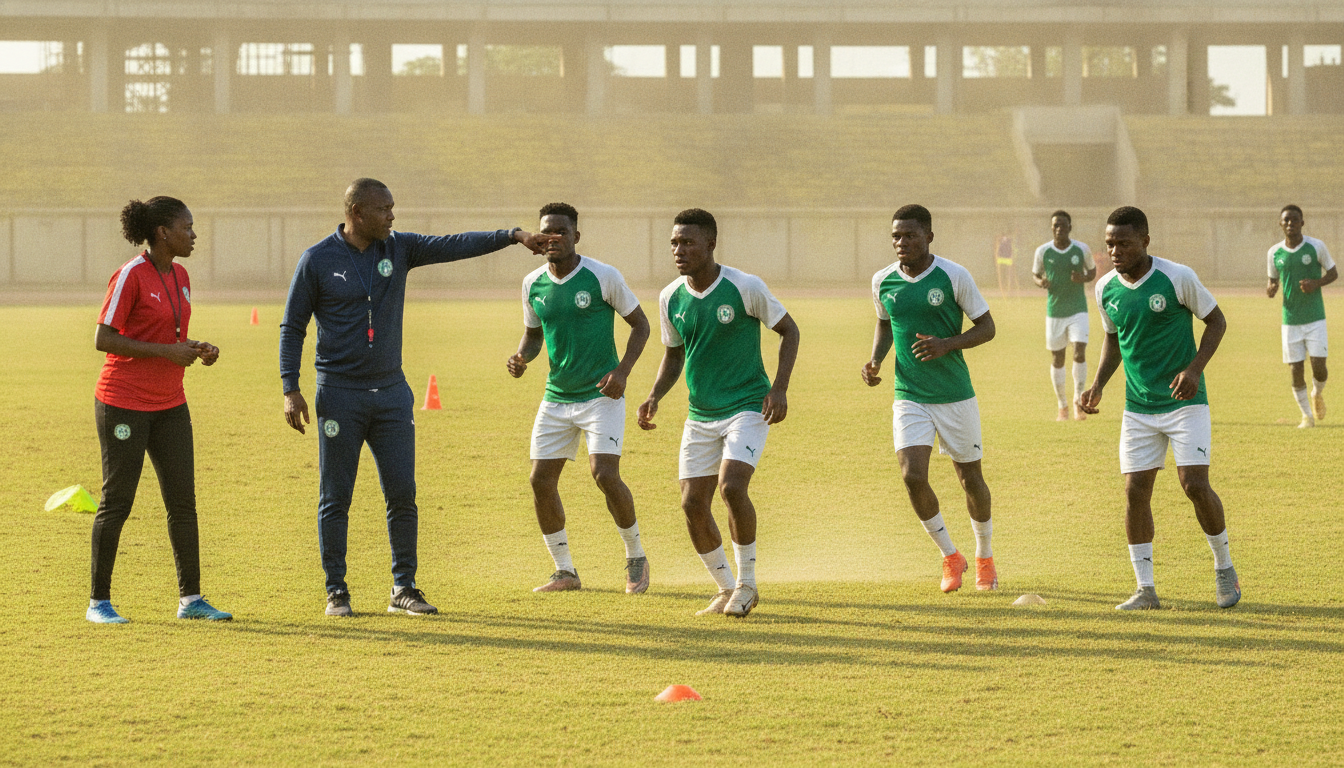
Maikaba told reporters he remains concerned about lapses that cost the Flying Eagles in their final group match, and he has prioritised defensive work in training this week. The coach admitted the 2-0 loss to Burkina Faso exposed recurring problems from set plays and similar attacking situations. He said the coaching staff has repeatedly drilled specific scenarios to improve concentration and reduce errors at the back.
The tactical tweaks are expected to include personnel and positional adjustments aimed at tightening marking and improving reactions to aerial deliveries. Maikaba stressed the need for a composed, organised backline if Nigeria are to defend their WAFU B crown and advance to next week’s final. The emphasis is clear: limit mistakes, control transitions and keep the team compact through the full 90 minutes.
Hosts unbeaten and defending a perfect record
Côte d’Ivoire enter the semi-final without conceding a goal, a run that has bolstered confidence around the Young Elephants squad and among local supporters. The hosts scored seven times in group play while maintaining a flawless defensive record, a statistic that underlines their balance and collective organisation. Playing on home soil at Yamoussoukro, the Ivorians have the crowd behind them and momentum that can be difficult for any visiting side to counter.
Their unbeaten run in the tournament has been built on structured defending and efficient attacking transitions, with several players standing out for composure and sharpness in the final third. That form makes them formidable opponents for the Flying Eagles, who must find a way to break down the Ivorian organisation without leaving space for swift counterattacks. Local backing and familiarity with playing conditions are additional advantages the hosts will seek to exploit.
Stakes: WAFU B final and Africa U20 Cup of Nations qualification
Beyond regional pride, Wednesday’s semi-final carries immediate continental implications. The winner will not only progress to the WAFU B final on Sunday but will also secure one of the qualification slots for next year’s Africa U20 Cup of Nations, joining hosts Ghana. That dual reward raises the match stakes significantly and will shape how both coaches approach selection and game management. For Nigeria, defending their regional title while ensuring AFCON qualification presents a tactical and psychological challenge.
A loss would end the Flying Eagles’ title defence and force them into an off-cycle rebuild ahead of continental qualifiers for ensuing tournaments. For Côte d’Ivoire, victory would vindicate their unbeaten group run and set up a home final where they could claim regional silverware and the associated momentum heading into the Africa U20 stage. The tie therefore represents both immediate success and an important developmental milestone for the young players involved.
Tactical matchup and likely changes to Nigeria’s XI
Analysts expect Maikaba to introduce personnel changes aimed at shoring up central defence and improving set-piece concentration. The coaching staff have reportedly focused on defending crosses and managing second-ball situations in recent sessions. That could translate into a more conservative formation or the selection of a defensive midfielder tasked with screening the back four and breaking up Ivorian possession.
Nigeria’s attacking threats will still be needed, but the balance between defence and offence is likely to tilt towards caution early in the tie. Containment of the Young Elephants’ wide play and limiting space between Ivorian forwards and midfielders will be critical. If Nigeria can neutralise the hosts’ initial rhythm, they will create opportunities to press higher and exploit gaps as the game opens up in later stages.
Key players to watch on both sides
The Young Elephants have several performers who have combined defensive solidity with incisive attacking support, and their names are starting to circulate among scouts and pundits. Those players will be central to Côte d’Ivoire’s plan to maintain their clean-sheet record while probing for goals on the break. Nigeria, meanwhile, will rely on experienced youngsters who have been part of previous age-group successes to steady the side and lead by example.
Set-piece specialists and players strong in aerial duels are likely to play decisive roles in Yamoussoukro, given past concerns about conceding from similar situations. Midfield control will also be a battleground; whoever dominates that area is likely to influence the tempo and direction of the match. Individual discipline and concentration in key moments could determine whether the tie is settled in regular time or heads into extra time.
Recent history and renewed rivalry
The semi-final rekindles a budding rivalry that intensified at last year’s WAFU B Championship in Togo, where the Flying Eagles came from behind to beat Côte d’Ivoire 2-1. That comeback victory ended with Nigeria lifting the trophy, a result the Ivorians will be keen to avenge on home turf. The memory of that encounter adds an extra layer of narrative and competitive edge to Wednesday’s match, particularly for players who experienced both outcomes.
Rivalries at youth level can shape player development and national team trajectories, and this fixture is already being framed as a key test for both nations’ future senior prospects. Coaches are mindful of the balance between winning today and managing player workloads and development pathways for tournaments to come. The encounter therefore holds significance well beyond the immediate result.
Match setting and expected atmosphere in Yamoussoukro
The Stade Charles Konan Banny will provide an intense atmosphere as local supporters look to drive the Young Elephants toward the final at their home venue. Crowd noise and partisan support can influence momentum swings, and visiting teams must be prepared for periods of sustained pressure. Nigeria will need composure to manage the early phases and avoid being drawn into errors under duress.
Organisers have emphasised security and logistics to ensure the fixture proceeds smoothly, and both federations have encouraged fair play and respect among travelling fans. Weather and pitch conditions may also affect tactical choices, with coaches likely to consider those variables when finalising their starting line-ups. The match-day environment will be a test of mental fortitude as much as of technical ability.
The approaching semi-final between Nigeria and Côte d’Ivoire shapes up as a tightly contested clash where defensive discipline, tactical clarity and mental resilience will be decisive. Both teams have clear incentives to win: a place in the WAFU B final, a berth at the Africa U20 Cup of Nations, and the momentum that comes with tournament success. As kickoff approaches at Stade Charles Konan Banny, the Flying Eagles’ adjustments and the Young Elephants’ unbeaten form set the stage for an absorbing contest.