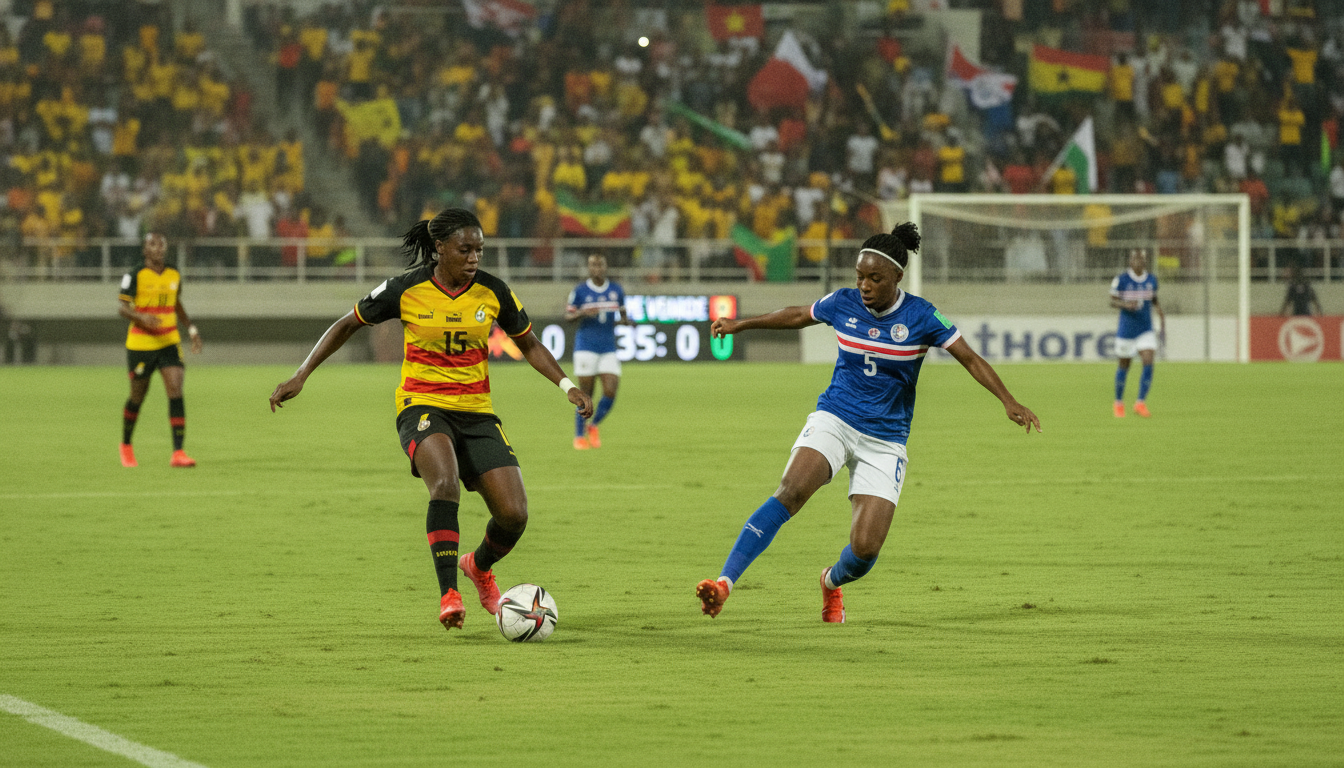
Black Queens target winning start against Cape Verde in WAFCON opener
Black Queens begin their 2026 WAFCON campaign vs Cape Verde on July 31, 2026 at Moulay Rachid Stadium (17:00 GMT). Coach Björkegren aims for a winning start with belief.


Ghana’s national women’s team, the Black Queens, will open their 2026 CAF Women’s Africa Cup of Nations (WAFCON) campaign on July 31, 2026 when they face Cape Verde in the Group C opener in Morocco. The match, scheduled for 17:00 GMT at Moulay Rachid Stadium, arrives after an intense pre-tournament programme designed to sharpen fitness and cohesion. Team management has signalled that the squad is focused on securing three points in the first fixture to set a positive tone for the group stage.
Black Queens arrive in Morocco after a final training camp
The Black Queens concluded a final pre-tournament training camp that featured a series of friendlies aimed at fine-tuning combinations and match fitness. The coaching staff used those sessions to test tactical variations and reinforce set-piece routines ahead of the competitive opener. Players reported few fitness concerns and staff indicated readiness to field a selection built around balance and experience.
Preparations emphasised team shape and transitional play rather than wholesale personnel changes. The camp also served to integrate younger squad members into the group dynamic under pressure conditions. That continuity of training is intended to produce sharper decision-making in the opening match.
Coach Kim Lars Björkegren’s tactical priorities for the opener
Coach Kim Lars Björkegren has stressed structure and discipline as core principles going into the Cape Verde match. The emphasis in training has been on controlling midfield possession, reducing turnovers in dangerous areas, and striking quickly when space opens on the flanks. Defensive organisation on opposition set pieces has also been a clear focus for the backline.
Björkegren is expected to select a starting XI that blends experienced internationals with younger talents who can provide energy and pace. Tactical flexibility has been highlighted as a virtue the coach may deploy during the match, with the potential to switch between a more compact shape and an attack-minded formation if the game situation requires it.
Key players to watch for Ghana
Several members of the Black Queens squad enter the tournament carrying form and leadership that could prove decisive against Cape Verde. Senior players in central areas will be relied upon to control tempo and shield the defence, while wide attackers are tasked with providing service and penetration. The goalkeeper’s role in organising the defence and initiating counter-attacks will also be important on matchday.
Younger forwards and midfielders who impressed in the run-up to the tournament may be given opportunities to change the game. The ability of fringe players to make an impact off the bench could be a defining feature if the contest becomes tight. Coaching notes suggest that impact substitutes will play a planned role in the match management strategy.
Cape Verde’s style and the challenge they present
Cape Verde have earned respect in recent regional competitions for their compact defending and willingness to press in phases. They are likely to set up to frustrate opponents and then seek chances on the break or from well-worked set pieces. The Black Queens will need to be patient in possession and avoid rushing play in the final third to counter that approach.
Analysts expect the match to feature tactical battles across the midfield, with both teams keen to prevent the other from establishing sustained control. Ghana will need to combine movement and positional rotation to create openings, while remaining vigilant to counter-attacks that could be exploited by Cape Verde’s transition play.
Matchday logistics and atmosphere at Moulay Rachid Stadium
Kick-off for the Group C opener is scheduled for 17:00 GMT at Moulay Rachid Stadium on July 31, 2026, giving supporters in different time zones a clear reference point for viewing. The venue has been prepared to host the opening fixtures of the group stage and organisers have outlined standard match protocols for teams and officials. Security, pitch condition and match-day services have been reported as in order in the lead-up to the tournament.
Ghanaian fans are expected to travel in numbers, and those following from home will be eager for an early positive result. Supporter presence and vocal backing can influence momentum during tight matches, and the Black Queens will look to harness that energy as part of their game plan.
Group C implications and the road beyond the opener
A victory in the opening match would give the Black Queens a strategic advantage in Group C and increase their margin for manoeuvre in the remaining fixtures. Early points relieve the pressure that builds in the middle of the group phase and allow coaches to rotate players while maintaining a competitive position. Conversely, a dropped result would raise the stakes for subsequent matches and require a stronger approach to squad management.
Beyond the immediate group implications, performance in the opening game often sets the narrative for a team’s tournament progression. A confident start can drive momentum, while a cautious or unconvincing display may force tactical recalibration. For Ghana, the first match represents an opportunity to demonstrate that their pre-tournament work has translated into competitive readiness.
As the Black Queens prepare to step onto the pitch at Moulay Rachid Stadium, attention will be on how well the team converts training gains into on-field execution. The match against Cape Verde will test defensive cohesion, midfield control and attacking clarity under the pressures of tournament football. A positive result would validate the preparation and give Ghana a platform from which to pursue advancement from Group C.