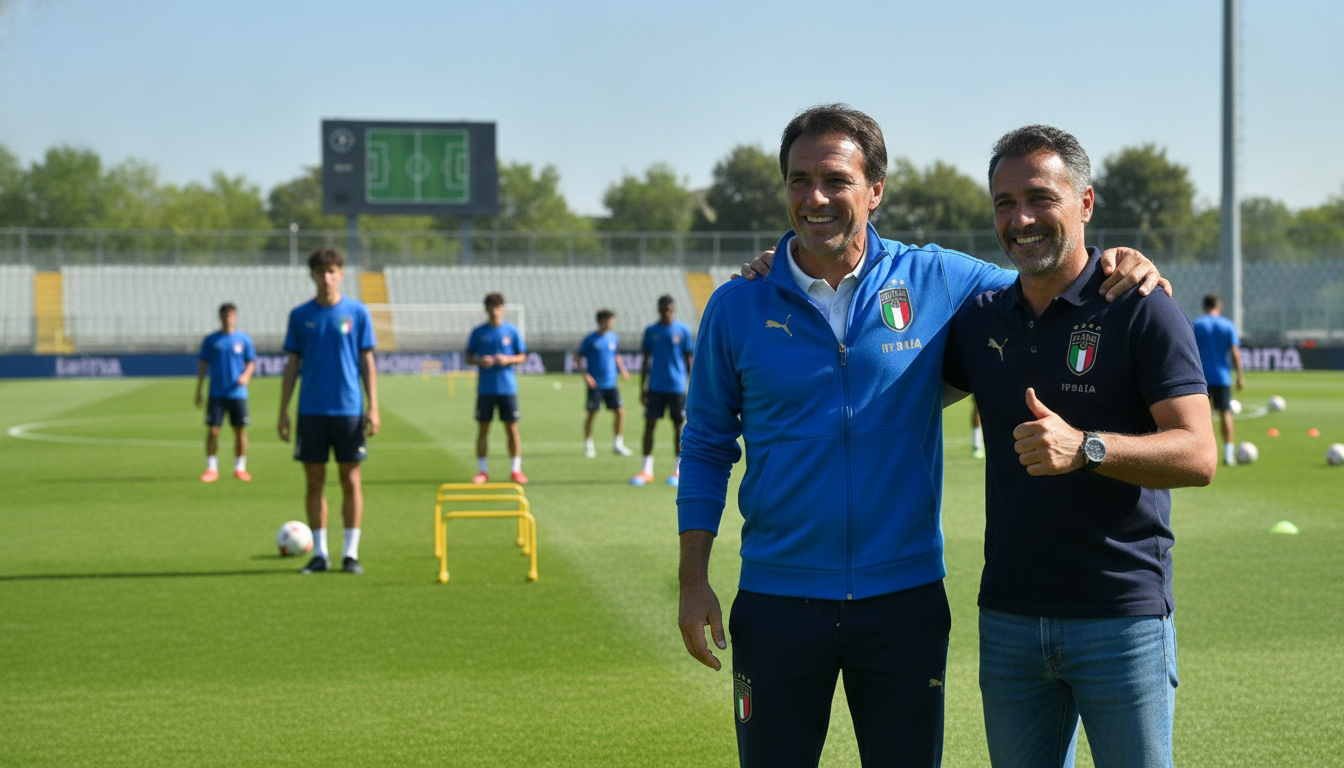
Christian Vieri Backs Roberto Mancini to Rebuild Italy After Chaotic Coaching Hunt
Christian Vieri backs Roberto Mancini after the Italian federation reappointed the Euro-winning coach amid a chaotic search that saw Pirlo and Maldini exit.

Mancini Returns to Lead Italy
Roberto Mancini has been reappointed as Italy head coach following a turbulent and highly publicised search for a successor. Christian Vieri, the former Italy striker, told the South China Morning Post that Mancini is the right figure to revive the national team and to prioritise young talent.
Mancini, who led Italy to the European Championship, returns to a role that has been vacant since Gennaro Gattuso resigned after Italy failed to qualify for the FIFA World Cup in North America. The reappointment is intended to stabilise the team ahead of a renewed programme of rebuilding and selection.
The Italian Football Federation opted for a familiar face with a proven record at senior international level rather than a risky fresh start. Mancini’s reputation for selecting and trusting young players was cited by supporters as a compelling reason for his return.
Vieri’s endorsement frames Mancini as a pragmatic choice capable of bridging experience and youth. The immediate challenge for the coach will be to restore confidence after months of off-field turmoil that disrupted preparation and strategy.
How the Coaching Search Collapsed
The federation’s hunt for a permanent manager unfolded chaotically and publicly, exposing divisions inside the organisation and attracting intense media scrutiny. Early approaches reportedly to Carlo Ancelotti and Pep Guardiola proved unsuccessful, leaving the federation scrambling for alternatives.
Andrea Pirlo emerged as a favoured candidate at one point, but his potential appointment collapsed after questions were raised about a sponsorship deal with a Russian betting company. That controversy forced the federation to step back from a plan that had looked, briefly, like the simplest way forward.
Paolo Maldini was named technical director as the federation tried to reconfigure its leadership, but he resigned after just 16 days amid the fallout from Pirlo’s failed appointment. Maldini’s adviser, Leonardo, also left the organisation in quick succession, prompting further reshuffling at the top.
The accumulated resignations and reversals left former Leicester manager Claudio Ranieri stepping into the role Maldini vacated. The episode underscored the federation’s struggle to manage both reputational risk and the delicate task of appointing people capable of guiding the national team back to international prominence.
Immediate Reactions: Vieri and Others
Christian Vieri, who earned 49 caps for Italy, has publicly backed Mancini and emphasised the coach’s willingness to give opportunities to promising younger players. Speaking in Hong Kong before Inter Milan’s friendly against Manchester City, Vieri praised Mancini’s readiness to select players not regularly starting for their clubs if he believes in their potential.
Vieri told the South China Morning Post that Italy’s coaches have long been hindered by insufficient focus on youth development, but that Mancini understands the importance of blooding new talent. His remarks underline a broader consensus among former players that reintroducing young talent is essential for long-term recovery.
Other voices around Italian football offered cautious approval. Observers noted that while Mancini brings familiarity and experience, the federation must now provide a coherent plan and clear support if the coach is to succeed. The endorsement from high-profile former internationals buys Mancini time, but it does not remove the structural questions the team faces.
Public reaction within Italy ranged from relief to scepticism, reflecting the high expectations placed on national team leadership after missed qualification and months of executive instability. The task ahead includes restoring trust among fans, players and domestic clubs.
Youth Development: A Persistent Problem
One theme repeated by Vieri and other former players is that Italy’s long-term problem rests with its youth pathways and domestic opportunities for emerging talent. Many observers say top Serie A clubs are cautious about exposing teenage players to regular first-team action, which limits the national pool when major tournaments arrive.
Vieri argued that Mancini’s inclination to reward players he trusts, even if they are not regular starters, is a necessary corrective. The coach’s prior tenure saw him give chances to younger players, a factor credited with Italy’s success at the European Championship.
Federation officials and club directors will need to agree on strategies that encourage youth development without compromising competitive ambitions in domestic and European competitions. Measures under discussion in some quarters include incentives for clubs that promote academy graduates and clearer pathways between youth national teams and senior selection.
The rebuilding process will require time and patience, and youth development is only one component. Improving coaching at lower levels, increasing investment in training facilities and aligning scouting networks are additional priorities that the federation must consider if Italy is to return to sustained international success.
Behind the Scenes: Sponsorship, Resignations and Replacements
The derailment of Andrea Pirlo’s candidacy highlighted the increasingly complex intersection of commercial deals and sporting appointments. The controversy around a sponsorship link with a Russian betting firm created reputational headaches that the federation judged too risky to ignore.
Paolo Maldini’s brief tenure as technical director and subsequent departure added to the perception of internal turmoil. His resignation, and the exit of his adviser Leonardo, left the federation scrambling for experienced hands and exposed weaknesses in its decision-making process.
Claudio Ranieri’s appointment as technical director is intended to restore some stability and bring an experienced football mind into the federation’s executive structure. Ranieri’s role will include supporting the coach’s work, overseeing talent development strategies and helping to repair relationships with clubs and stakeholders.
The high-profile nature of the resignations and reversals has elevated scrutiny on the federation’s governance and the transparency of its hiring processes. Rebuilding credibility will require demonstrable changes to how decisions are made and communicated, both to avoid repeating past mistakes and to reassure players and supporters.
Next Steps for the Azzurri and a Timeline for Recovery
With Roberto Mancini back in charge, attention now turns to practical steps: assembling a coaching staff, scheduling fixtures, and defining a squad framework that balances experience with youth. The immediate calendar will include friendlies and qualifiers that offer Mancini chances to test new combinations and players.
Selection priorities and a clear tactical identity will be critical in the short term. Mancini’s previous spell provided a framework for attacking organisation and fluid forward play, but he must now adapt those principles to a new generation of players and to the specific demands of international competition.
The federation and coaching team have the task of setting realistic milestones: rebuilding public confidence, improving competitive results in the next international window, and integrating a cohort of young players into the senior squad. Progress will be judged on both on-field results and structural changes to talent development.
Christian Vieri also used the platform of the Hong Kong visit to reflect more broadly on global football, suggesting that China will eventually host a World Cup. His remarks underscore the wider context in which national teams operate, as governing bodies and federations navigate commercial and geopolitical forces alongside sporting concerns.
Italy’s recovery under Mancini will not be instantaneous, but the reappointment provides a familiar figure who understands the national landscape and has a track record of blending youth with experience. The coming months will reveal whether the federation can convert that continuity into tangible progress.
The federation now faces the twin tasks of backing Mancini with a coherent strategy and repairing organisational credibility after a turbulent search, while Mancini must quickly assemble a plan to evaluate talent and restore Italy’s competitive standing.