CAF judicial reforms advance after two day Cairo meeting of tribunal leaders
CAF judicial reforms advance after a two day Cairo meeting where judicial chiefs reviewed draft regulations to strengthen referees, VAR and disciplinary trust


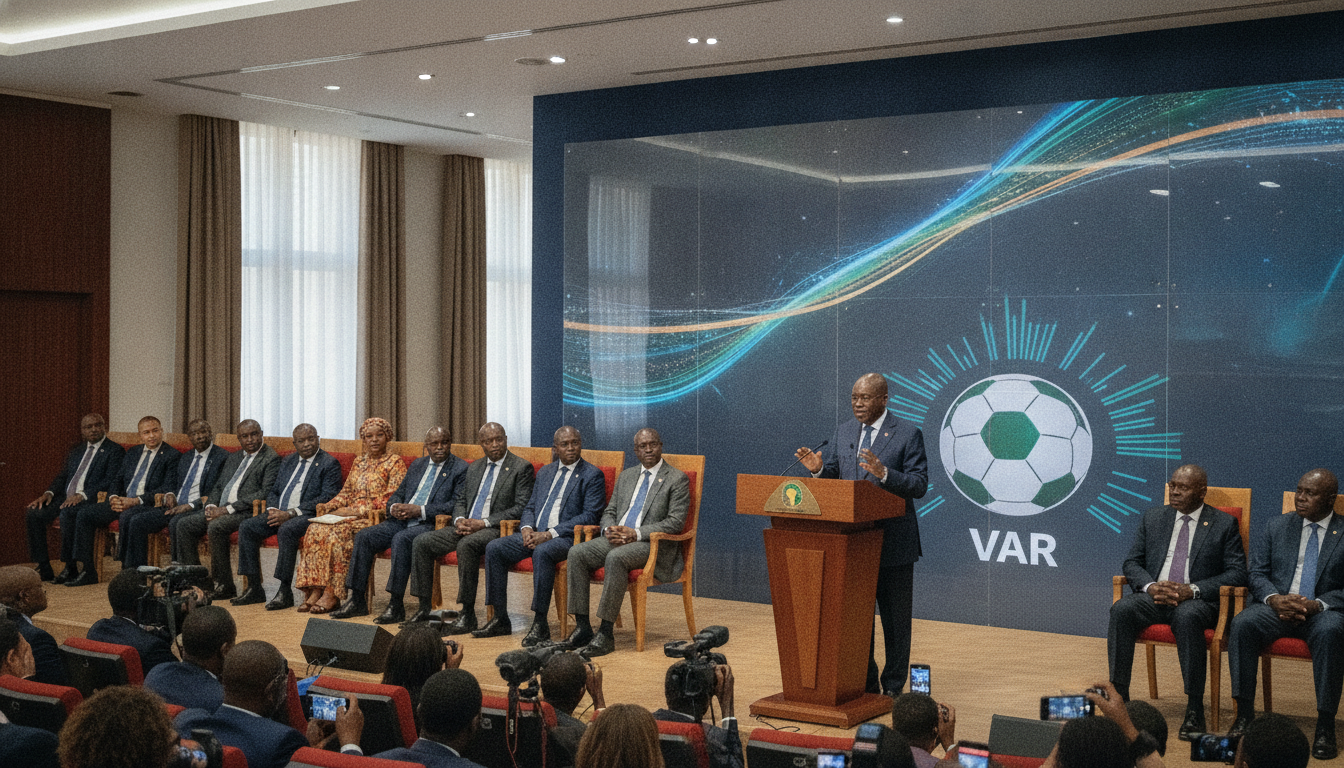
The Confederation of African Football moved forward on CAF judicial reforms this week after convening a two day meeting at its headquarters in Cairo with the leadership of its judicial tribunals.
Delegates reviewed draft regulations intended to bolster confidence in match officials, video assistant referee operations and the independence of disciplinary and appeal processes.
The gathering brought together Chairpersons and Vice Chairpersons of CAF judicial bodies alongside senior secretariat officials to exchange views on revisions to statutes and operational rules.
Meeting purpose and context
The meeting was held to allow leaders of the Disciplinary Board, Appeal Board, Legal Committee and Governance Committee to examine proposed changes to CAF regulations.
Acting General Secretary Samson Adamu led the CAF secretariat during the sessions, which focused on tightening procedures and clarifying responsibilities across disciplinary and officiating structures.
CAF framed the exercise as part of a broader effort to reinforce institutional trust after high profile refereeing concerns at continental competitions, and to ensure governance frameworks keep pace with evolving match control technology.
Key issues under review
Delegates concentrated on a suite of technical and procedural topics that affect match oversight and post match adjudication.
Discussions covered the rules governing VAR operation, protocols for referee assessment and reporting, criteria for disciplinary sanctions and the processes for appeal and review.
Committee members exchanged proposals to improve transparency, reduce ambiguity in enforcement and introduce safeguards that limit conflicts of interest in adjudicatory panels.
President Motsepe link to AFCON Morocco 2025 final
CAF President Patrice Motsepe highlighted the urgency of reform when he announced on 29 March 2026 that the confederation would pursue changes to its statutes and regulations.
His remarks followed the CAF Executive Committee meeting in Cairo and stressed that reforms must restore trust in referees, VAR operators and adjudicatory bodies.
CAF leaders said the aim is to make sure incidents that occurred at the Final Match of the TotalEnergies CAF Africa Cup of Nations Morocco 2025 are not repeated.
Attendance and institutional representation
The two day sessions in Cairo assembled a cross section of CAF judicial leadership and governance figures.
Attendees included Augustin Senghor as Chairperson of the CAF Committee for Legal Affairs and National Associations and Elvis Chetty as Vice Chairperson of that committee.
Ousmane Kane chaired the Disciplinary Board with Jane Njeri Onyango as Vice Chairperson, while Timothy Masauko Msungama took part representing the Appeal Board.
Governance committee input and legal oversight
Members of the Governance Committee contributed to debates on how regulatory changes should be framed within CAF governance structures.
Ahmed Megahed and Dieudonné Happi participated to advise on principles of institutional independence and accountability that should guide tribunal reforms.
Cedrick Aghey, as CAF Director of Legal Affairs and Compliance, provided legal analysis to ensure proposed revisions align with existing statutes and international sporting law norms.
Draft regulation themes and potential changes
Among the themes under consideration were clearer delineation of disciplinary jurisdiction and enhanced procedural timelines for hearings.
Delegates explored options to formalize VAR operator certification, strengthen referee fitness and competency assessments, and standardize incident reporting templates used by match officials.
Officials also discussed mechanisms to protect tribunal deliberations from undue influence and to publish reasoned decisions in a timely manner to improve public understanding.
Next steps and approval pathway
CAF indicated that the draft regulations reviewed in Cairo will be refined following input from the judicial leadership and the secretariat.
Revisions are expected to be circulated for further comment before any final proposals are tabled for approval by the appropriate CAF governance bodies.
The confederation did not set a public deadline during the meeting but said that implementation will follow the necessary legal and governance processes to ensure legitimacy and compliance.
Implications for referees and VAR operations
If adopted, the proposed changes could reshape how referees and VAR operators are evaluated and disciplined across CAF competitions.
Greater clarity on operational protocols may reduce on field confusion and provide stronger grounds for post match review when controversies arise.
Stronger procedural safeguards for disciplinary and appeal panels would aim to increase stakeholder trust in decisions and diminish the perception of arbitrariness.
CAF expects that a combination of technical regulation, improved governance and transparent adjudication will strengthen the integrity of its competitions and the credibility of its officiating corps.
The leadership emphasized that these measures are intended to be practical and enforceable so they deliver measurable improvements in match control and dispute resolution.
The Cairo meeting represented a concentrated effort by CAF to bring its judicial leadership into alignment on regulatory priorities and to chart a path toward clearer, more reliable governance of officiating and discipline across African football.