Cape Verde draw Uruguay 2-2 in Miami as World Cup debutants keep knockout hopes alive
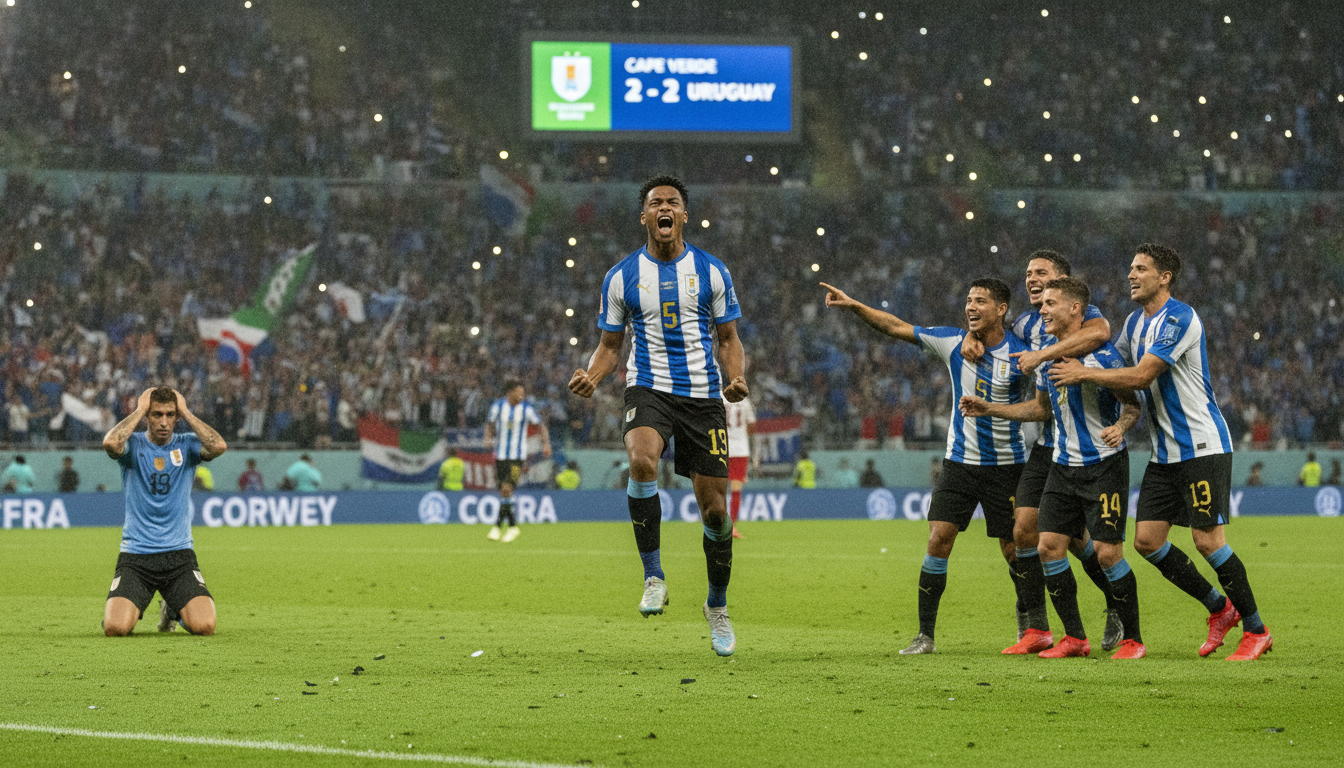
Cape Verde draw Uruguay 2-2 in Miami, with Kevin Pina’s long-range free-kick and Hélio Varela’s composed finish earning the debutants a point that preserves their path to the last 16.

Cape Verde’s remarkable first FIFA World Cup campaign continued in Miami as the Blue Sharks fought back to claim a 2-2 draw with two-time champions Uruguay. The result keeps Cape Verde’s tournament hopes intact after an opening draw with Spain, and it leaves both teams on two points from two Group G matches. The match produced moments of high quality and costly errors, and it highlighted Cape Verde’s blend of bravery and direct play against a traditionally stronger opponent.
Pina stuns Uruguay with a long-range free-kick
Kevin Pina opened the scoring for Cape Verde in the 21st minute with a spectacular long-range free-kick. The shot squeezed through the center of the Uruguay wall and beat the goalkeeper, delivering a shock to the South American side and igniting celebrations among travelling supporters.
That early goal changed the dynamic of the match by encouraging Cape Verde to commit more players forward in search of a second. While the attacking approach exposed defensive holes, it also demonstrated the island nation’s willingness to dictate terms against a more experienced opponent rather than sit back and defend.
Araújo and Canobbio turn the game before halftime
Uruguay responded to the setback by restoring parity through Maxi Araújo, who rose to head home after a delivery was inadvertently flicked on by Cape Verde defender Sidny Lopes Cabral. The goal underlined Uruguay’s aerial threat and their ability to punish loose defensive moments.
The South Americans then completed a first-half turnaround in stoppage time when Agustín Canobbio, introduced into the starting line-up, reacted first to Araújo’s cross and converted from close range. That strike gave Uruguay a 2-1 lead at the break and shifted pressure back onto Cape Verde going into the second half.
Varela capitalises on defensive lapse to equalise
Cape Verde’s persistence paid off when Hélio Varela capitalised on a costly error by Uruguay defender Mathías Olivera. Olivera attempted a cross-field pass across his own box but failed to spot Varela, who took possession, rounded the goalkeeper and finished into an empty net to make it 2-2.
The goal was a reminder that sharp transitions remain Cape Verde’s most dangerous weapon and that lapses in concentration at the back can be ruthlessly punished. Varela’s composure to control, beat the keeper and slot home illustrated the forward’s calm under pressure and the squad’s readiness to seize high-stakes opportunities.
Late drama as Valverde effort chalked off and both sides press for a winner
The match produced frantic moments in stoppage time, including what seemed to be a late winner for Uruguay when Federico Valverde bundled the ball into the net. The goal was ultimately ruled out for offside, preserving the draw and prompting intense reactions from both sets of players and supporters.
Both teams created further chances in the closing stages as Uruguay pressed to reclaim the lead and Cape Verde pushed to complete a stirring comeback. The final minutes were characterised by rapid transitions, contested set pieces and urgency from managers and players alike as the reality of tournament progression came into sharp focus.
Group G impact: standings and scenarios after the draw
The 2-2 result leaves Uruguay in second place and Cape Verde third in Group G, with both teams holding two points after two matches. Spain remain a key reference point in the section, having already taken points off both sides, and the final round of fixtures will decide which teams progress to the knockout phase.
Cape Verde head into their final group game against Saudi Arabia with the opportunity to reach the last 16 in their first World Cup appearance. A win would significantly enhance their prospects, while a draw could still be enough depending on results elsewhere. Uruguay, meanwhile, must take results from their match with Spain to secure progression, with a positive result likely required to maintain realistic hopes of advancing.
Cape Verde’s identity: resilience, directness and growing belief
The Blue Sharks have captured attention not only for results but for their style. Against Spain they demonstrated defensive discipline, while in Miami they showed a more expansive, counter-attacking approach that repeatedly tested Uruguay’s backline with quick transitions and physical runs.
Players such as Kevin Pina and Hélio Varela have emerged as focal points for the team, combining individual moments of quality with a collective willingness to play on the front foot. The blend of organisation, courage and attacking intent has turned Cape Verde into one of the tournament’s more compelling underdog stories and has earned them plaudits from neutral observers and pundits.
What to watch next for both teams
Cape Verde’s remaining match against Saudi Arabia will be decisive for their hopes of reaching the knockout rounds, and they will aim to replicate the attacking freedom shown against Uruguay while shoring up defensive lapses that invite pressure. Managing energy levels and limiting mistakes in possession will be central to their game plan.
Uruguay must refocus for a high-stakes encounter with Spain, where clinical finishing and defensive solidity will be essential. The draw in Miami highlighted both strengths and vulnerabilities, and the team will need to convert promising spells into more consistent control and more ruthless chances in attack to navigate a competitive final group match.
Cape Verde have added another memorable chapter to their World Cup debut, combining a famous result against Spain with a spirited display to earn a draw against Uruguay. The point keeps their knockout ambitions alive and has intensified interest in a nation making a swift impact on football’s biggest stage.
The tournament now shifts attention to the final round of Group G fixtures, where margins will be tight and a single result could determine which teams advance. Cape Verde have given themselves a genuine chance to progress, and their continued belief and direct play promise an intriguing finale to the group phase.