Cape Verde Spain draw: World Cup debutants hold European champions to historic 0-0 in Atlanta
Cape Verde Spain draw reverberates at World Cup 2026 as debutants Cape Verde frustrate European champions Spain with a disciplined 0-0 in Atlanta, boosting island nation’s hopes.

Cape Verde produced one of the most remarkable results of the 2026 World Cup, holding European champions Spain to a goalless draw in Atlanta. The Cape Verde Spain draw stunned expectations as the island nation, making its tournament debut, defended with structure and belief to earn a point that could be pivotal in Group H. Spain dominated possession but repeatedly found themselves stopped by organisation, timely interventions and a standout performance from their veteran goalkeeper.
Defensive discipline frustrates Spanish possession
Spain controlled the ball for long spells, probing patiently and trying to open spaces with short passes and movement. Cape Verde set up in a compact shape that minimized the gaps between lines and forced Spain into shots from distance or crowded areas. The visitors’ defenders showed calm under sustained pressure, routinely cutting out passing lanes and shepherding Spain away from high-quality chances.
Rare moments of danger for Cape Verde came from quick transitions, as the Blue Sharks rode their luck and took calculated risks when possession allowed. Spain’s numerical dominance rarely translated into clear openings thanks to disciplined defensive rotations and consistent pressure on the ball carrier. By nullifying Spain’s rhythm, Cape Verde forced the favourites into frustration rather than a sustained attacking avalanche.
Vozinha’s veteran presence changes the game
The defining figure in Atlanta was Cape Verde’s 40-year-old goalkeeper, whose experience and shot-stopping kept his side level on several occasions. He produced a series of crucial saves, most notably denying a close-range header that looked destined for the net and reacting sharply to turn away another dangerous effort. His composure and command of the penalty area steadied a defence that was under pressure for much of the match.
Vozinha’s leadership extended beyond reflex saves; he organised his backline and communicated effectively to ensure defensive shape remained intact. That presence earned him recognition after the match and provided a psychological boost to teammates facing world-class opposition. The goalkeeper’s display illustrated how an individual performance can influence a compact team plan in a single game at the highest level.
Tactical setup and key moments that defined the match
Cape Verde deployed a disciplined defensive block that sat relatively deep and congested the central channels where Spain typically builds attacks. The midfield worked tirelessly to screen the defence, closing down space and making it difficult for Spain’s creative players to receive the ball between the lines. When opportunities for quick counters appeared, the Blue Sharks pushed forward with directness to relieve pressure.
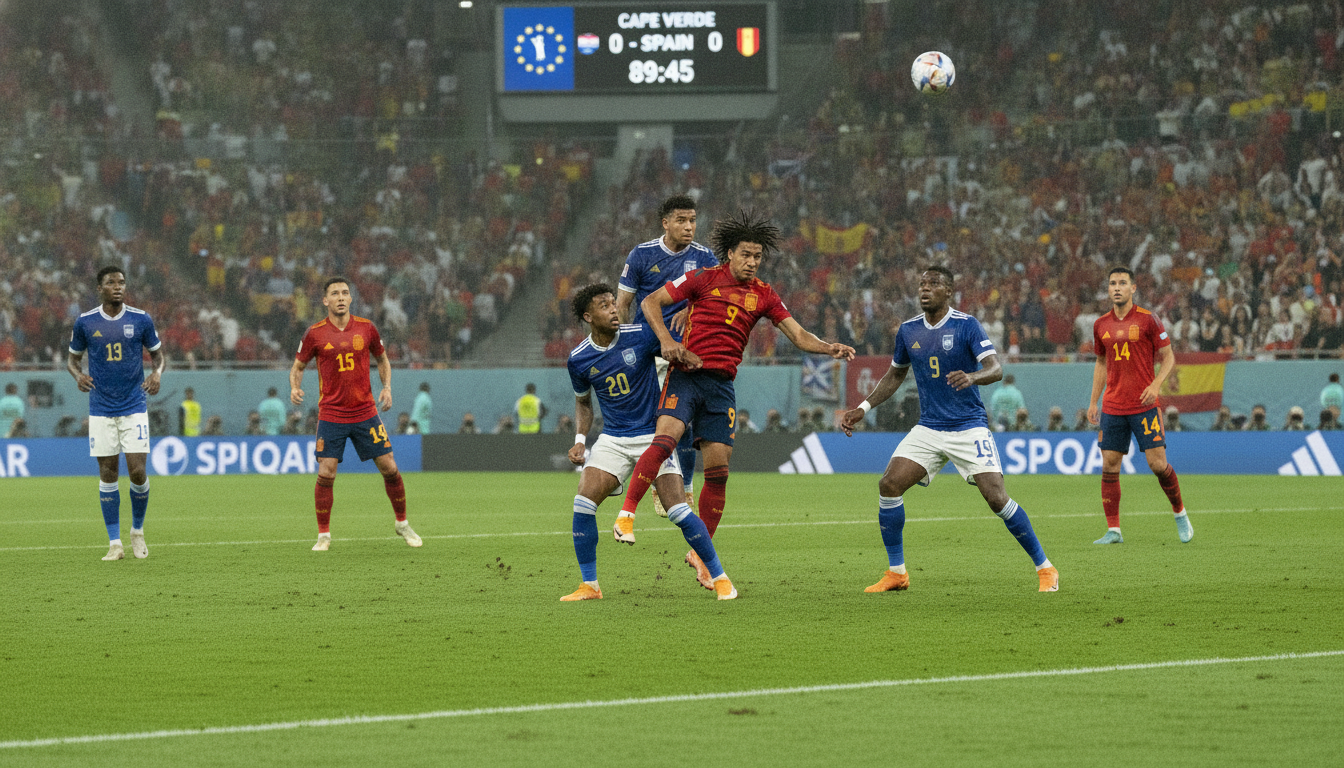
Spain’s most notable threat came midway through the first half when Ferran Torres struck the crossbar and Mikel Oyarzabal followed up with a header that was pushed away by the Cape Verde keeper. Later half chances included a long-range effort that skimmed over the crossbar and a late shot from inside the box that rolled wide. A second-half substitution introduced an electric young winger to add pace, but Cape Verde’s concentration and compactness never wavered.
Coaching, preparation and the rise of a debutant nation
Cape Verde’s tactical plan reflected meticulous preparation and a clear understanding of how to blunt Spain’s strengths. The coach’s emphasis on structure, discipline and situational organisation allowed a small footballing nation to compete against one of the sport’s traditional powers. That approach mirrored the team’s qualification campaign, where defensive solidity and collective discipline were foundations for success.
On the touchline, the coach’s rotations and emphasis on mindset were evident as the squad absorbed periods of pressure while remaining ready to seize moments to attack. The result underlines the progress of Cape Verdean football at a national level and will be hailed domestically as a validation of long-term development and coaching investment. For a debutant nation, this is the sort of result that accelerates belief and raises expectations ahead of the next fixtures.
Group H implications and the road ahead for Cape Verde
The draw gives Cape Verde a valuable point in a Group H that also features Uruguay and Saudi Arabia, and it immediately changes the dynamics of qualification from the group stage. For a side making its first World Cup appearance, taking a point off the European champions opens a clearer path to competing for a knockout spot. Spain, still among the favourites on reputation, must now balance attacking urgency with caution in upcoming matches.
Cape Verde will take confidence from the result but also know that the tournament will demand consistency and the ability to convert defensive discipline into points. The group remains tight on paper, and the Blue Sharks’ ability to replicate this defensive form while finding a measure of attacking control will be decisive. The point in Atlanta could be the platform from which Cape Verde prepares for their next game with renewed tactical clarity.
National reaction and wider significance for African football
Back on the islands, the result was greeted with widespread celebration and a sense of national pride as Cape Verde announced itself on football’s biggest stage. Players and officials emphasised the collective nature of the achievement, pointing to months of work, focus and a long-term plan coming to fruition in the global spotlight. The performance will resonate across African football as another example of emerging nations challenging more established powers.
For the continent, Cape Verde’s display reinforces the depth of talent and organizational growth in nations outside the traditional heavyweights. The match offered a reminder that disciplined planning, strong leadership and mental resilience can bridge gaps in resources and profile. Saturday’s draw will be studied by teams looking to adopt pragmatic but positive approaches when facing technically superior opponents.
Looking ahead, Cape Verde must convert the confidence from this moment into consistent performances if they are to progress beyond the group stage and extend their historic run in the tournament.