LaLiga referees to speak after matches as CTA and league plan on-camera access and rulebook overhaul
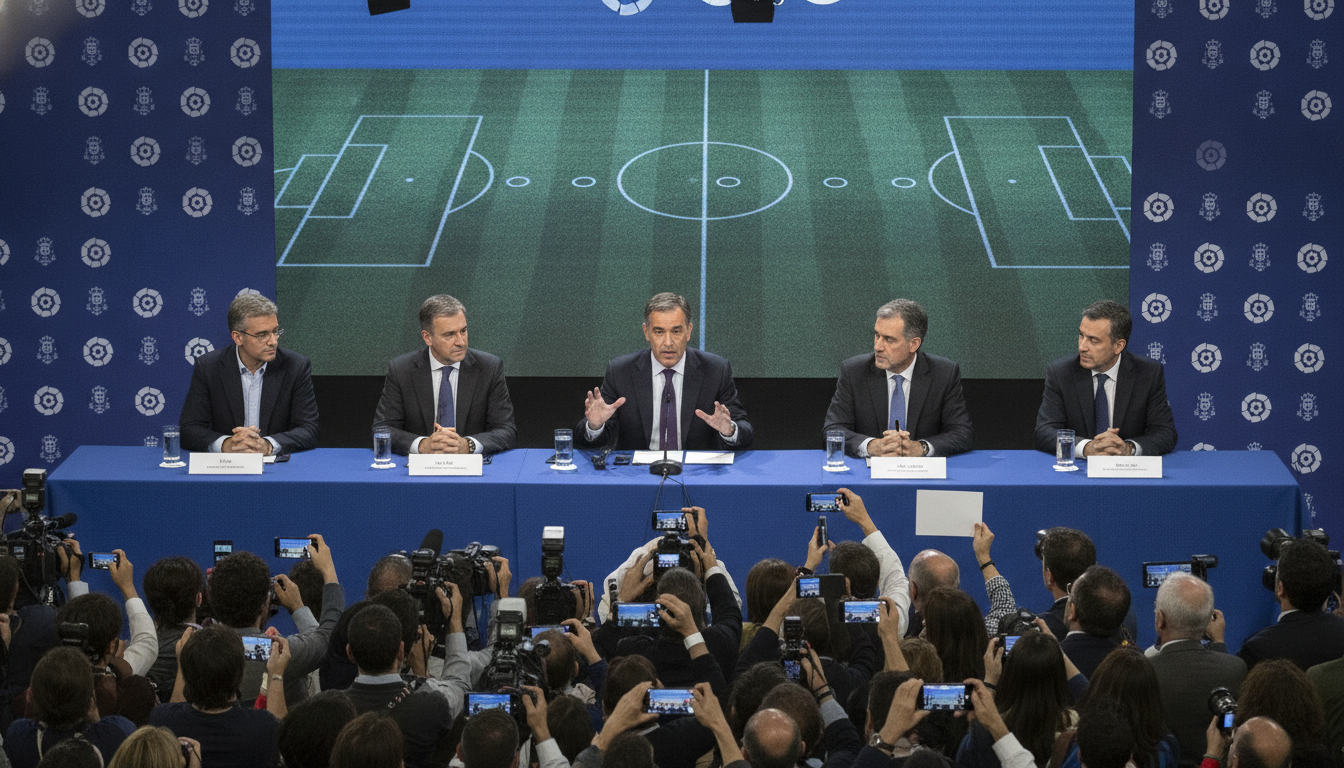
LaLiga referees to speak after matches will be trialed by the CTA in collaboration with LaLiga in the second half of the season, the association confirmed. CTA president Fran Soto outlined plans for post-match statements, pre-match interventions and expanded media access as part of a broader effort to improve transparency and the competition’s audiovisual product. The CTA is also preparing a detailed Manual of Unification of Criteria, with written provisions and explanatory video material, to be published for clubs, players and media.


CTA and LaLiga to trial post-match referee statements
The Technical Committee for Referees (CTA) has agreed with LaLiga to begin trialing post-match statements by match officials in selected fixtures. The initiative is intended to be introduced in the second phase of the season, initially on a match-by-match basis before being evaluated for broader adoption.
According to CTA president Fran Soto, the measured rollout will allow both the refereeing body and broadcasters to refine protocols for when and how referees address cameras. The CTA frames the move as an enhancement of the broadcast product and an opportunity to offer viewers direct explanations of key decisions.
Pre-match interventions and locker-room access
In addition to post-match statements, the CTA plans to permit a short pre-match intervention by the refereeing team similar to the pre-game appearances typically given by coaches. Broadcast access may extend to the referees’ dressing room before kick-off to capture preparation and referee briefings.
These pre-match elements are intended to normalize referees’ public role and to provide context for their conduct during the game. The CTA is finalizing the operational details with LaLiga, including privacy safeguards, timing, and stadium logistics to ensure minimal disruption to match operations.
Manual of Unification of Criteria to standardize officiating
A cornerstone of the CTA’s program is a Manual of Unification of Criteria that will span more than one hundred pages and set out the committee’s interpretation of rules and protocols. The manual will include a comprehensive, literal section describing expected actions for a wide range of match situations, starting with the most contentious incidents.
The objective of the document is to reduce inconsistency between referees and to give clubs, players and officials a clear reference for on-field decisions. By codifying approaches to fouls, misconduct, and VAR-related processes, the CTA expects the manual to be a coordinating tool for refereeing teams across the competition.
Video explanations and educational content for clarity
Beyond the written manual, the CTA plans to supplement the text with video demonstrations illustrating the application of criteria in real-match scenarios. These clips will be used to illustrate nuance and to eliminate ambiguity where textual descriptions might fall short.
By combining written prescriptions with visual examples, the CTA aims to produce an accessible training and reference package that can be used by referees, coaches and media alike. The video material is also designed to serve as an educational resource that broadcasters can use to inform viewers and reduce speculative commentary after contentious events.
Distribution plan and timeline for clubs, players and media
The CTA intends to make the manual available online by the end of August, providing immediate access to all clubs, registered players and media outlets. A physical version of the manual will follow to ensure formal distribution and reference at club and federation level.
This staged distribution is intended to ensure transparency and to allow stakeholders time to review the document before it becomes the standard basis for refereeing interpretation. The online release will be the first public step in aligning on-field practice with the committee’s clarified criteria.
Broadcasting implications and operational concerns
Allowing referees to speak on camera and granting pre-match access to dressing rooms will require new broadcast protocols and coordination between match venues, LaLiga production teams and the CTA. Microphone placement, interview timing and the management of sensitive content will need careful regulation to protect referees and maintain the integrity of match operations.
There are also practical and security considerations to address, including the safety of officials when speaking publicly and the need to avoid undue influence on refereeing performance. Organizers will have to balance the benefits of transparency against risks such as heightened scrutiny, misinterpretation by audiences, and possible disciplinary implications for pre- or post-match commentary.
Stakeholder reaction and potential impact on the game
Clubs, players and broadcasters are likely to view the changes through different lenses, with broadcasters welcoming added content and clubs assessing whether clearer criteria will reduce post-match disputes. Fans may benefit from improved understanding of refereeing decisions, which could lower the volume of public debate and misinformation after high-profile incidents.
Referees themselves will gain a platform to explain decisions and to demonstrate the consistency the CTA is seeking, but the new exposure may also increase pressure on individual officials. How the refereeing community adapts to public-facing duties will be a key test for the CTA’s wider reform agenda.
The CTA’s combined approach of procedural clarification, audiovisual access and educational materials represents a deliberate attempt to modernize officiating and to integrate refereeing more transparently into LaLiga’s broadcast offering. The committee and the league will monitor trials closely and adjust the program in response to operational feedback and stakeholder concerns, with the stated goal of strengthening consistency and improving the viewing experience for fans.
The reform package, if implemented broadly, could mark a significant shift in how referees are presented and perceived in Spanish football and influence how other leagues consider similar measures.